Please do
remember
these things.
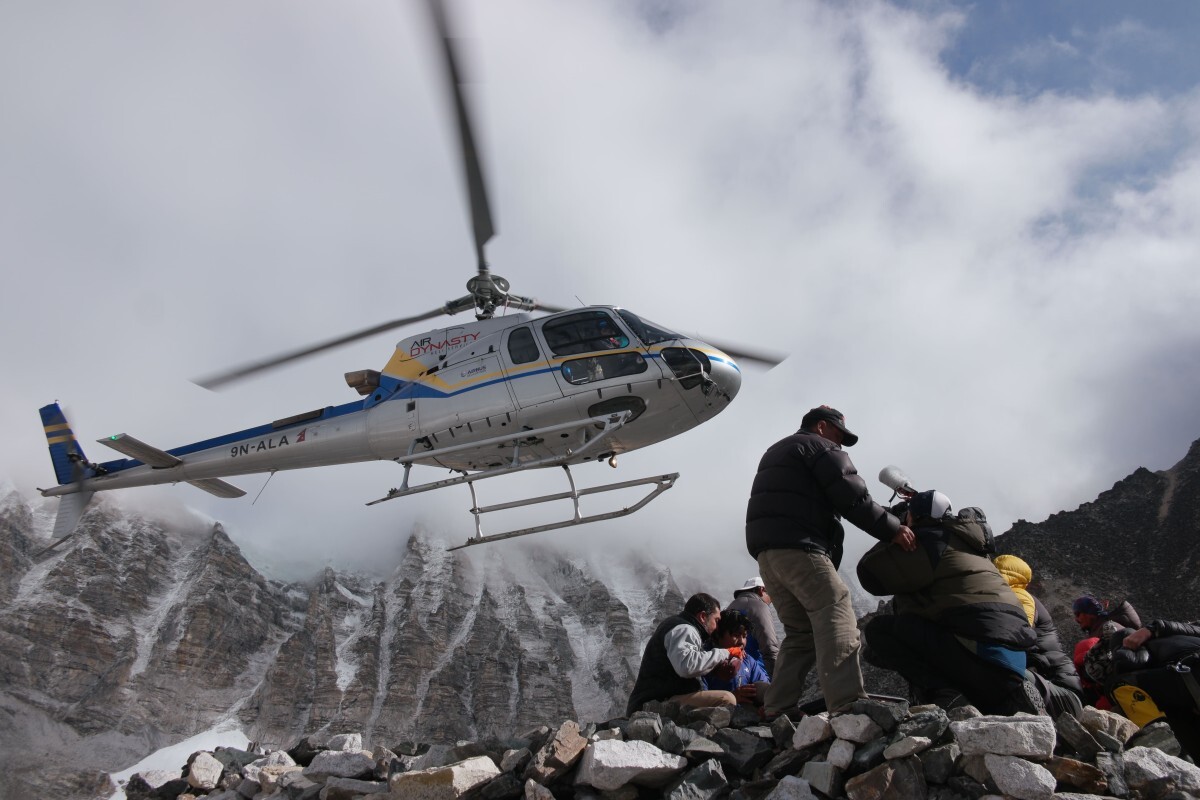
Trekking and mountain climbing in the Himalayan region have contingency conditions sometimes. Lukla domestic flight depends on the weather. Sometimes it can be bad weather in mountain regions that can cause domestic flight delays or cancellations. In case of delay or cancel the domestic flight, the client has to bear all the additional expenses including food and accommodation by themselves.
However, 8K Expeditions will take responsibility for all other arrangements as per the schedule and guide and other staff extra expenses in case of delay or cancel the flight. If you wish to make an alternative arrangement such as a Helicopter flight to avoid flight delays, all additional costs would be your (client) responsibility. 8K Expeditions does not accept any responsibility for costs incurred as a result of international flight missed but we assistance to make alternative arrangements wherever possible. We recommend always keeping some extra time when you trek and climb in the Himalayas and making sure your international flight ticket has a flexible date. Also, note that while on the trip we may have to make sometimes changes in the itinerary due to unforeseen reasons like landslides or natural disasters, bad weather or health conditions, etc.
TRIPLE 6000M PEAK EXPEDITION - FAQ
What is the Triple 6000-Metre Peak Expedition in Nepal?
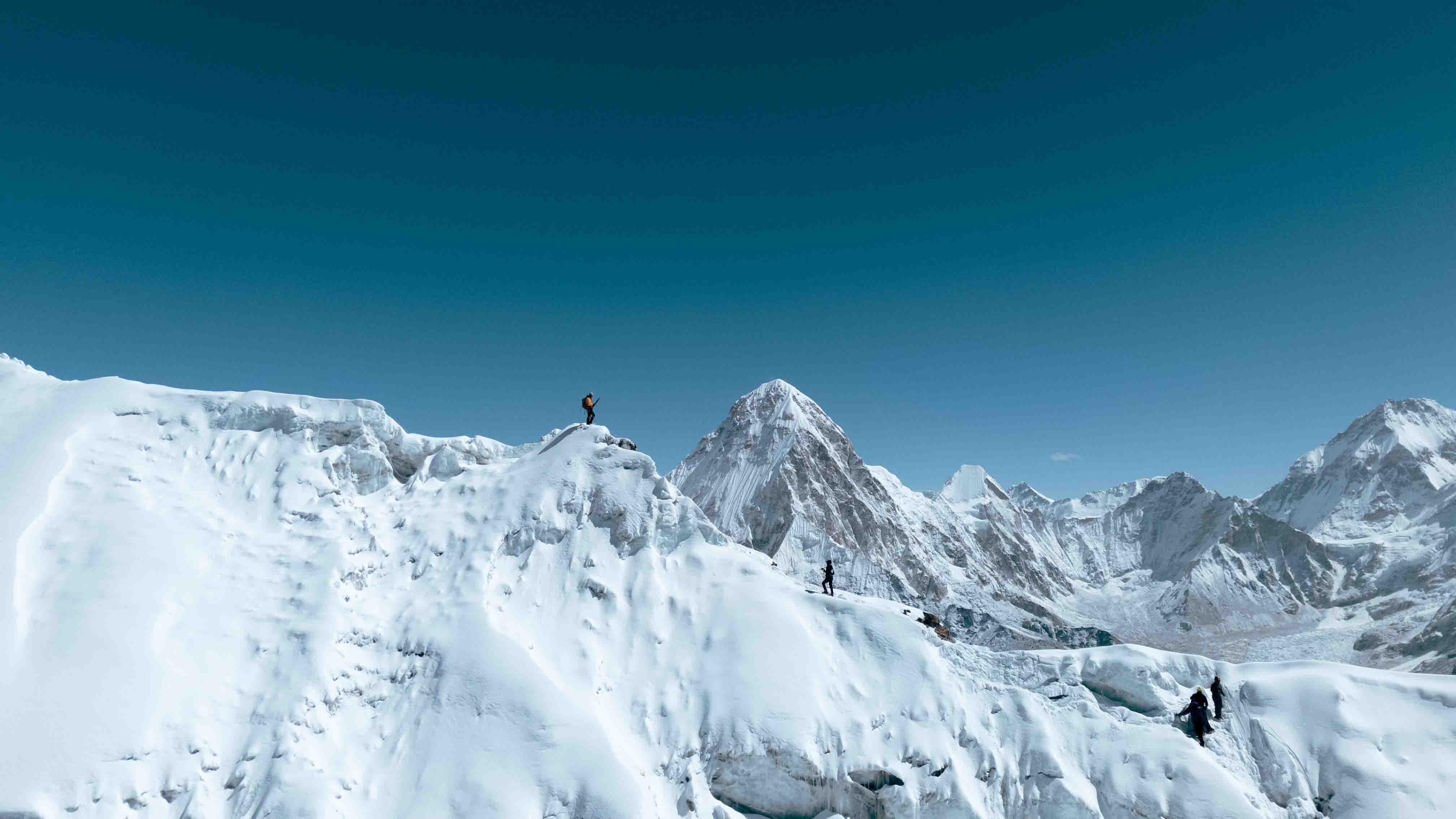
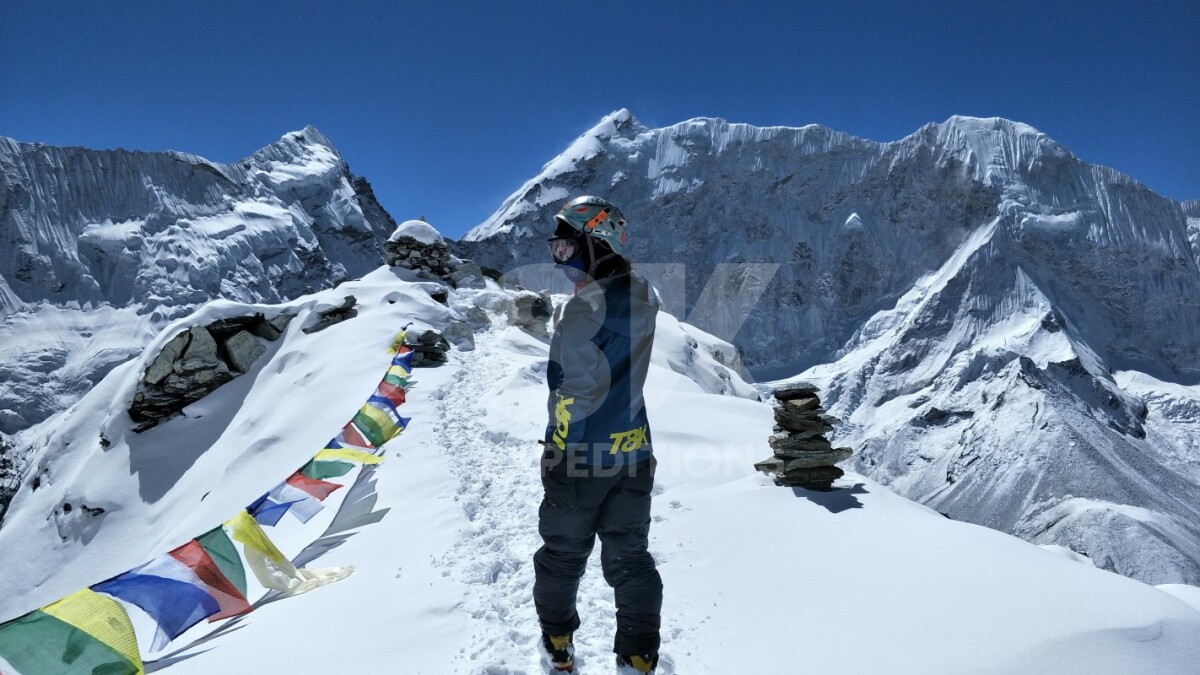
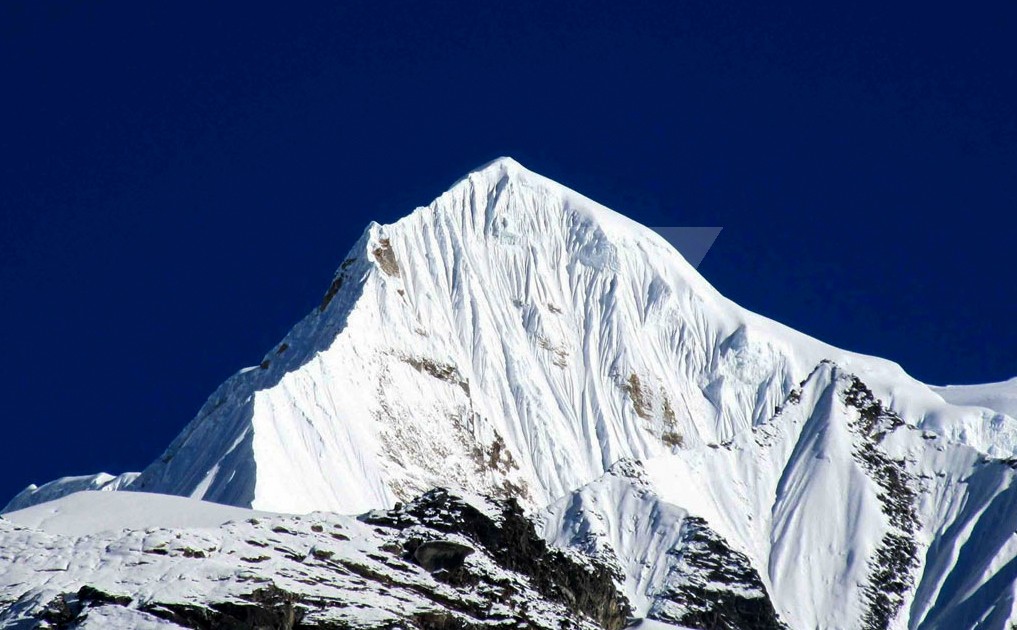
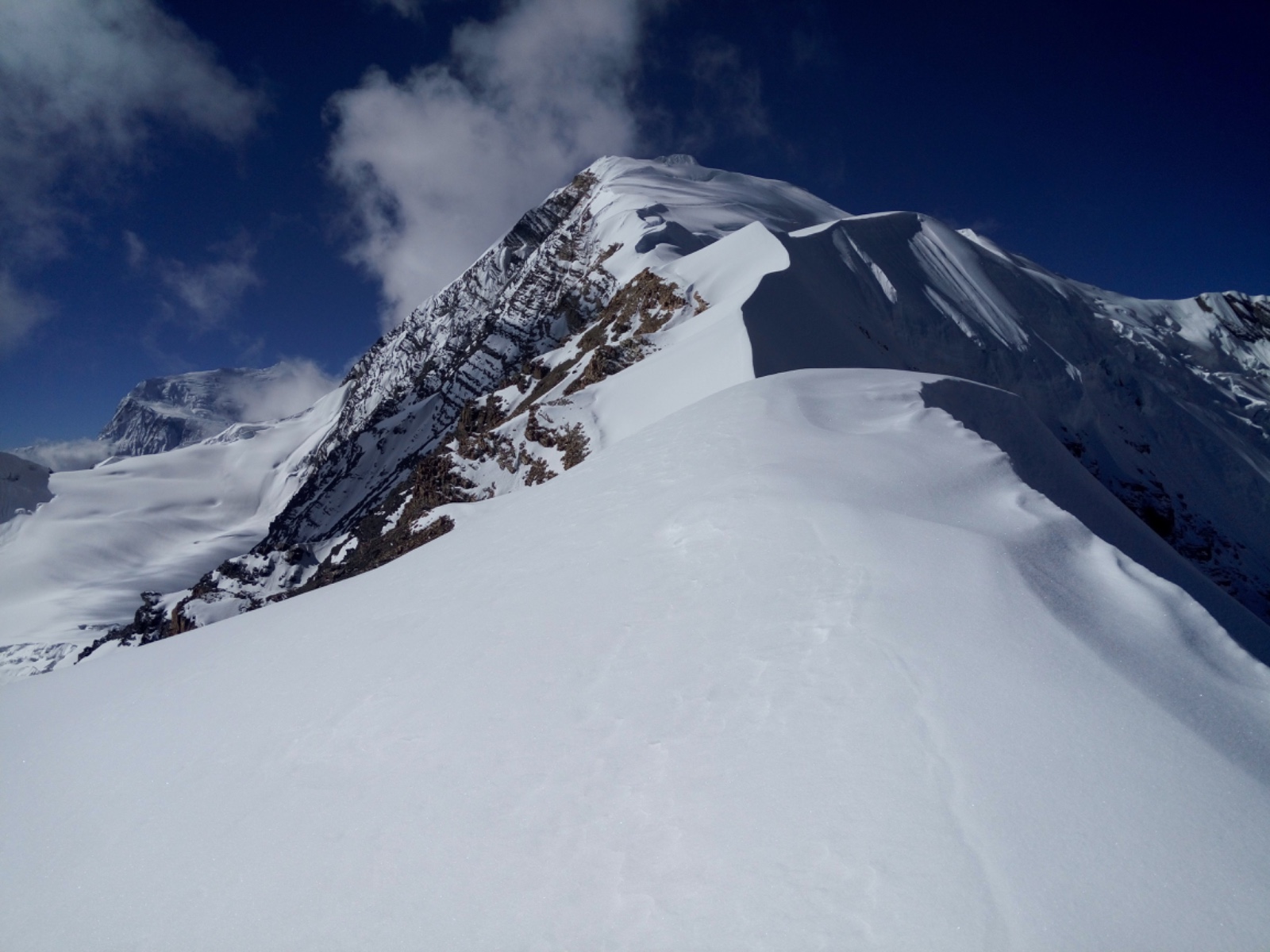
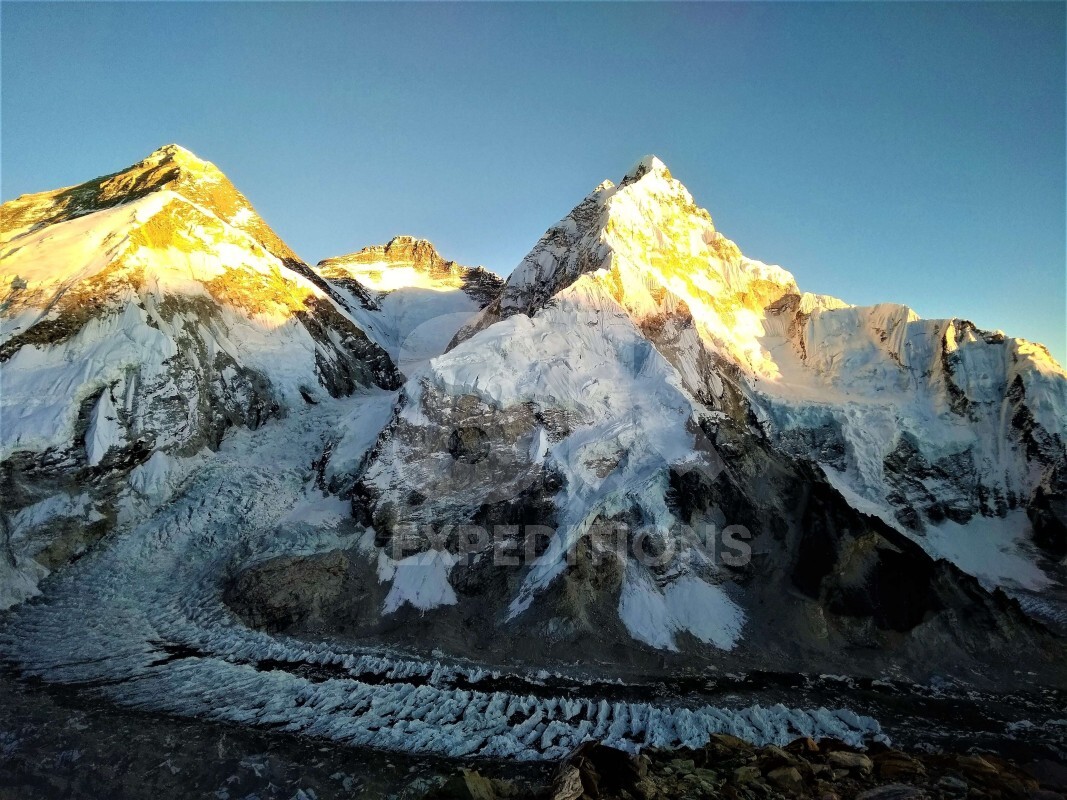
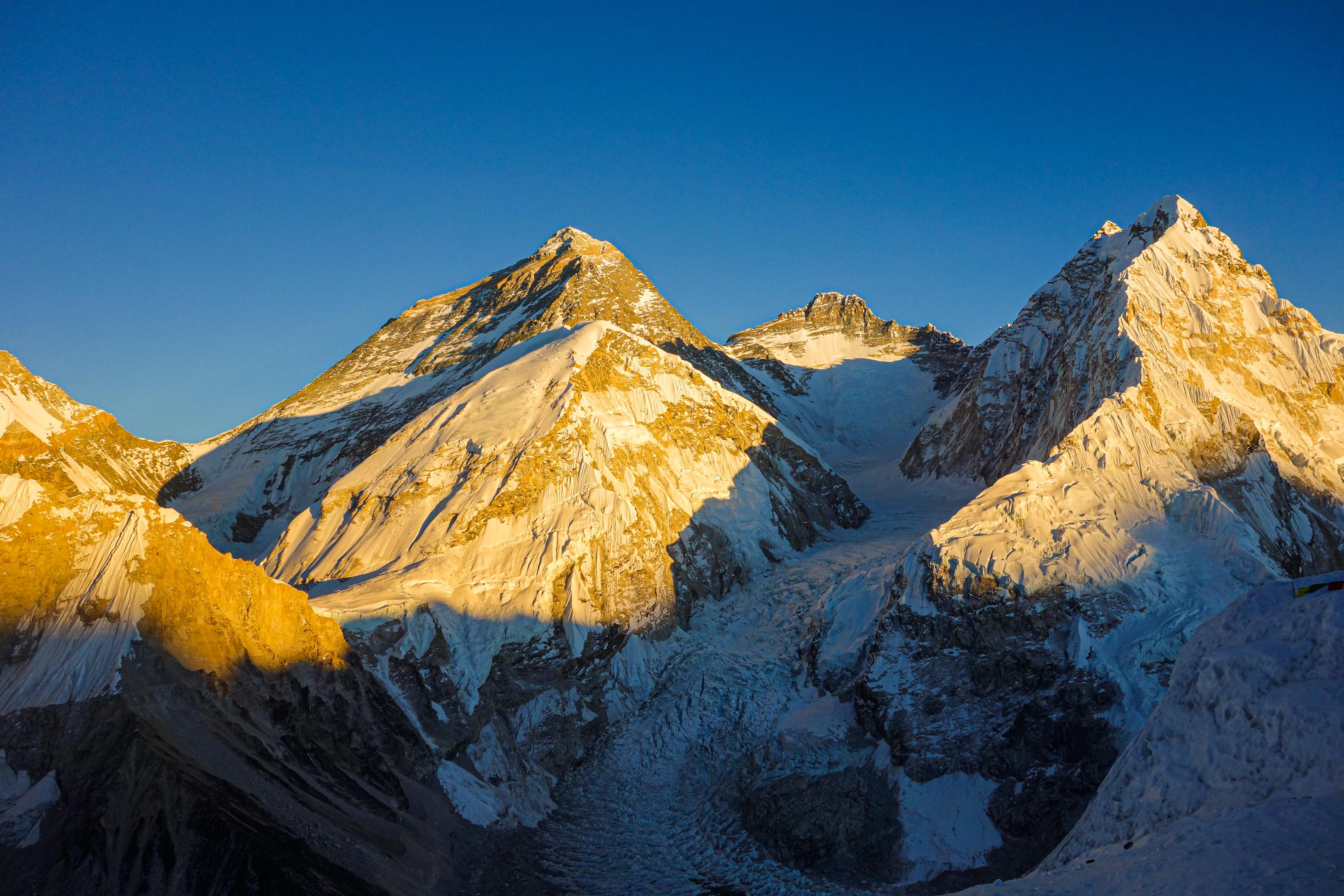
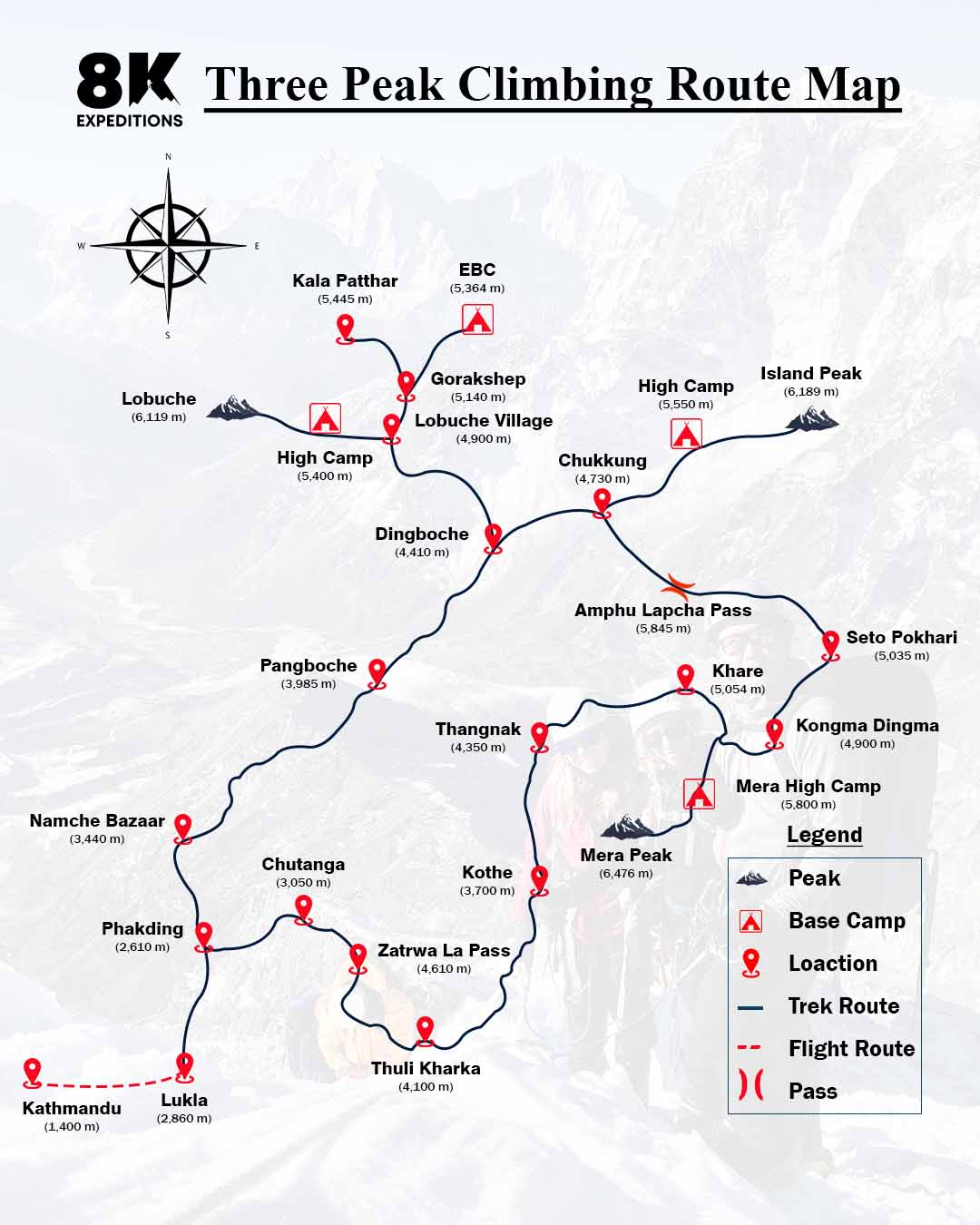
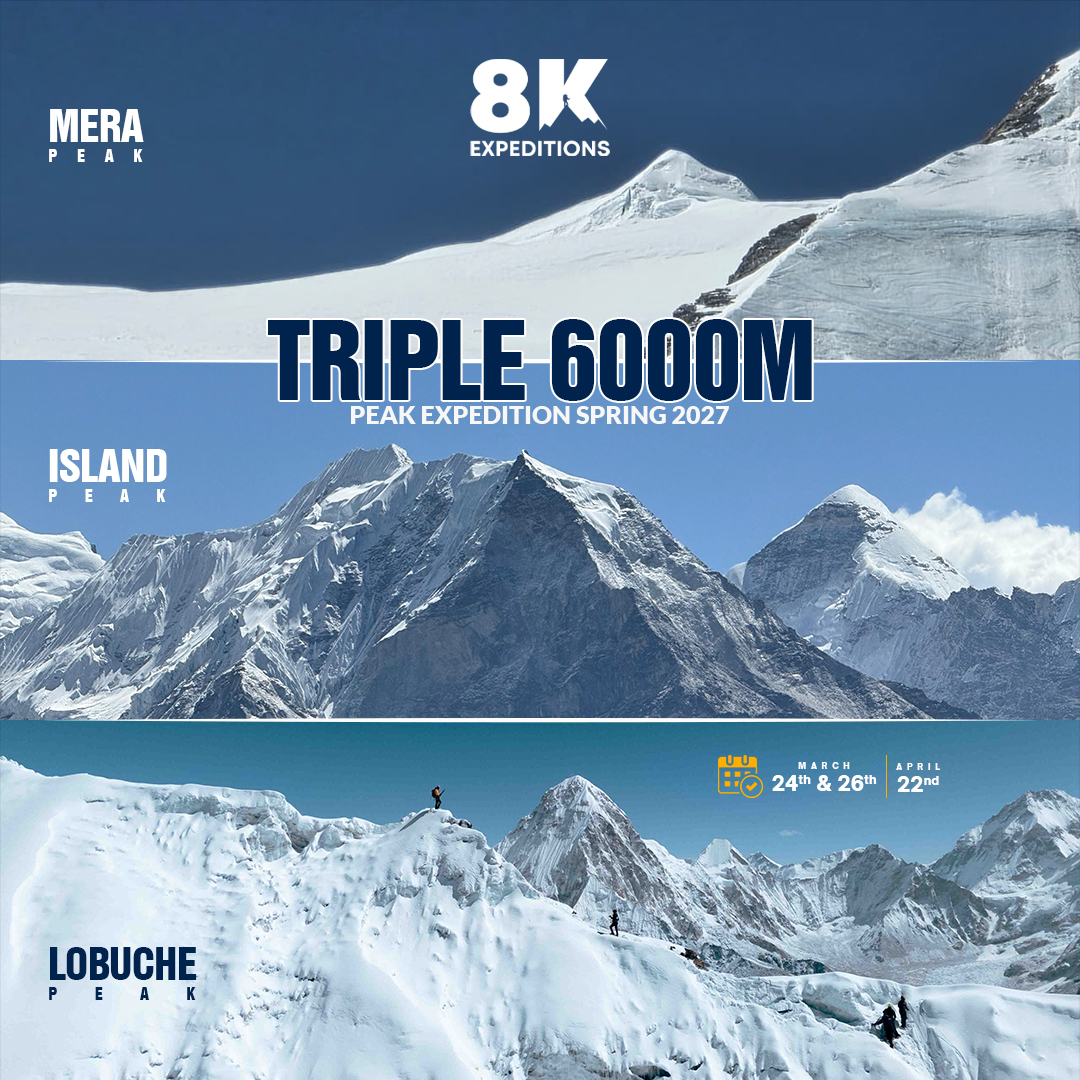
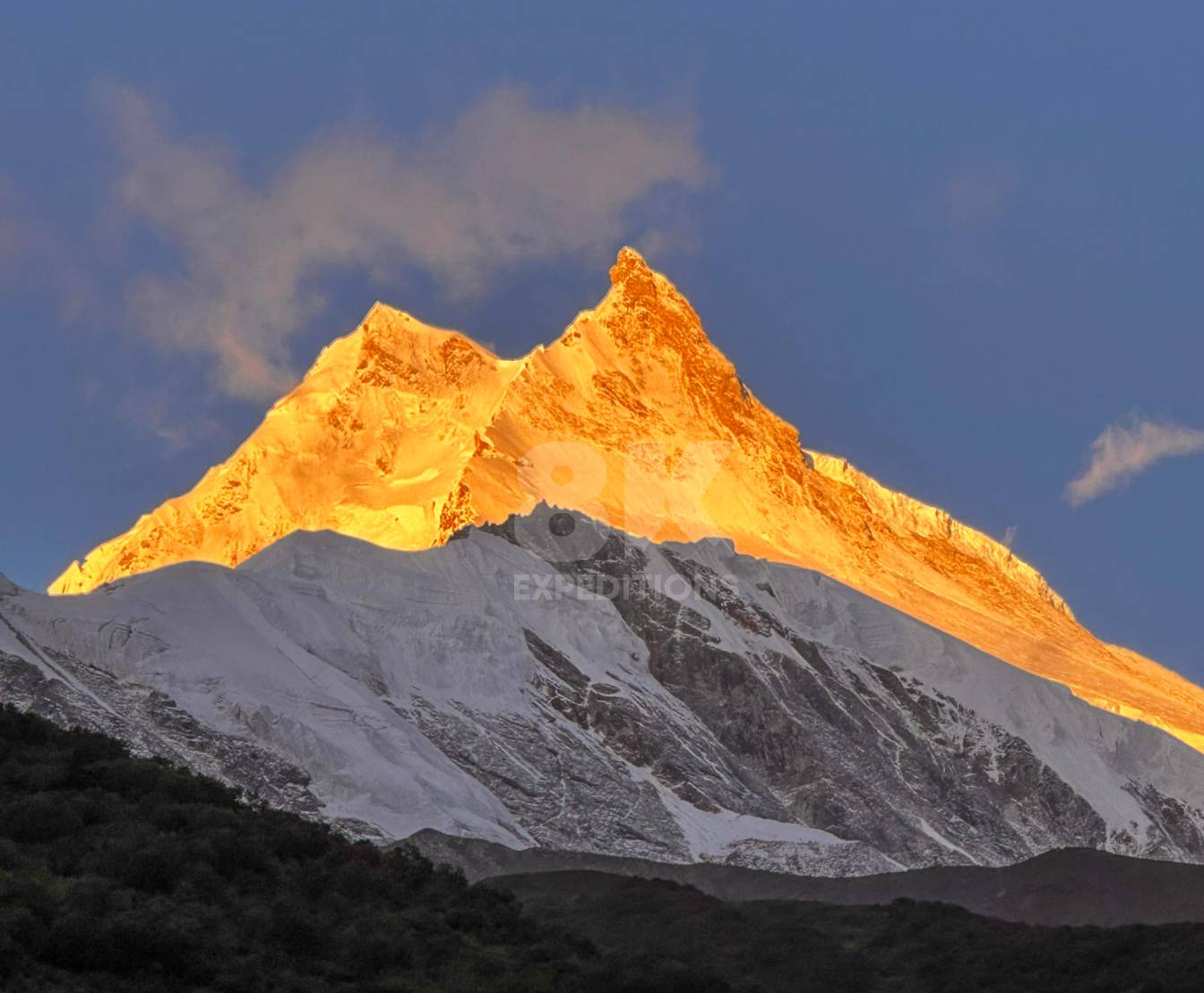
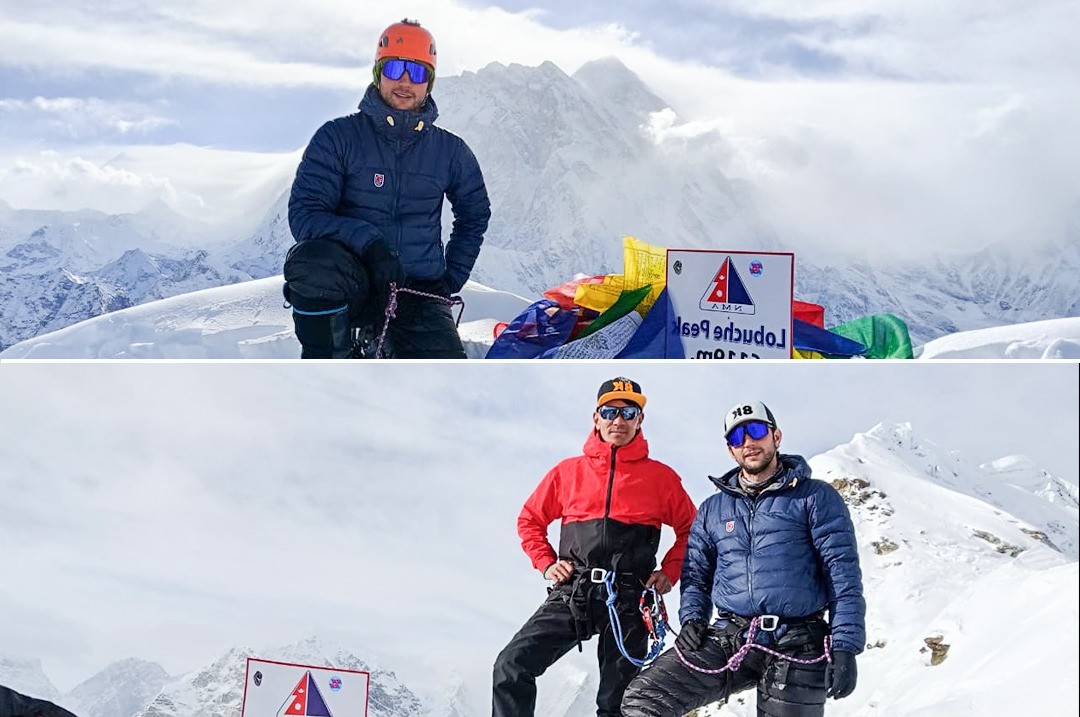
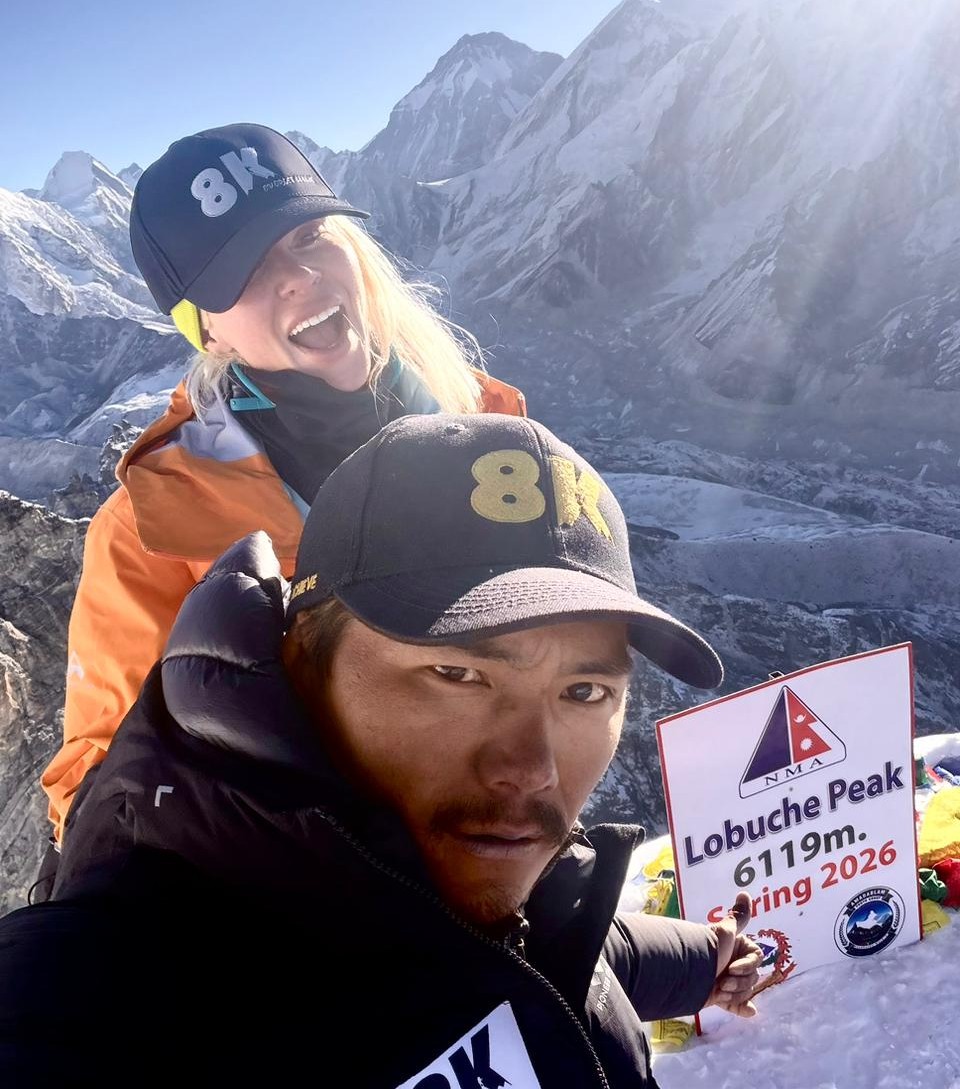
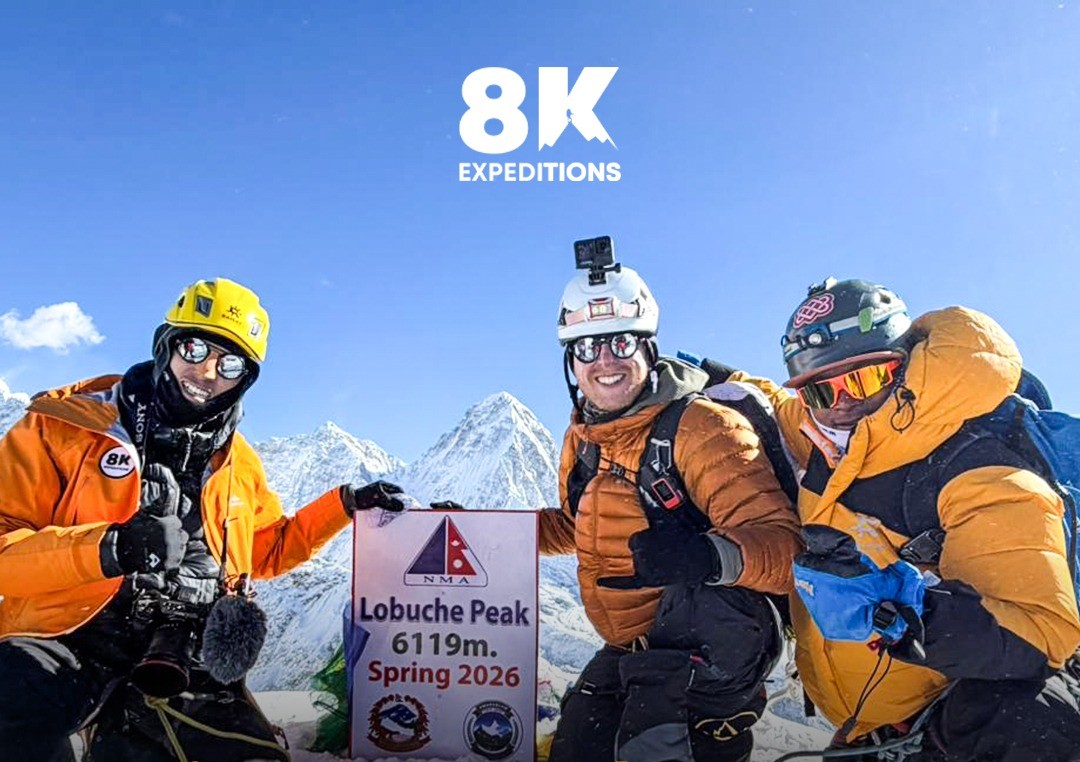
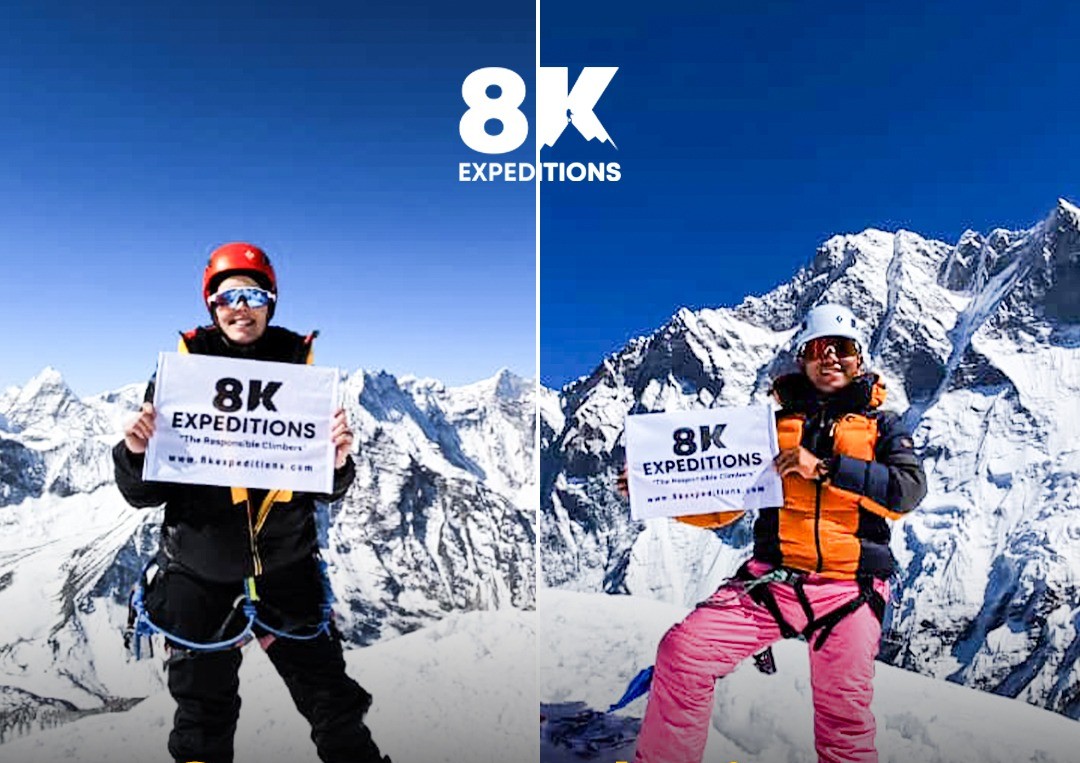
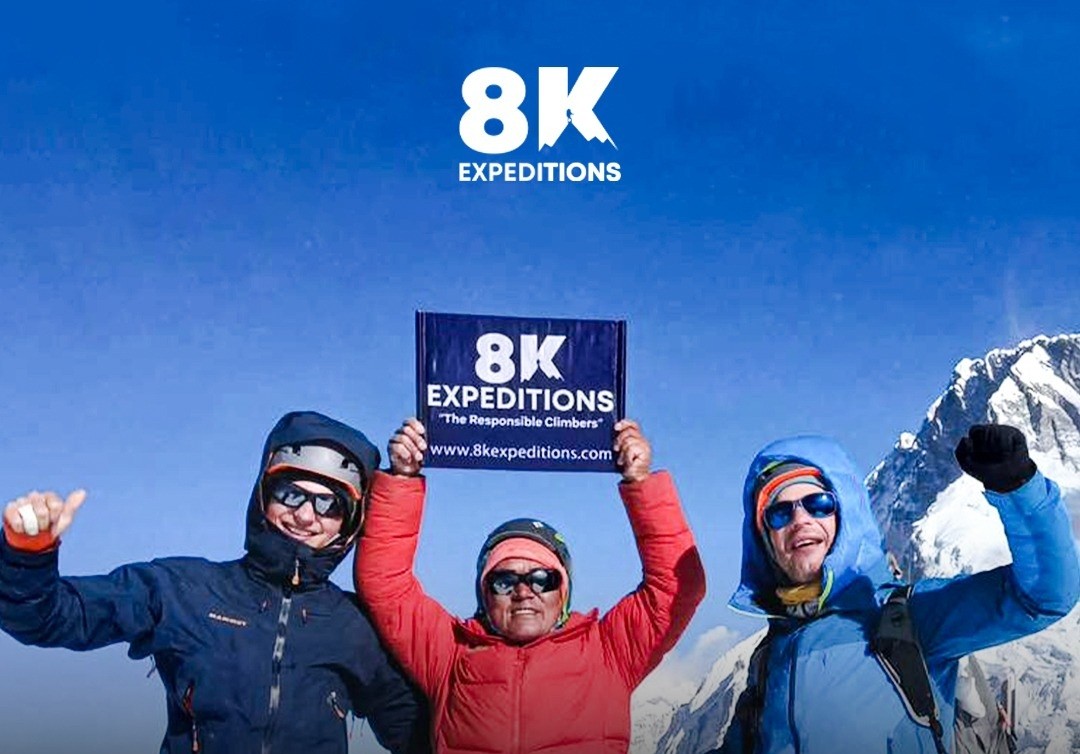
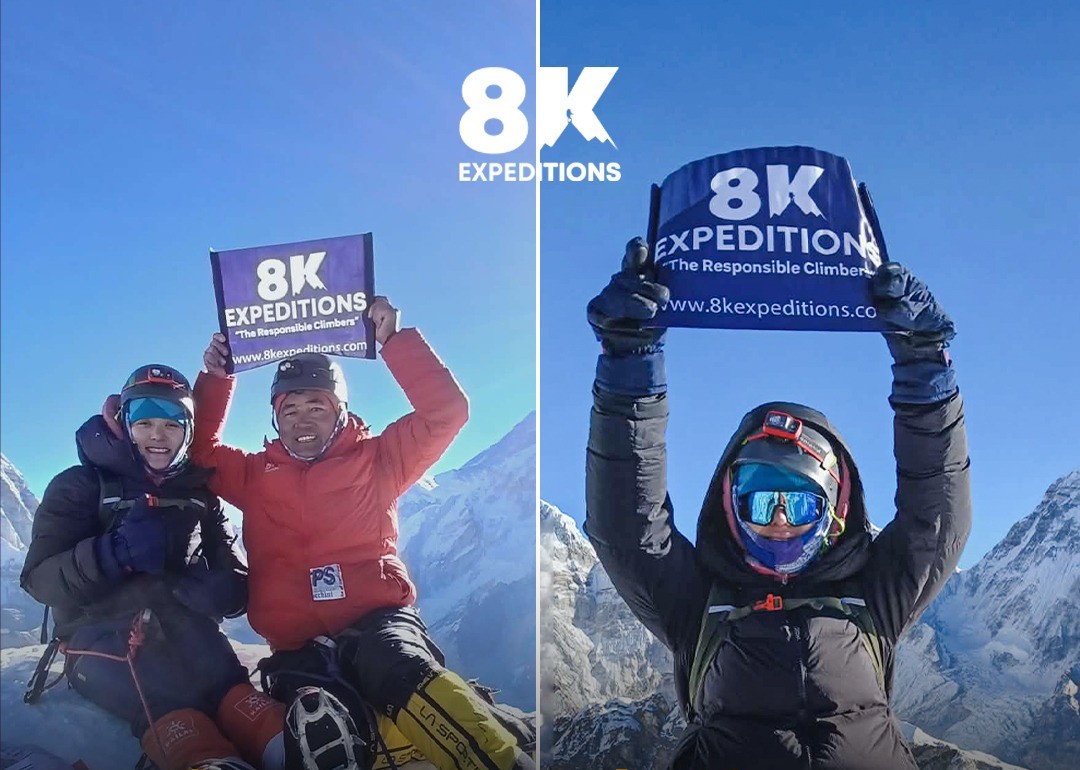
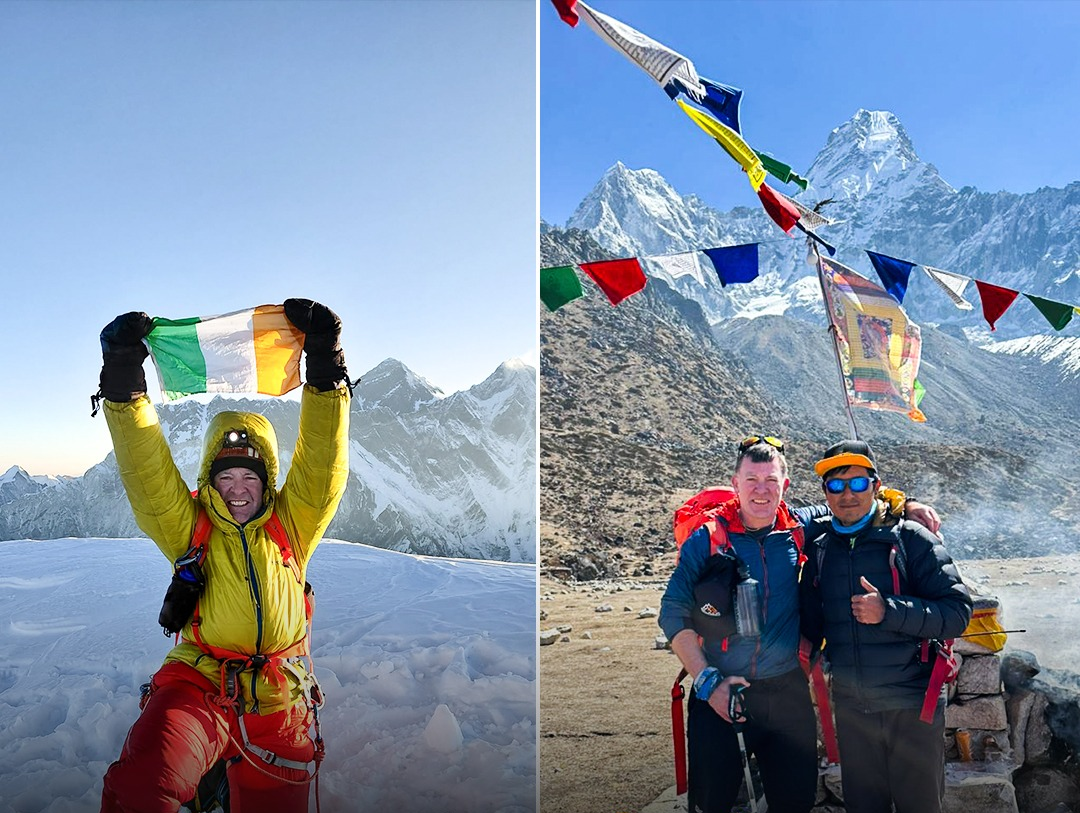
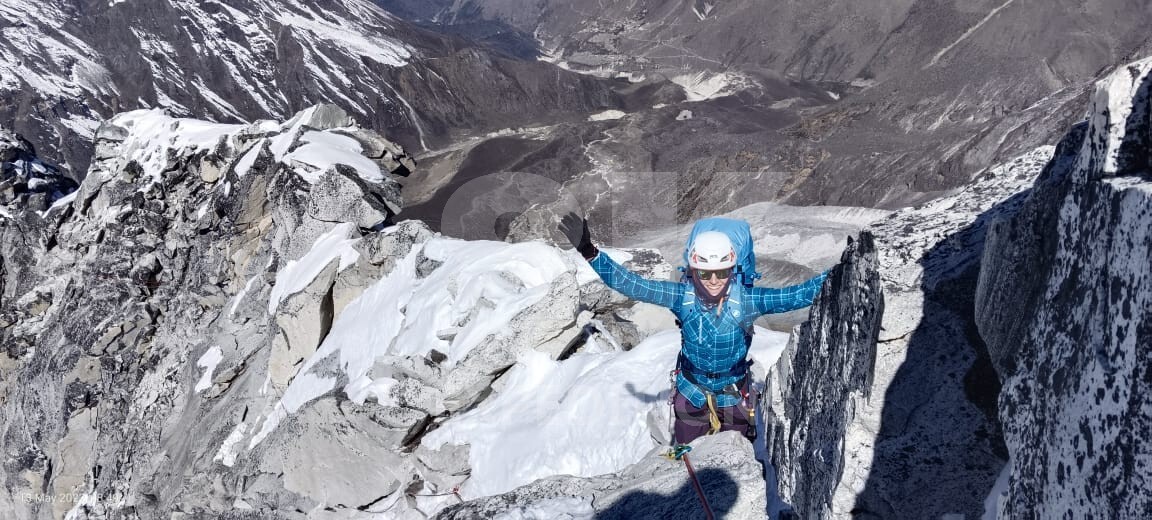
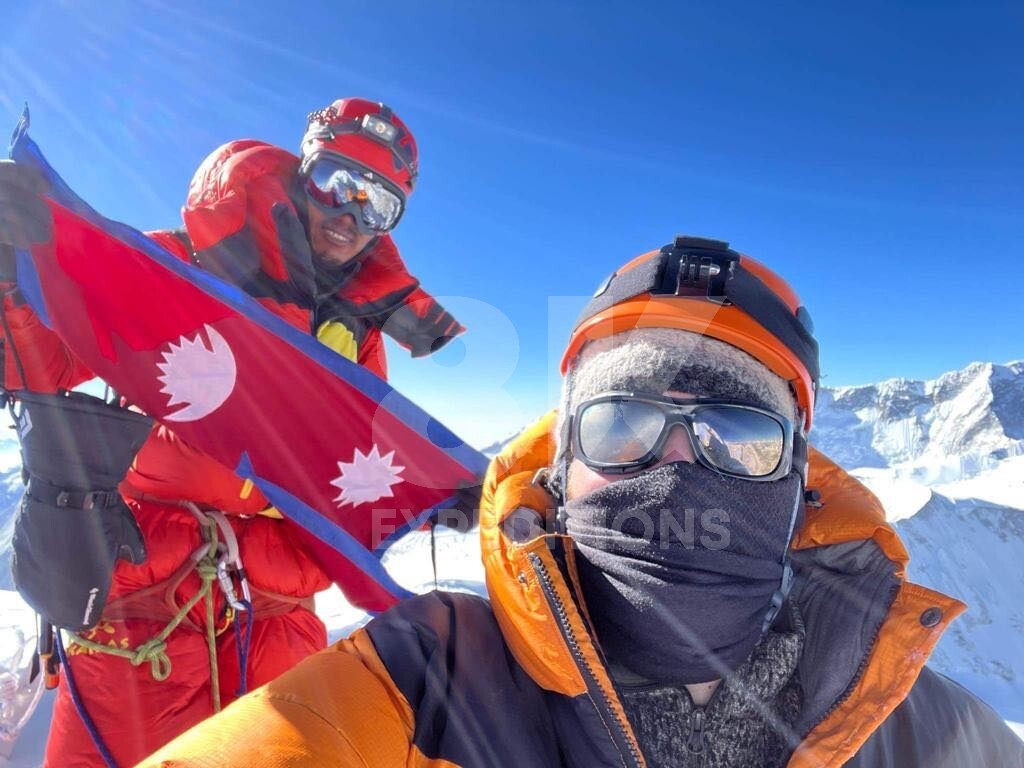
The Triple 6000-Metre Peak Expedition is a challenging Himalayan climbing adventure that combines Mera Peak (6,476 m), Island Peak (6,189 m), and Lobuche East Peak (6,119 m) in one expedition. It is designed for climbers who want to experience three different 6,000-metre peaks in Nepal while developing high-altitude trekking and mountaineering skills.
What peaks are included in the Mera, Island Peak and Lobuche East expedition?
The expedition includes three of Nepal's popular 6,000-metre climbing peaks:
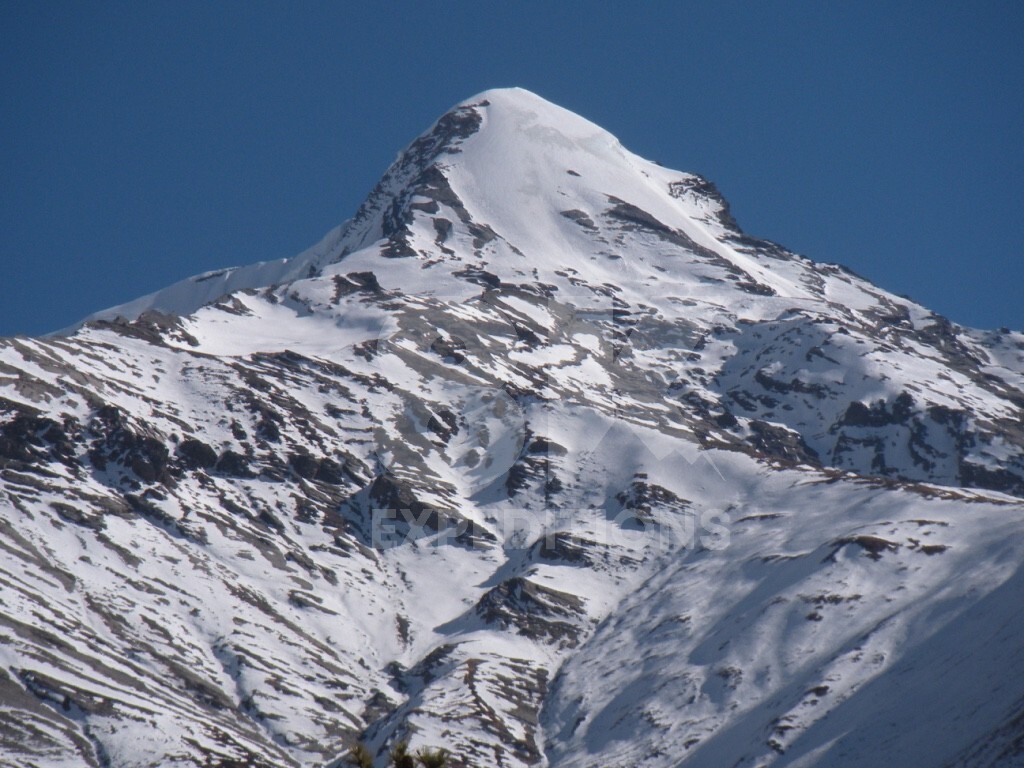
- Mera Peak – 6,476 m
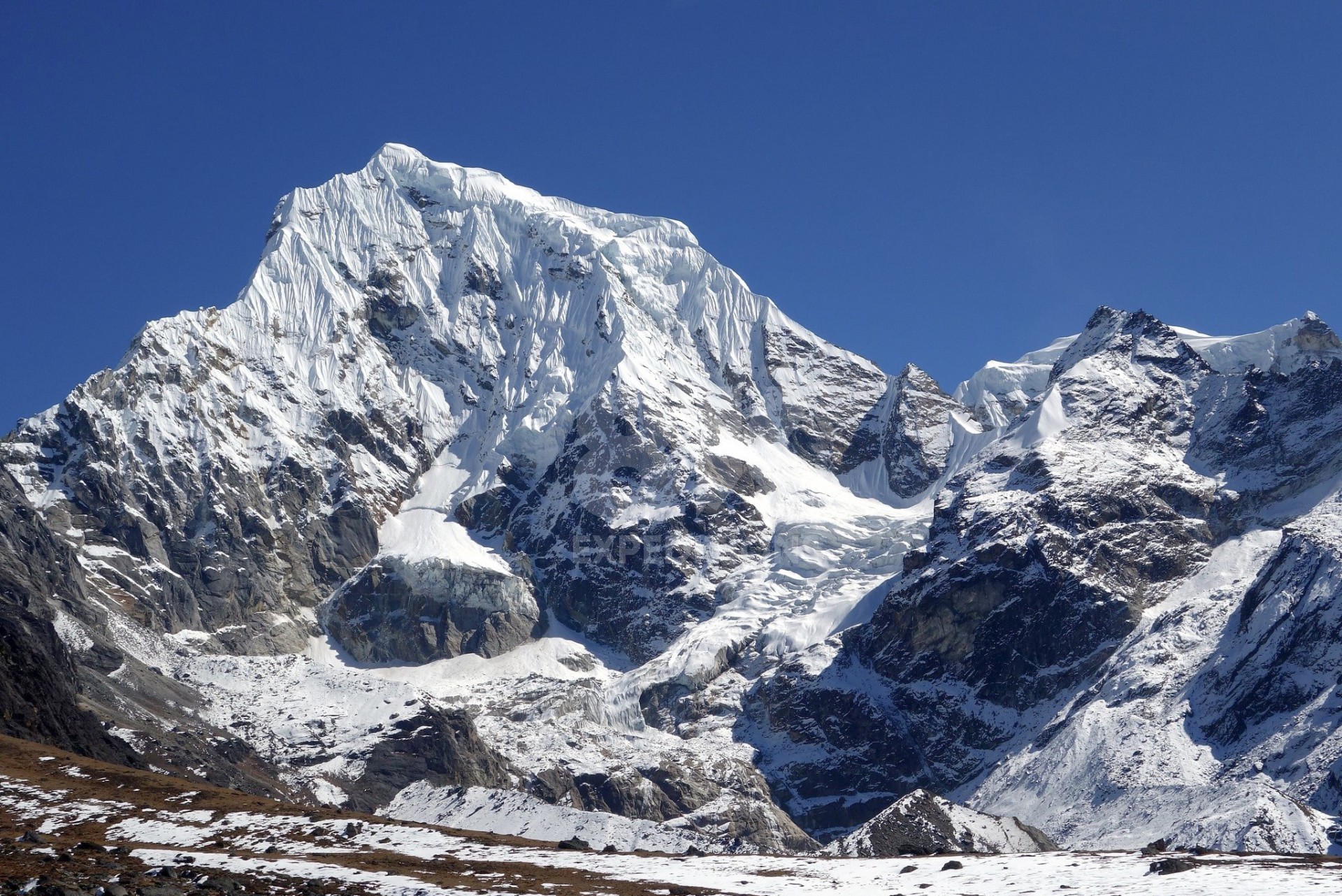
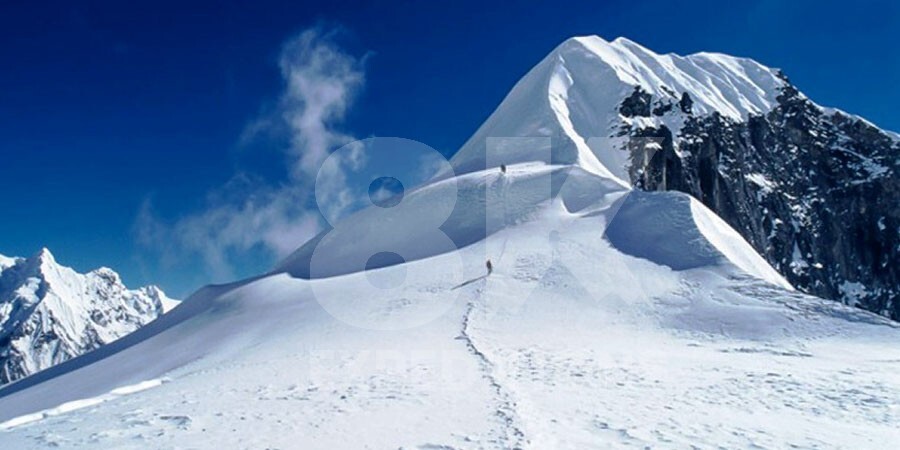
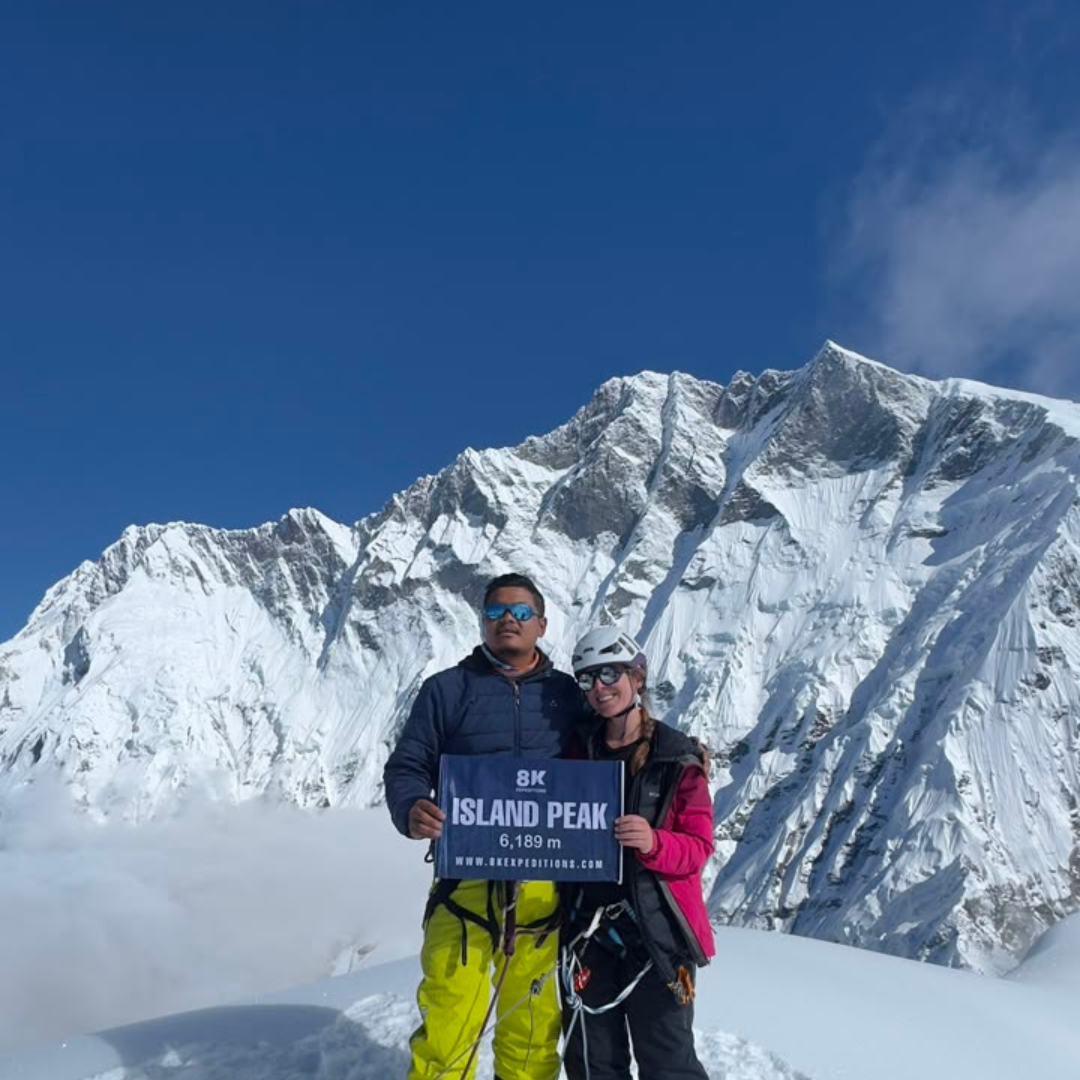
- Island Peak (Imja Tse) – 6,189 m
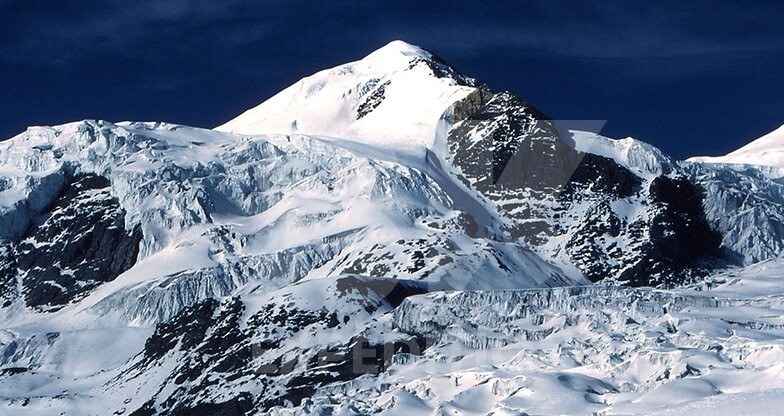
- Lobuche East Peak – 6,119 m
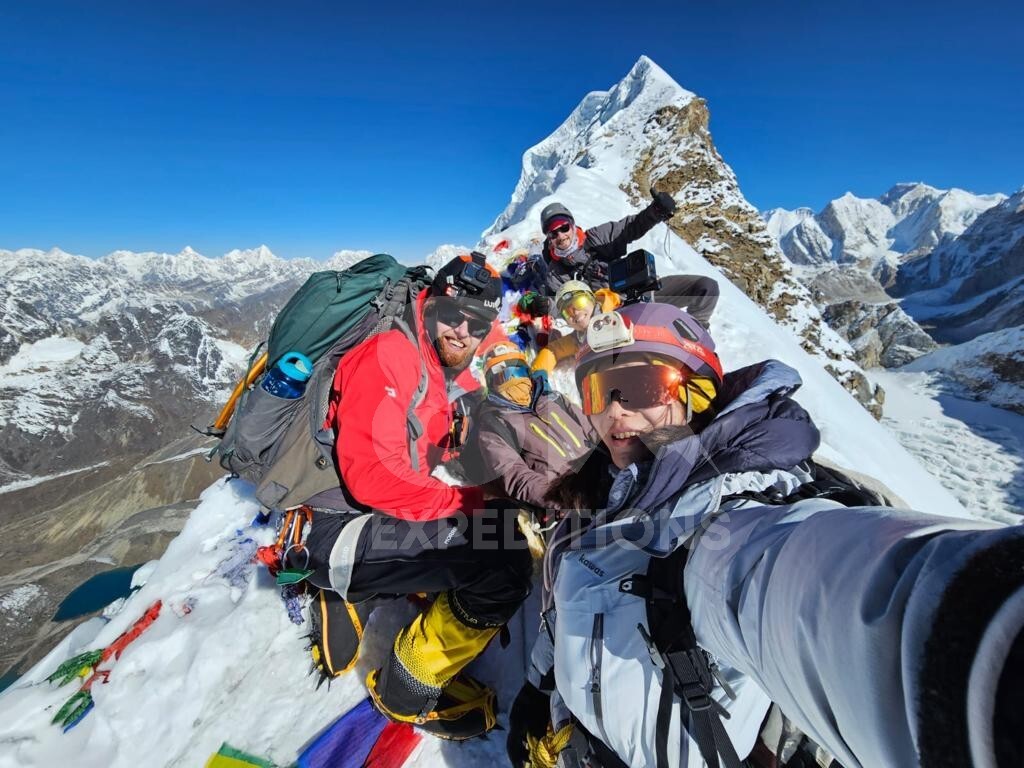
The combination provides a progressive Himalayan climbing experience, from the long glacier ascent of Mera Peak to the more technical terrain of Island Peak and Lobuche East.
How difficult is the triple peak expedition?
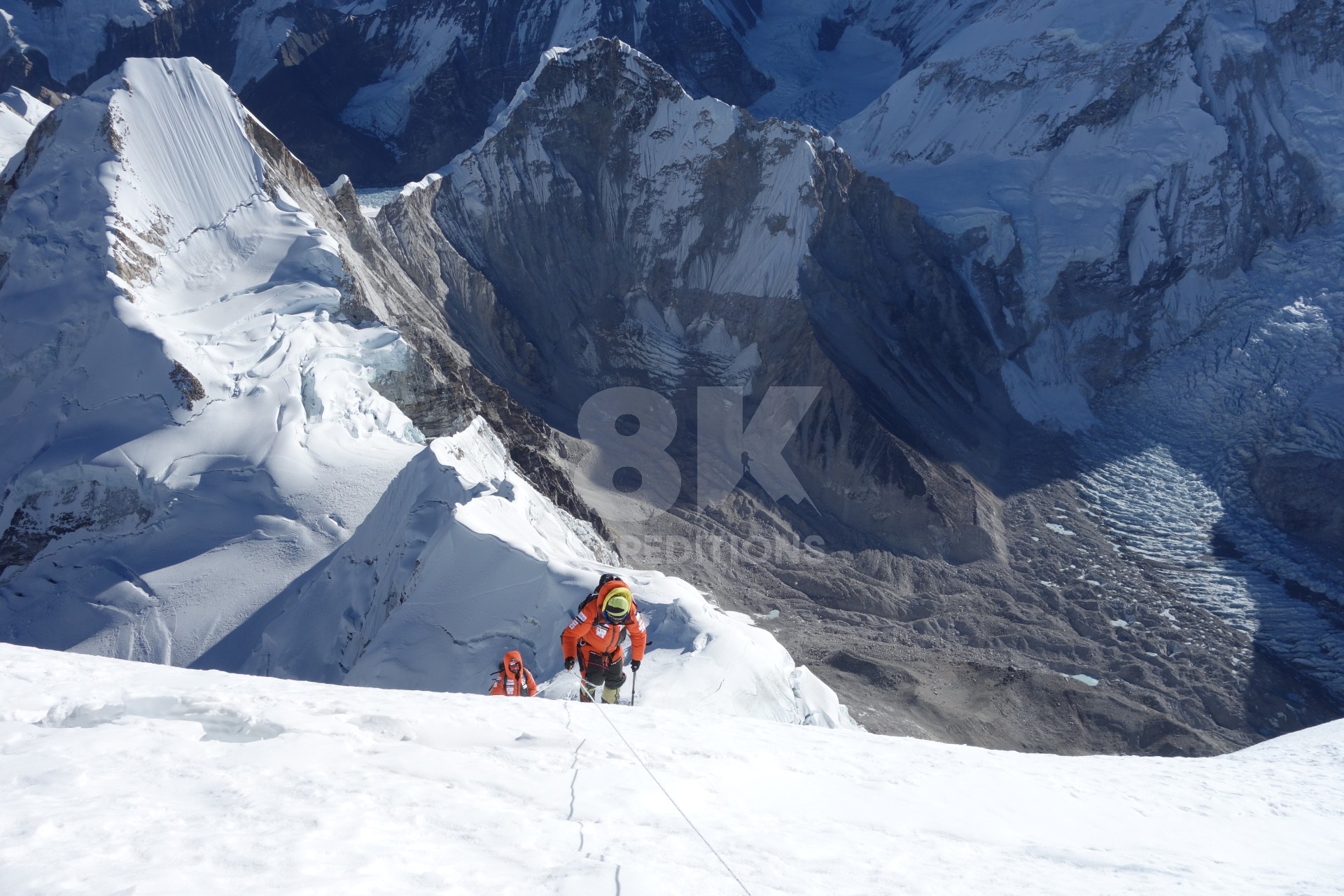
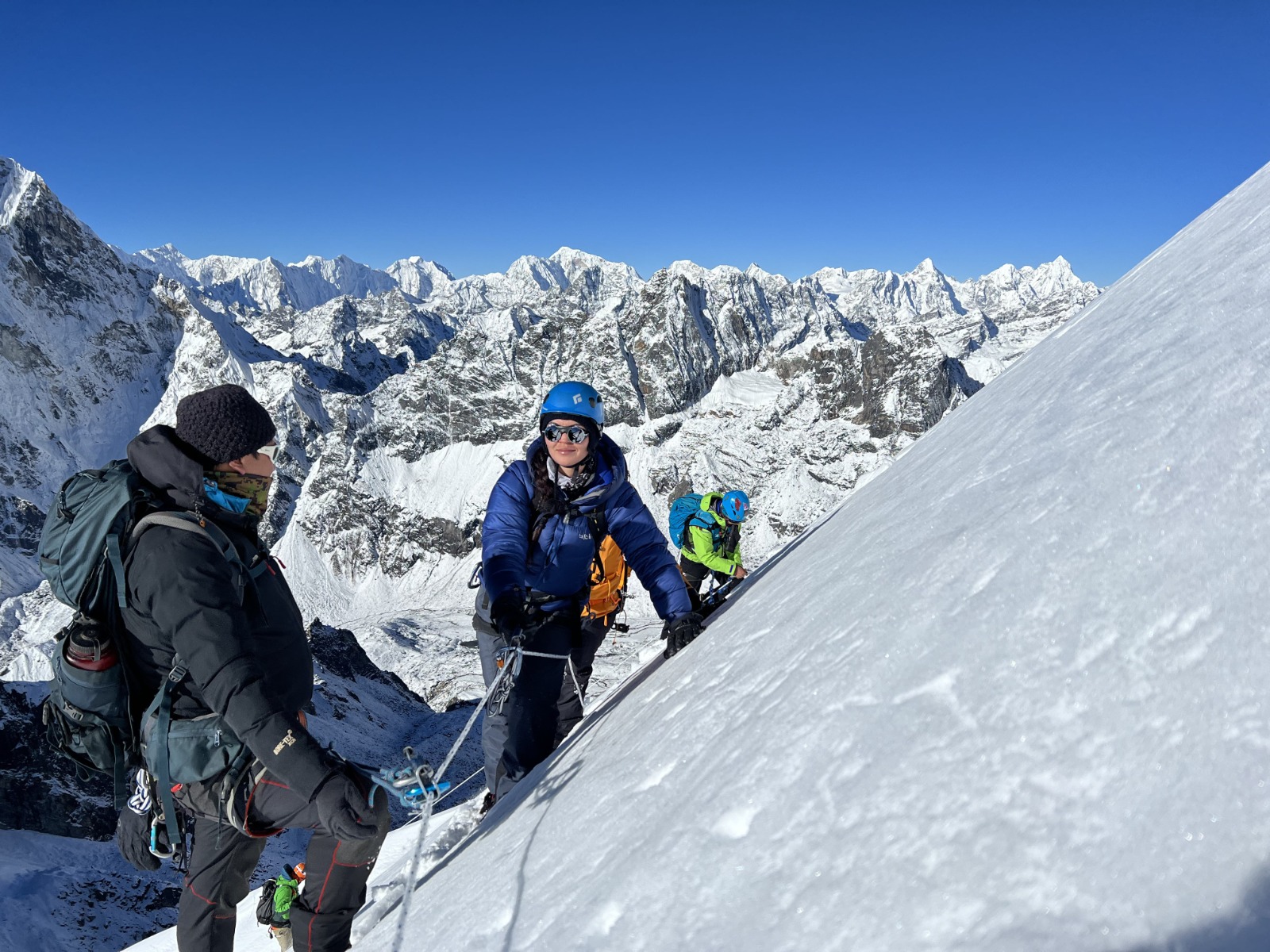
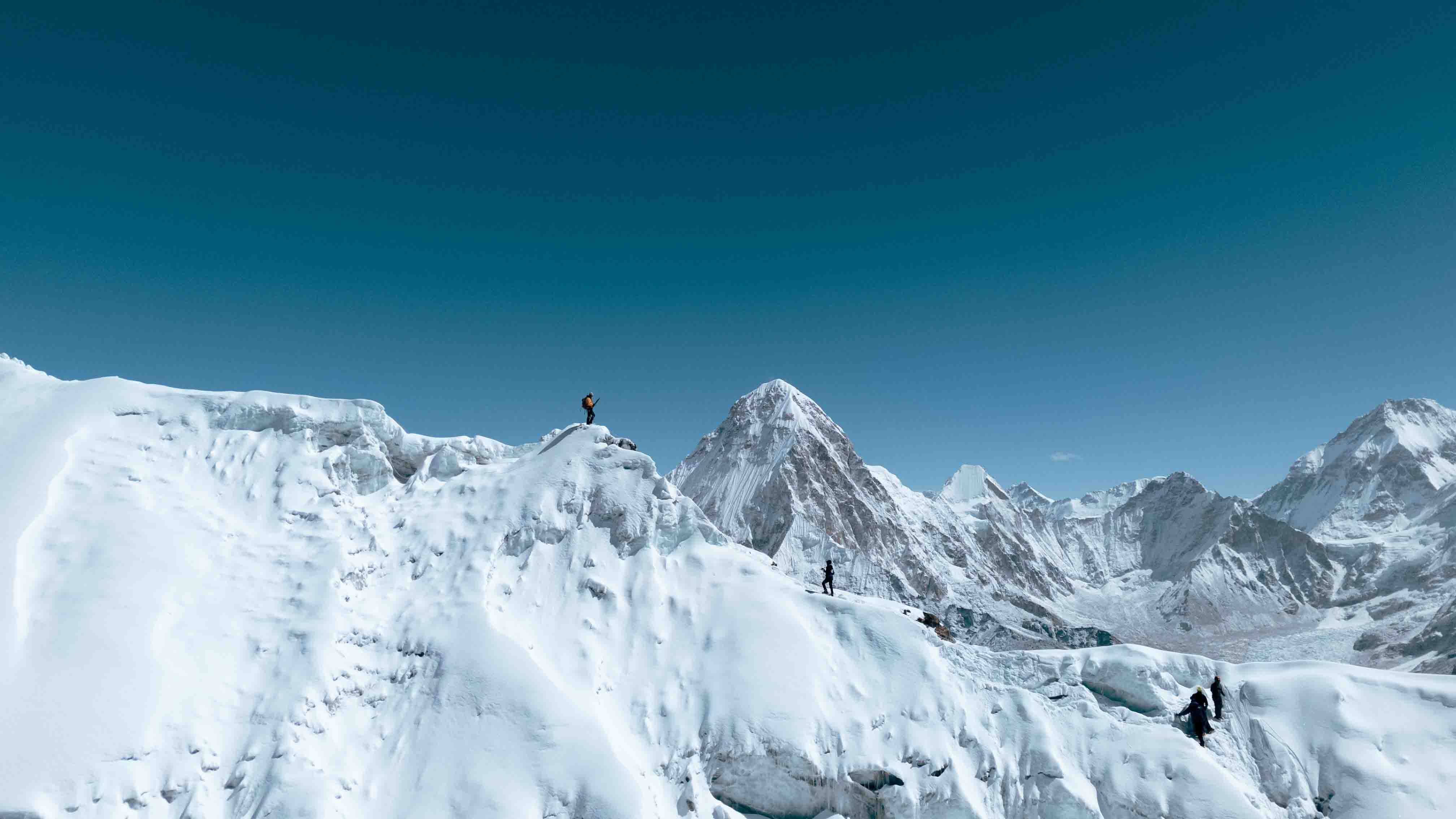
The Triple 6000-Metre Peak Expedition is graded Hard and requires good physical fitness, endurance and preparation. Mera Peak involves high-altitude trekking and glacier travel, while Island Peak and Lobuche East involve more technical climbing, including rope work, steep snow and ice terrain. Previous mountaineering experience is beneficial, although climbers with strong trekking experience and proper training can prepare for the expedition with professional guidance.
Which is the highest peak in the Triple 6000-Metre Expedition?
Mera Peak at 6,476 metres (21,247 feet) is the highest of the three peaks. It is also one of the highest trekking peaks in Nepal. The expedition then continues toward Island Peak at 6,189 metres and Lobuche East at 6,119 metres.
Is three peak expedition suitable for beginners?
The expedition is not a typical beginner trekking trip because all three summits exceed 6,000 metres. However, trekkers who have good endurance, previous high-altitude trekking experience and adequate mountaineering preparation may undertake the expedition with professional climbing support. Training before departure is strongly recommended, particularly for altitude management, crampon use, rope techniques and steep snow or ice terrain.
How many days does the Triple 6000-Metre Peak Expedition take?
The triple 6000m peak expedition takes 26 days, including arrival in Kathmandu, preparation and gear checks, trekking to the Mera region, the three peak ascents, return to Lukla, flight back to Kathmandu and departure.
How much does it cost to climb triple 6000m peak expedition?
The total cost depends on the departure season, group size, services and package inclusions. The best way to confirm the current Triple 6000-Metre Peak Expedition is to contact 8K Expeditions directly for the latest departure-specific price.
Do climber need previous mountaineering experience for the Triple 6000m Peak Expedition?
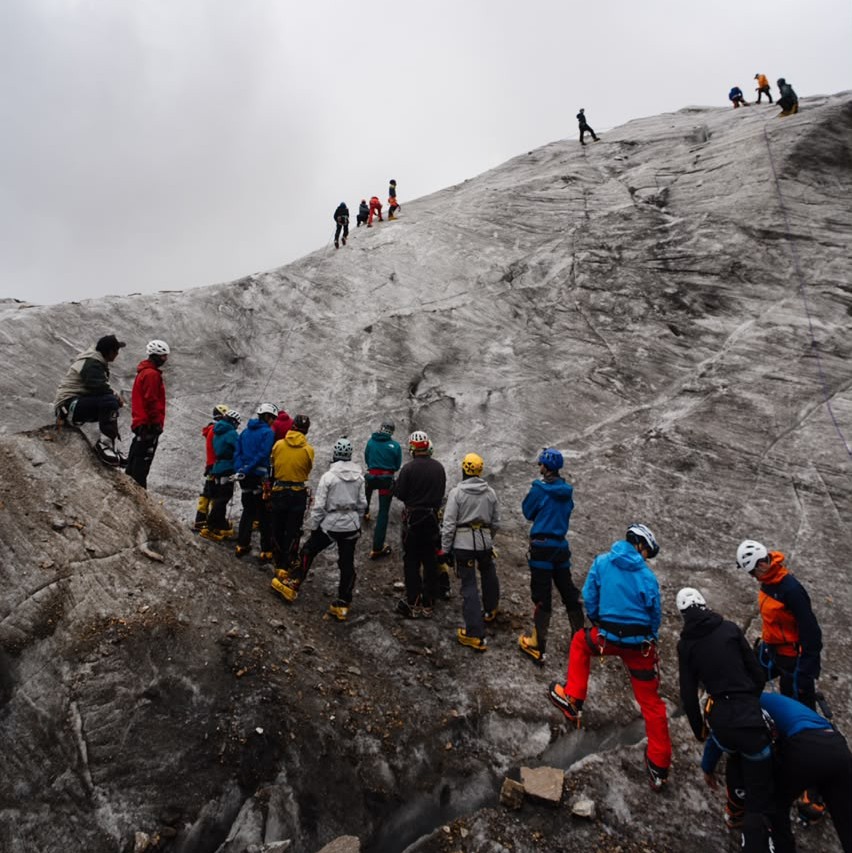
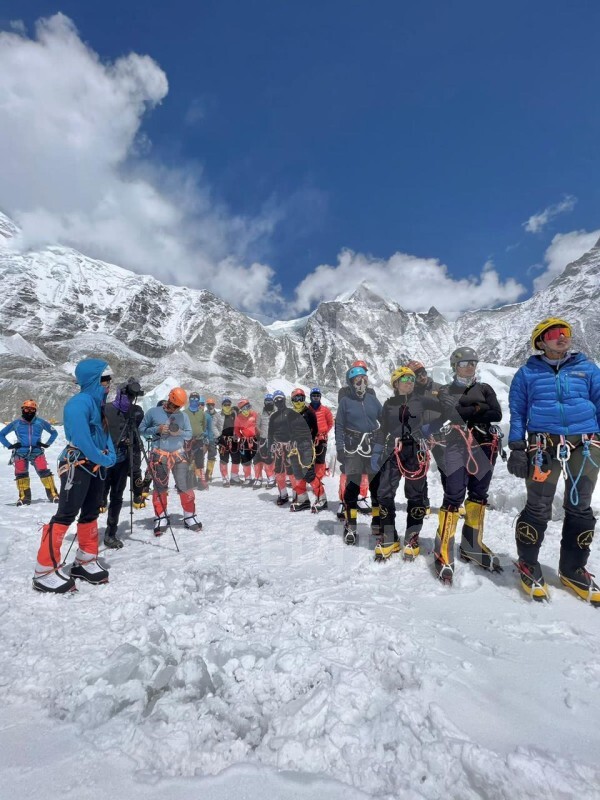
Previous mountaineering experience is highly beneficial. Climbers should be comfortable with long trekking days, high-altitude environments and basic climbing equipment. The expedition also includes climbing training and acclimatization before the major summit attempts, helping participants prepare for the technical and high-altitude sections of the route.
What kind of training is required for Mera Peak, Island Peak and Lobuche East climbing?
Preparation should focus on:
- Cardiovascular endurance
- Long-distance hiking
- Uphill and downhill training
- Strength and core conditioning
- Altitude preparation
- Crampon and ice-axe skills
- Rope and climbing techniques
- Carrying a backpack for extended periods
Because the expedition includes three 6,000-metre summits, consistent physical preparation before arriving in Nepal is important.
Do climber need climbing equipment for the Triple 6000-Metre Peak Expedition?
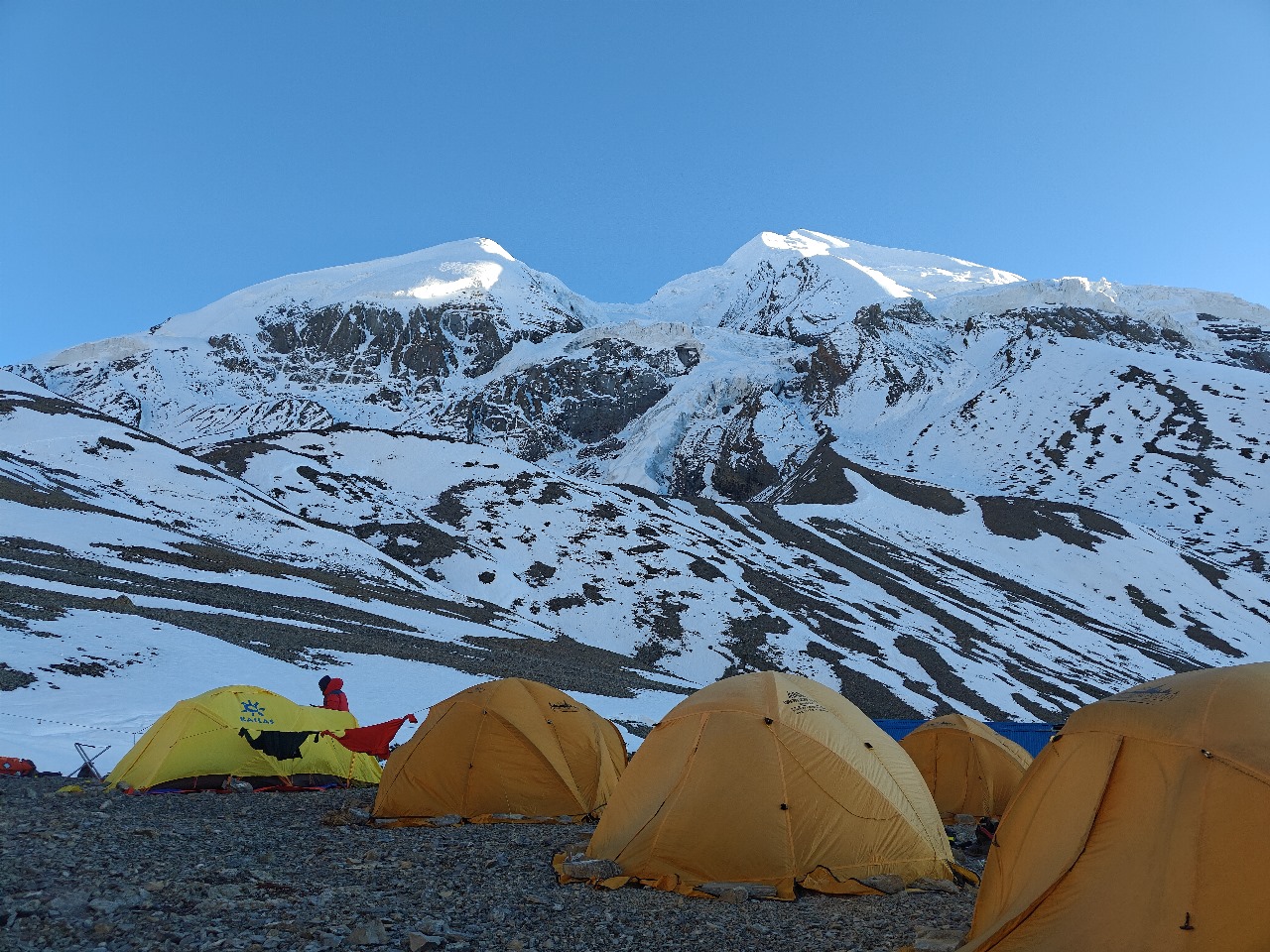
Yes, Climbers need appropriate mountaineering equipment for high-altitude and glacier climbing. Depending on the equipment provided by the operator, personal gear may include mountaineering boots, crampons, harness, helmet, ice axe, climbing clothing, gloves and other high-altitude equipment. 8K Expeditions provides specified group and high-camp equipment, while personal climbing gear is listed among the exclusions.
Is a climbing guide provided for the Mera, Island Peak and Lobuche East expedition?
Yes, 8K Expeditions package provides professional trekking and climbing support, including a certified trek guide, assistant guide and climbing guide support during the peak-climbing sections. The listed climbing support is based on a 1 member : 1 guide arrangement.
Does the permits cost included in the packagte?
Yes, the triple peak climbing permits is included in the packages.
Does the expedition cross Amphu Lapcha Pass?
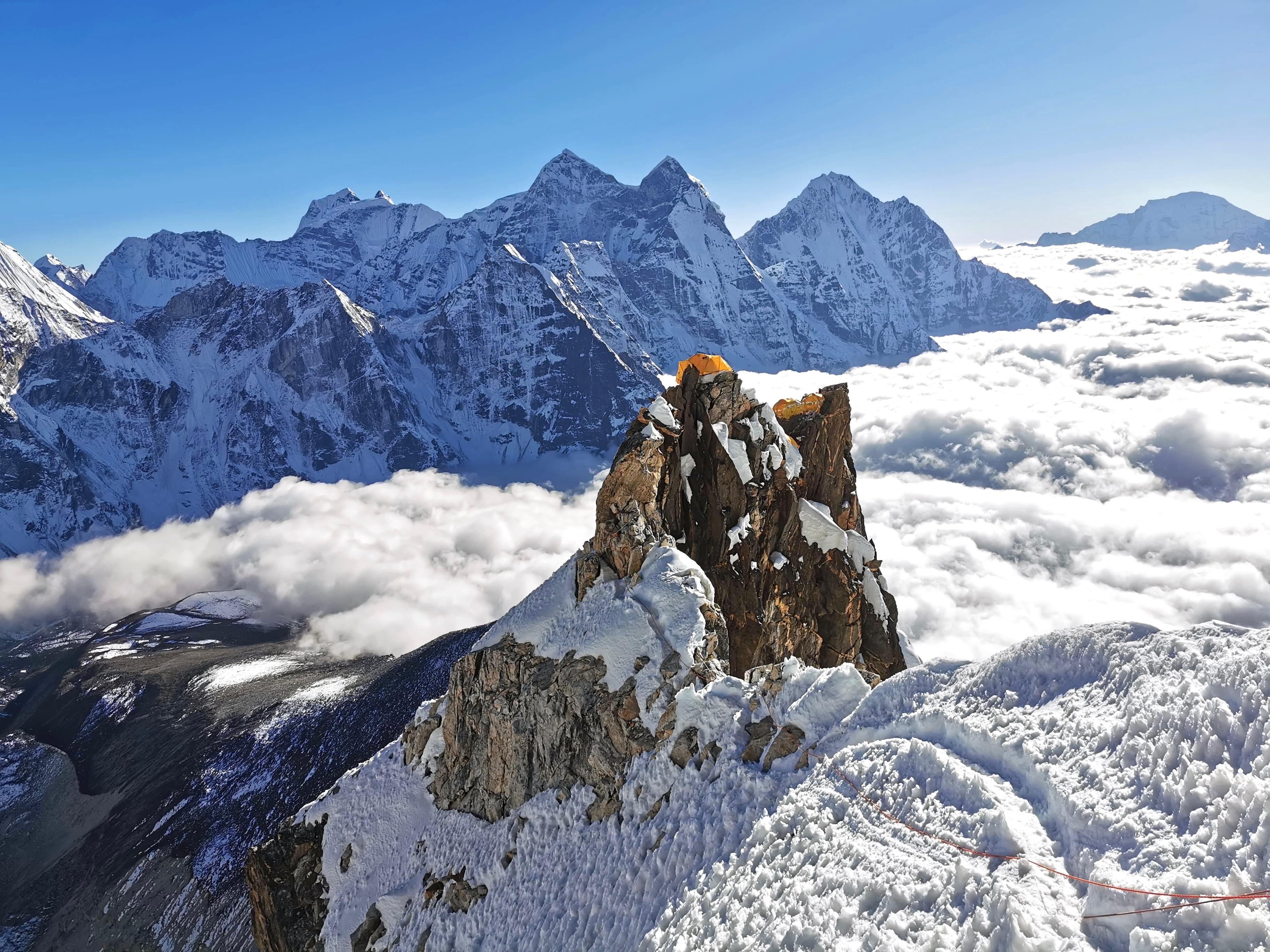
Yes, The current itinerary crosses Amphu Lapcha Pass at 5,845 metres after the Mera Peak section and before continuing toward Chhukung and Island Peak. This is one of the most demanding sections of the expedition and contributes significantly to the overall difficulty of the route.
What makes the Triple 6000-Metre Peak Expedition different from climbing one peak?
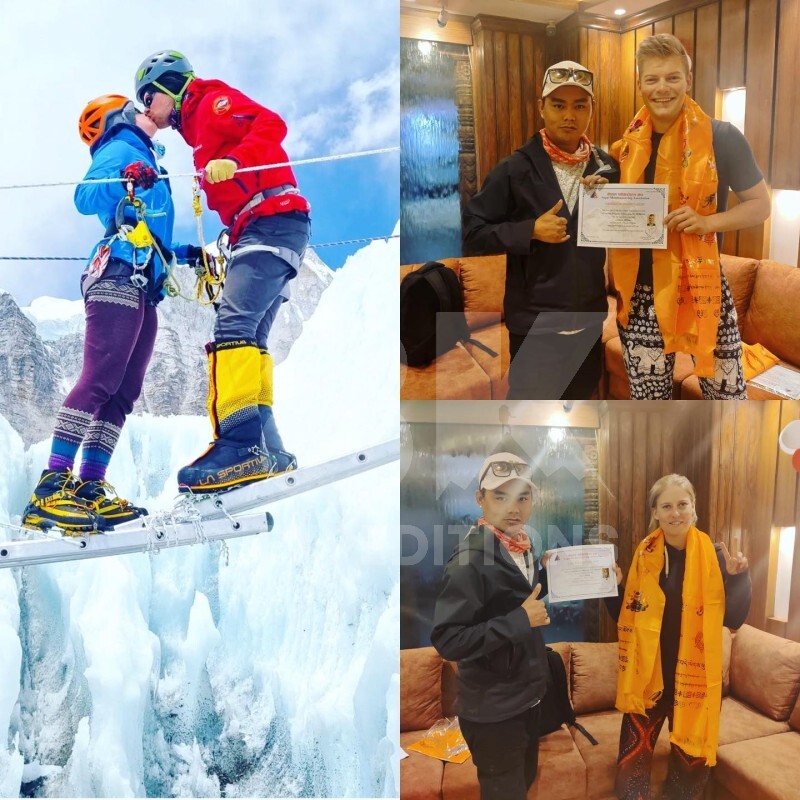
Climbing three 6,000-metre peaks in one expedition provides a broader mountaineering experience. The route combines high-altitude trekking, glacier travel, technical climbing, acclimatization, the Amphu Lapcha crossing and three separate summit objectives. It is particularly suitable for climbers who want to build experience before progressing toward more demanding Himalayan peaks.
Can climbers climb Island Peak and Lobuche East without climbing Mera Peak?
Yes, Mera Peak, Island Peak and Lobuche East can also be climbed as separate expeditions. However, the Triple 6000-Metre Peak Expedition is designed specifically for climbers who want to complete all three peaks within one itinerary.
Is the Triple 6000-Metre Peak Expedition available in 2027?
Yes, 8K Expeditions has announced Spring and Autumn 2027 booking availability for the Triple 6000-Metre Peak Expedition. The current package page lists a Spring 2027 departure beginning 24 March 2027, while the newer 2027 announcement provides additional fixed departure dates.
What happens if the Lukla flight is delayed or cancelled?
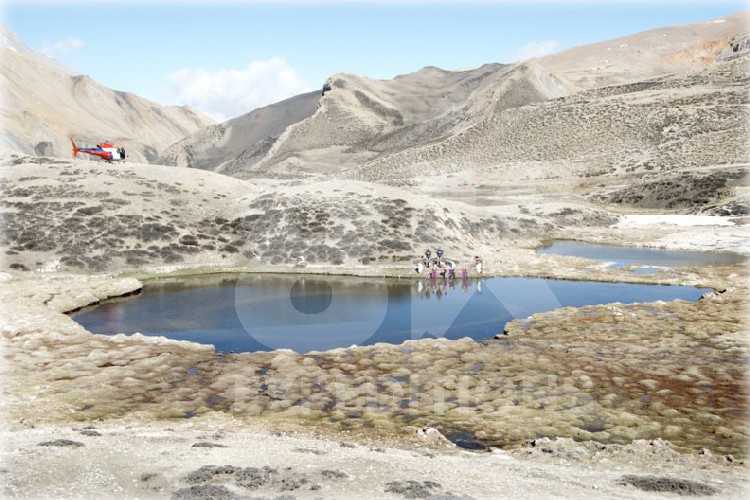
Lukla flights are highly dependent on mountain weather. If a domestic flight is delayed or cancelled, additional accommodation, meals and transportation costs may apply. Helicopter transportation can be arranged as an alternative when available, but additional costs are the client's responsibility.
Do climbers need travel and rescue insurance for the Triple 6000-Metre Peak Expedition?
Yes, the medical and emergency rescue insurance is mandatory with minimum coverage of USD 15,000. Climbers should make sure their insurance covers high-altitude mountaineering and emergency evacuation appropriate to the expedition.
Who should consider the Triple 6000-Metre Peak Expedition?
The expedition is suitable for physically fit trekkers, aspiring mountaineers and experienced climbers who want to attempt multiple 6,000-metre Himalayan peaks in one expedition. Because the itinerary is graded Hard, participants should be prepared for prolonged trekking, significant altitude gain, glacier travel, technical climbing and variable Himalayan weather.
What can I expect from the Mera, Island Peak and Lobuche East climbing experience?
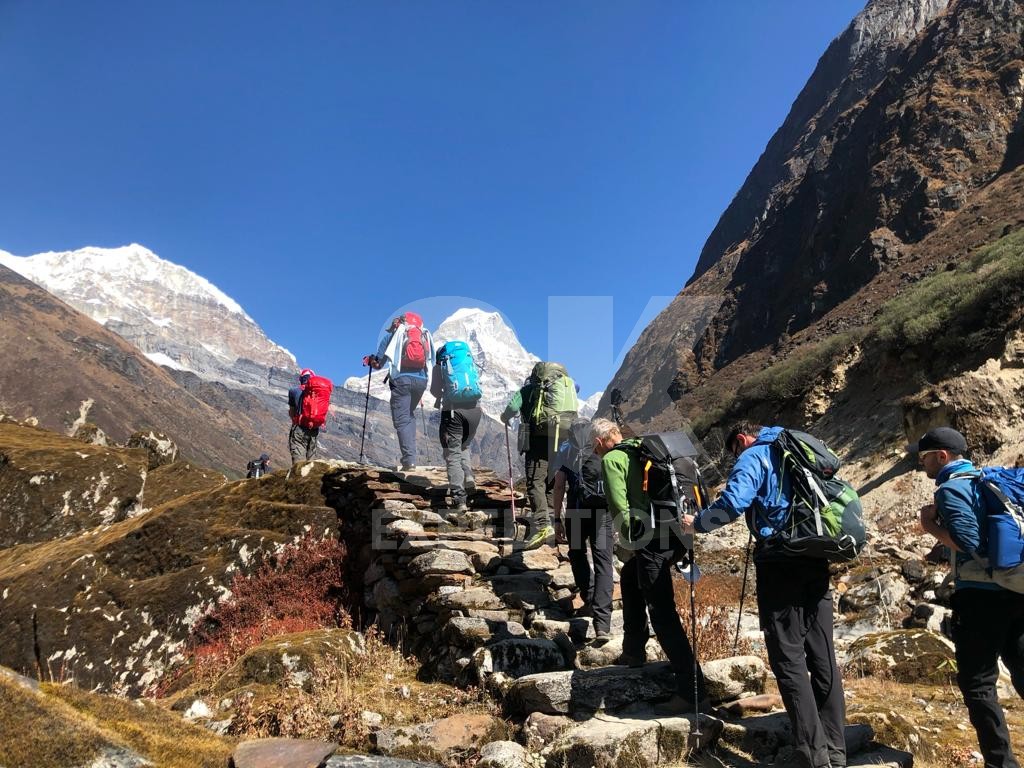
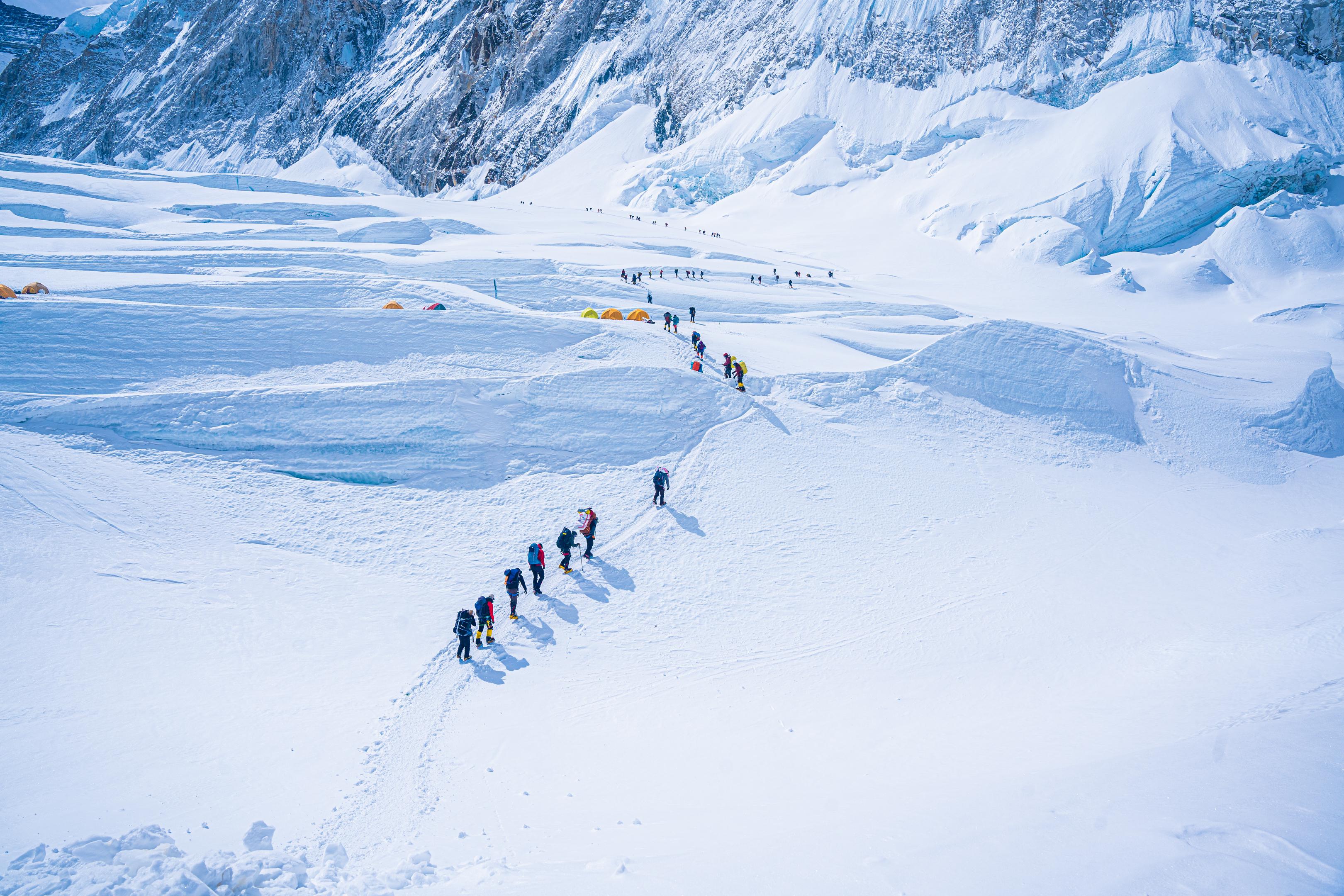
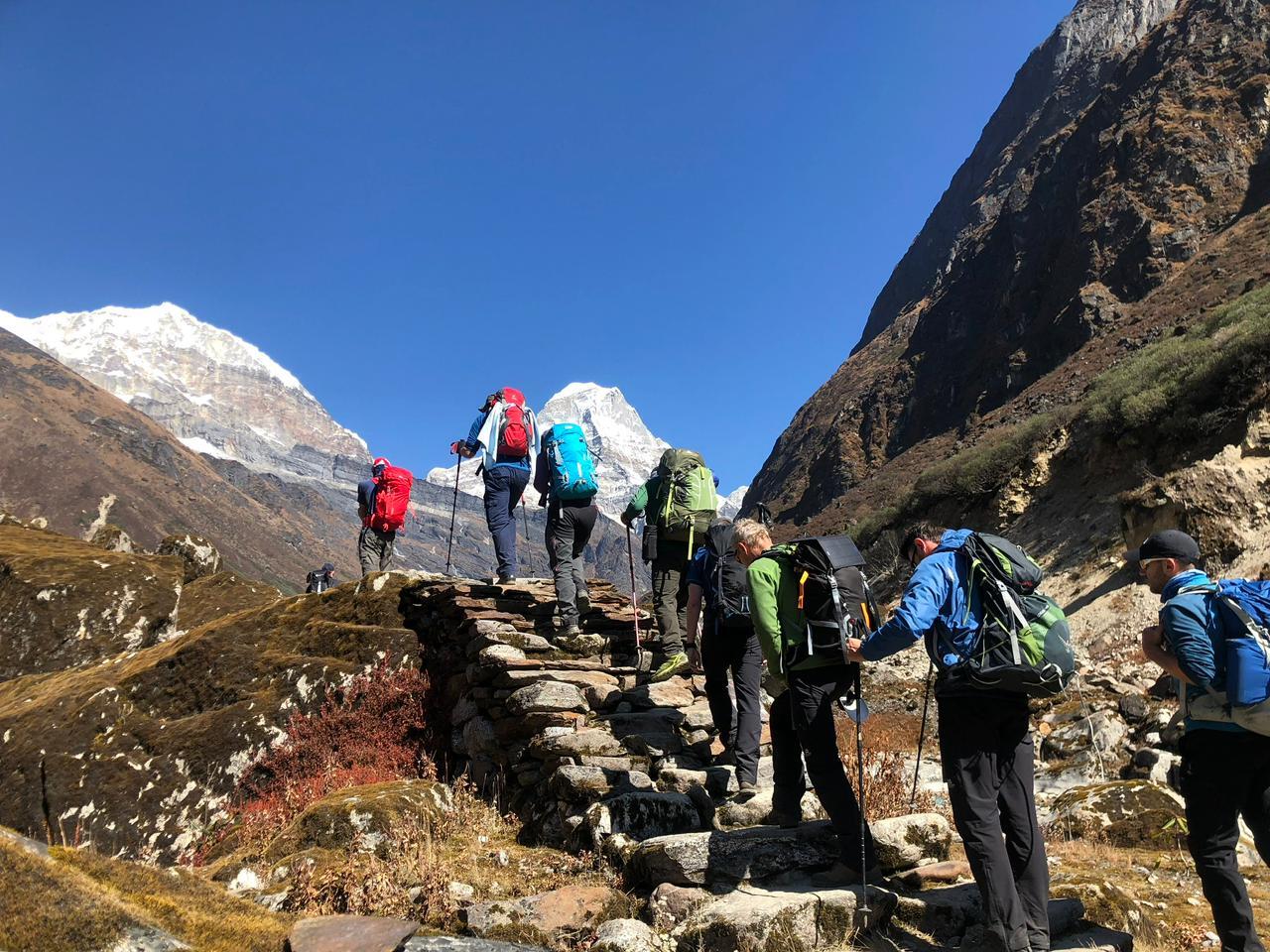
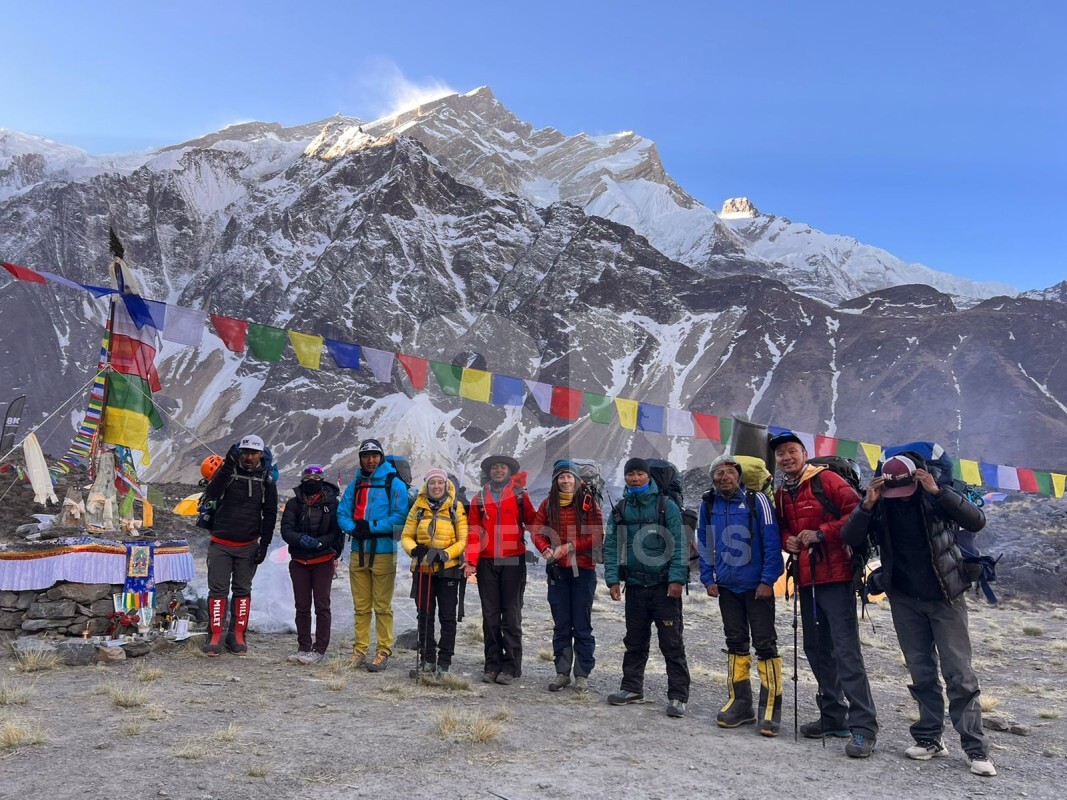
You can expect a combination of remote Himalayan trekking, Sherpa villages, high-altitude landscapes, glaciers, technical climbing sections and three major summit objectives. The expedition progresses from the Hinku Valley and Mera Peak toward the Khumbu region, crossing Amphu Lapcha Pass and continuing to Island Peak and Lobuche East.
Bookings Now Open for the Triple 6000-Metre Peak Expedition 2027 — Mera Peak, Island Peak & Lobuche East.
Plan Your Expedition With Us and Send Your Inquiry via :