K2 Base Camp Trek : A Complete Guide to Cost, Itinerary, Difficulty, Route & Booking
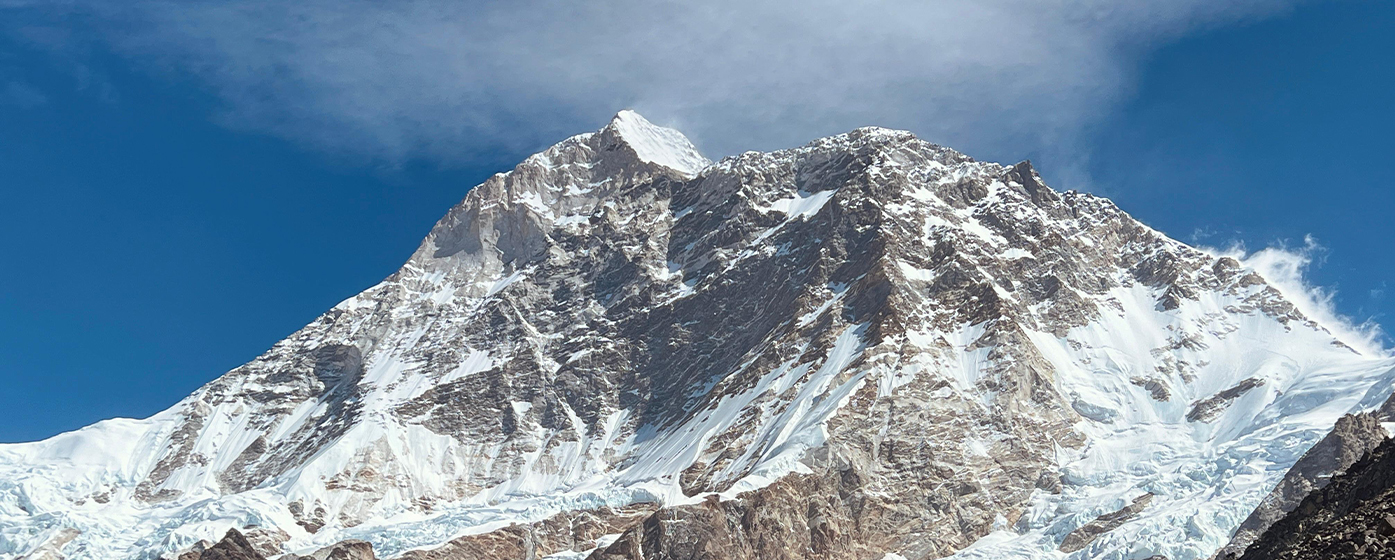
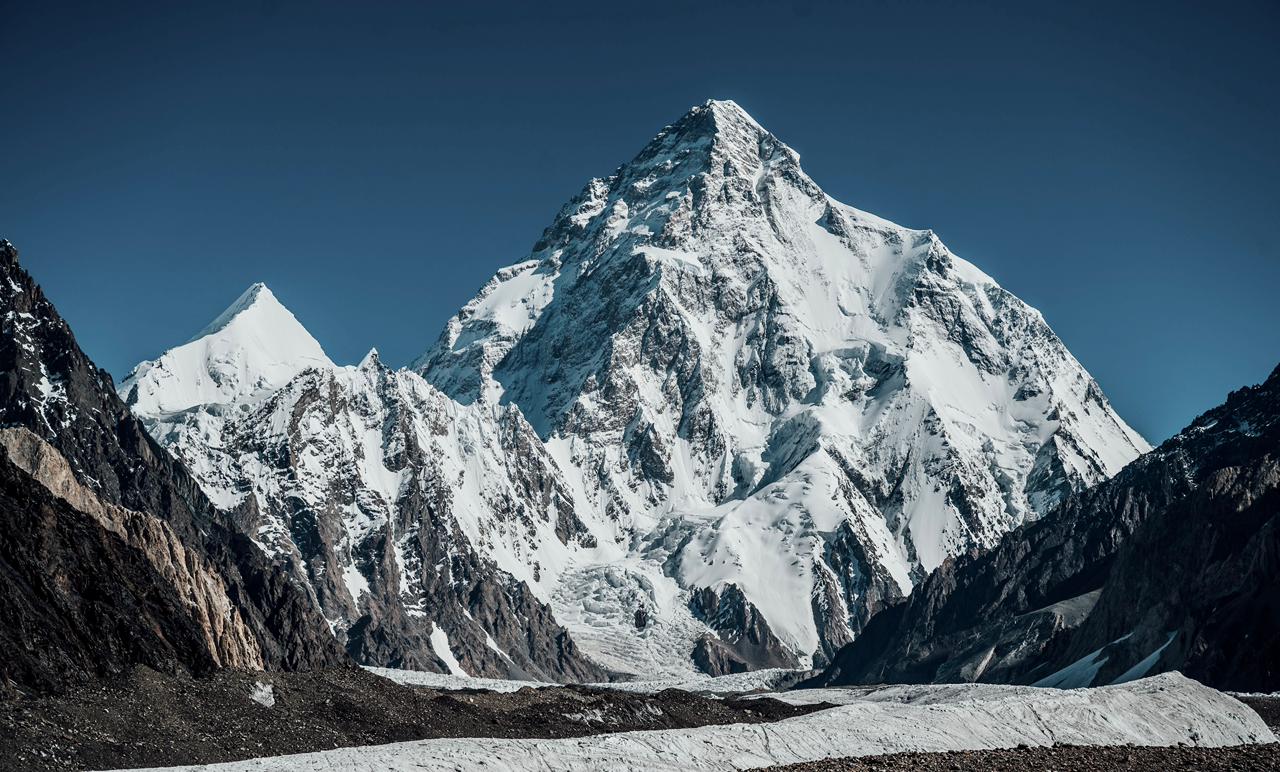
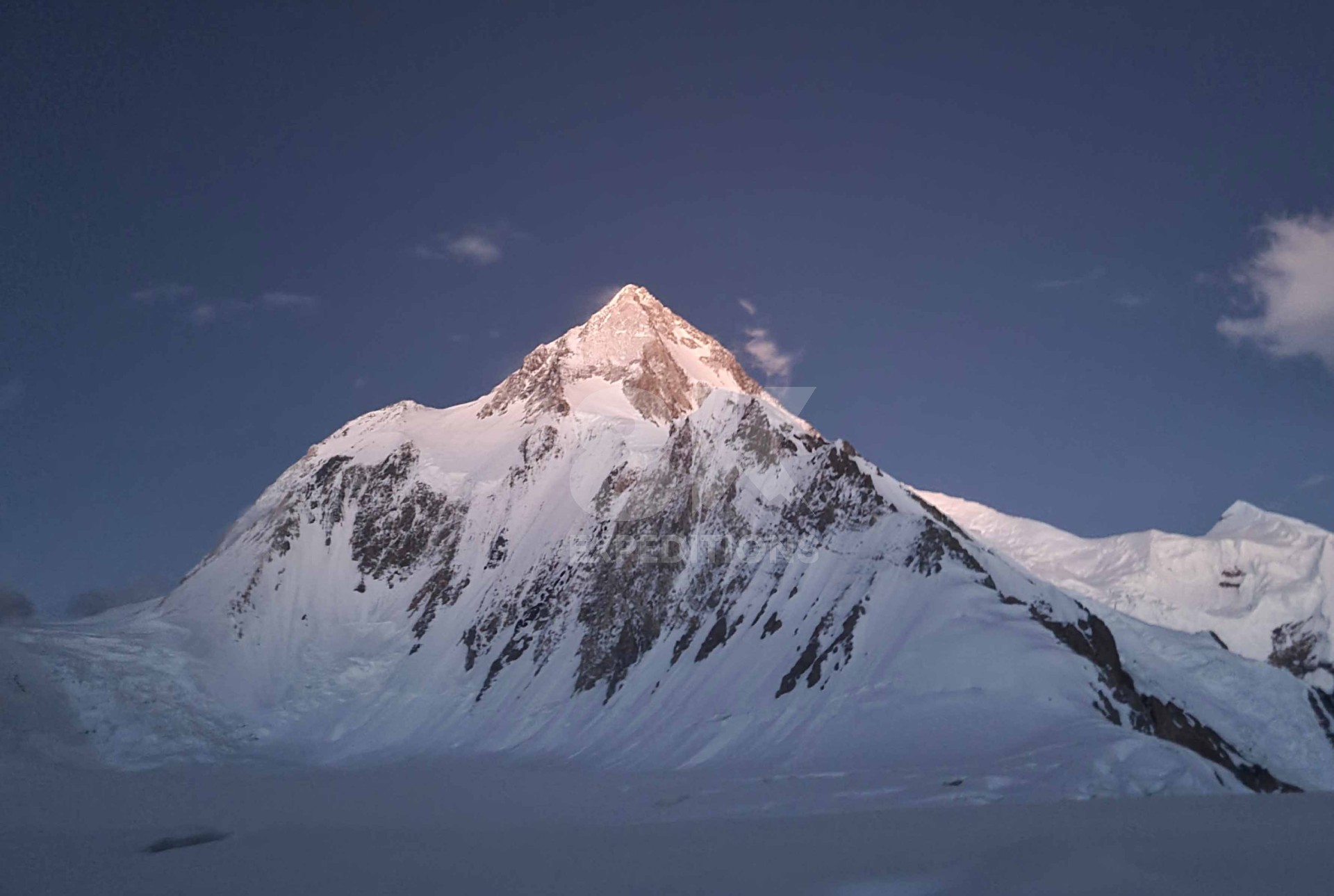
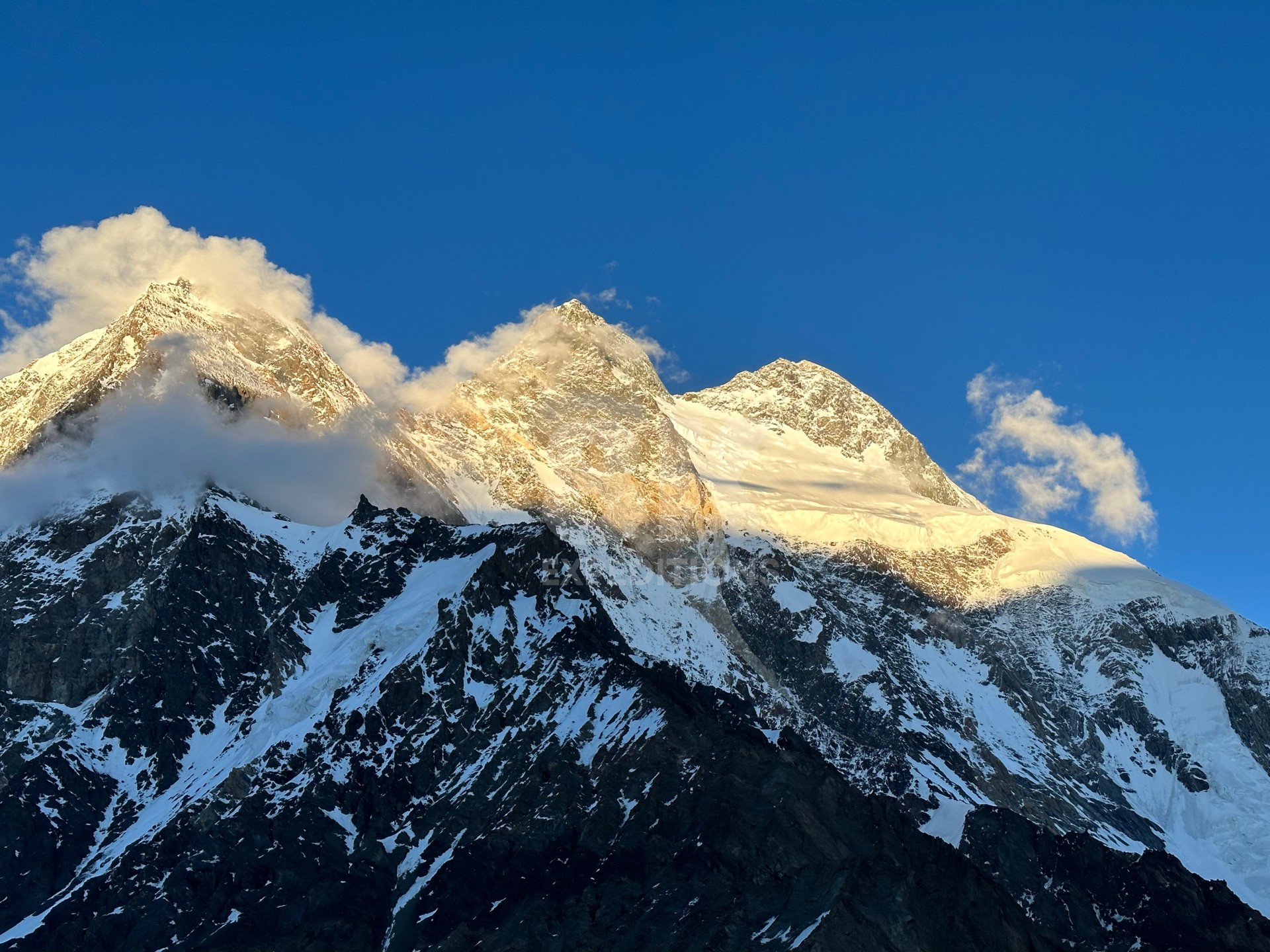
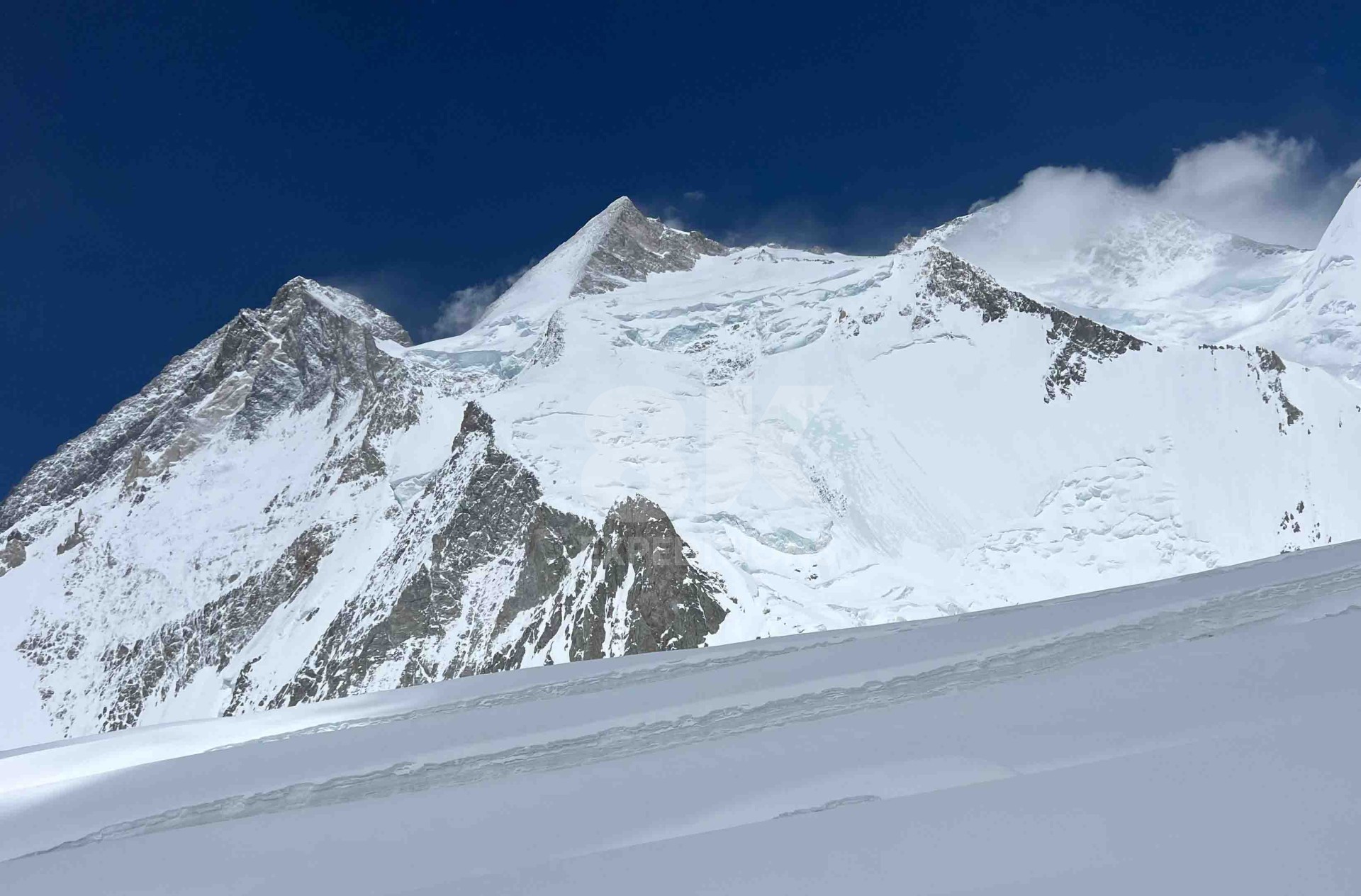
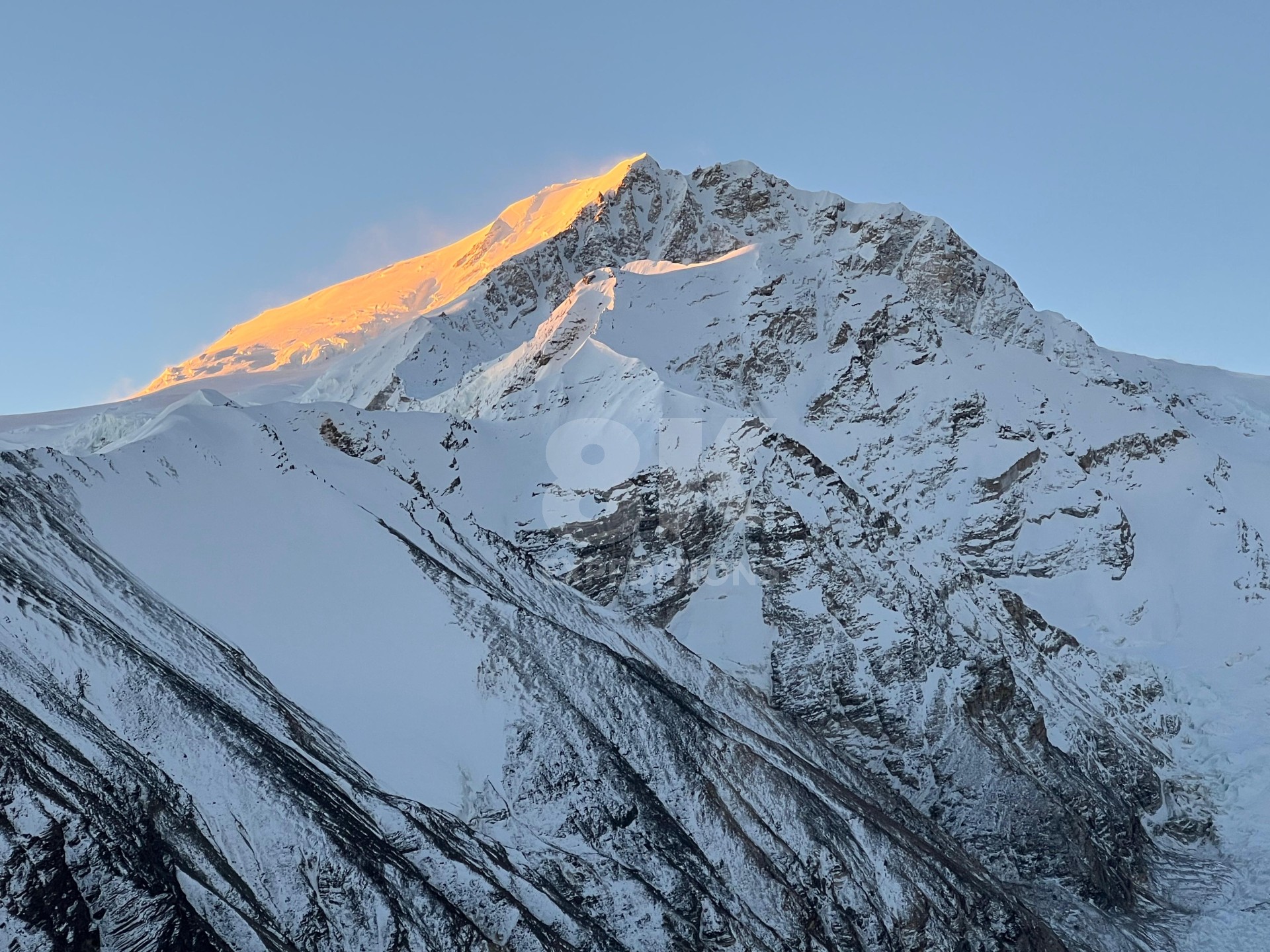
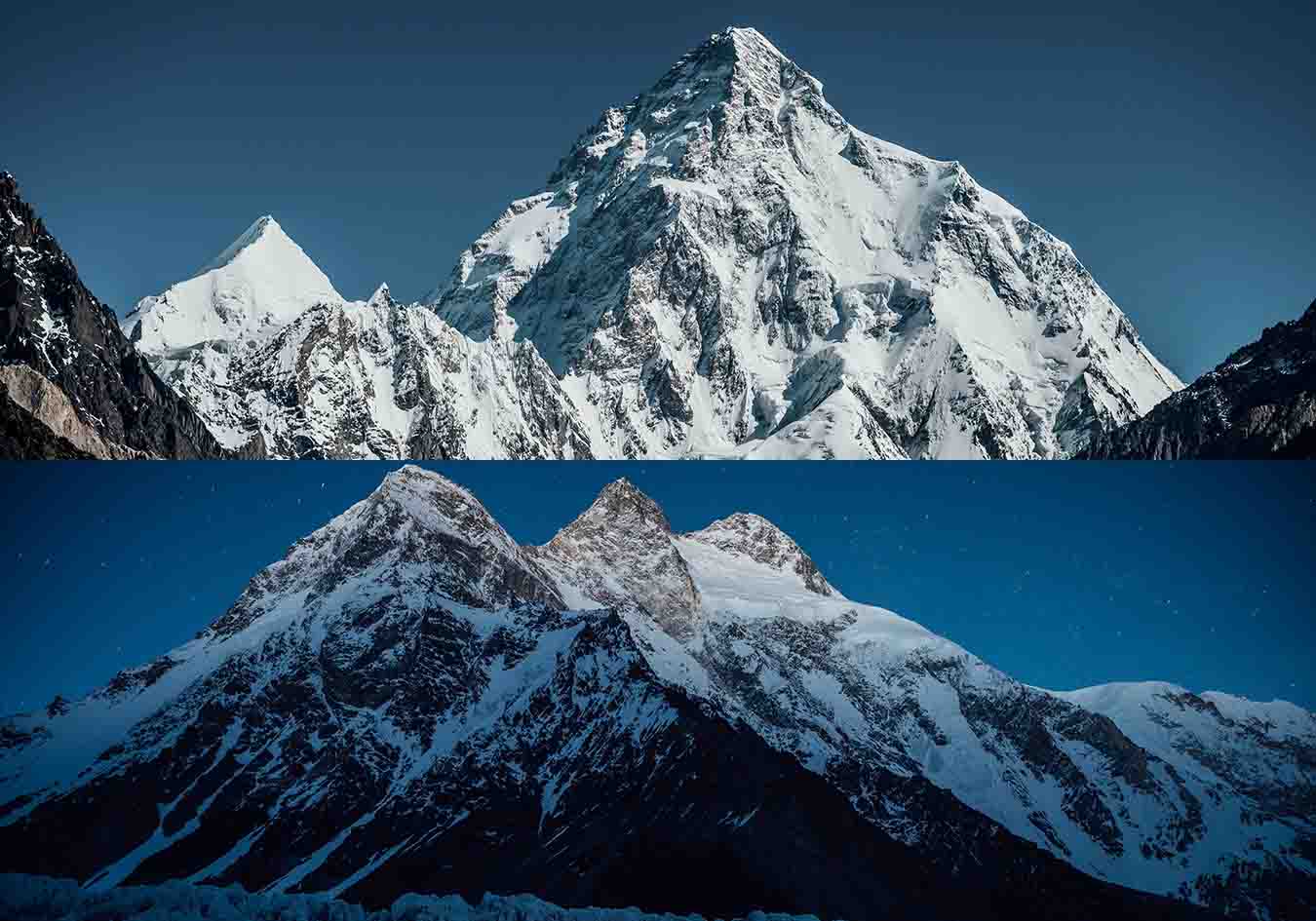
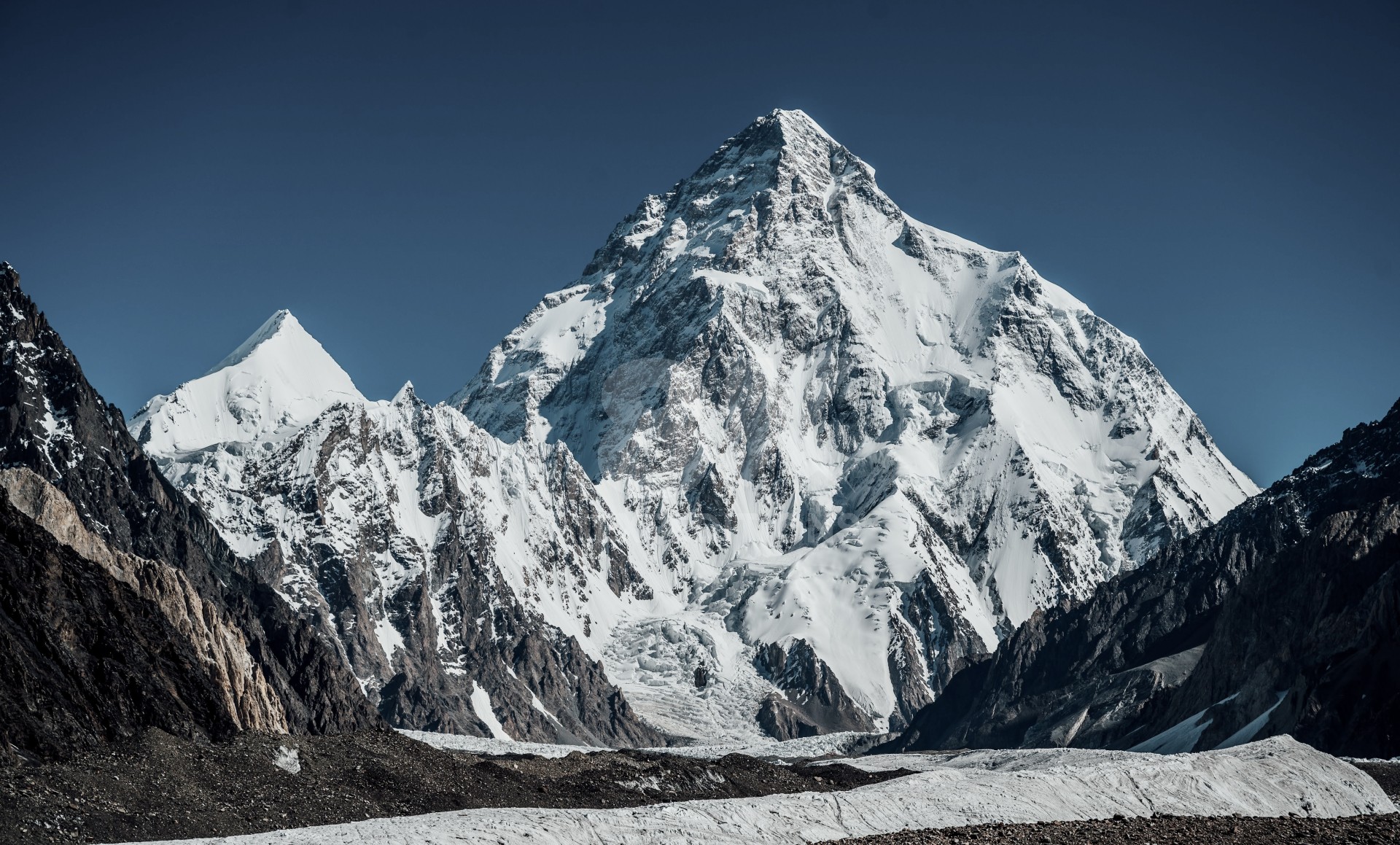
Standing beneath K2, the world's second-highest mountain at 8,611 meters, is a dream for trekkers, adventurers and mountain enthusiasts from around the world. Unlike a technical K2 climbing expedition, the K2 Base Camp Trek offers the opportunity to journey deep into Pakistan's legendary Karakoram and experience some of the most spectacular mountain landscapes on Earth without attempting to climb K2 itself. The journey takes you through Askole, Baltoro Glacier, Concordia and K2 Base Camp, surrounded by some of the world's highest and most dramatic peaks.
If you are planning to undertake this extraordinary adventure in 2027, this comprehensive guide covers everything you need to know from K2 Base Camp Trek cost and itinerary to difficulty, altitude, permits, accommodation, safety, equipment and booking.
What Is the K2 Base Camp Trek?
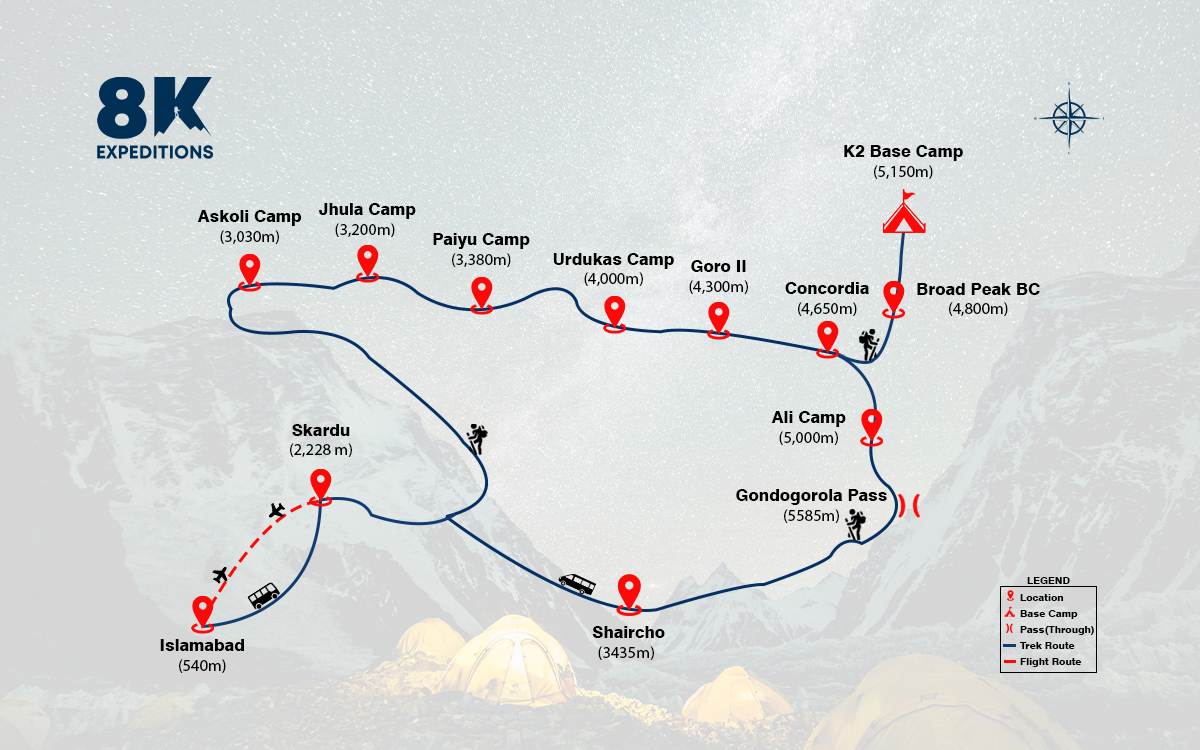
The K2 Base Camp Trek is a high-altitude trekking adventure through the heart of Pakistan's Karakoram range. The classic approach begins in Askole and follows the spectacular Baltoro Glacier toward Concordia, one of the most famous mountain viewpoints in the world. From Concordia, the route continues toward K2 Base Camp, offering close views of K2 and several other enormous Karakoram peaks.
Unlike the K2 Expedition, the trek does not involve climbing K2. The objective is to reach the mountain's base camp and experience the extraordinary landscape surrounding it.
K2 Base Camp Route Map
Why Trek to K2 Base Camp?
K2 Base Camp is more than simply another trekking destination. The journey takes you into one of the world's most spectacular high-mountain environments.
How Difficult Is the K2 Base Camp Trek?
The K2 Base Camp Trek is a challenging high-altitude trek. You do not need technical mountaineering skills for the standard trekking route but you do need good physical fitness, endurance, preparation and mental resilience.
The difficulty may arise from several factors:
- High Altitude : The trek reaches elevations of approximately 5,150 meters at K2 Base Camp. Acclimatization is therefore an essential part of the itinerary. Long Trekking Days Depending on the section of the route, trekkers may spend approximately 5–8 hours or more walking each day.
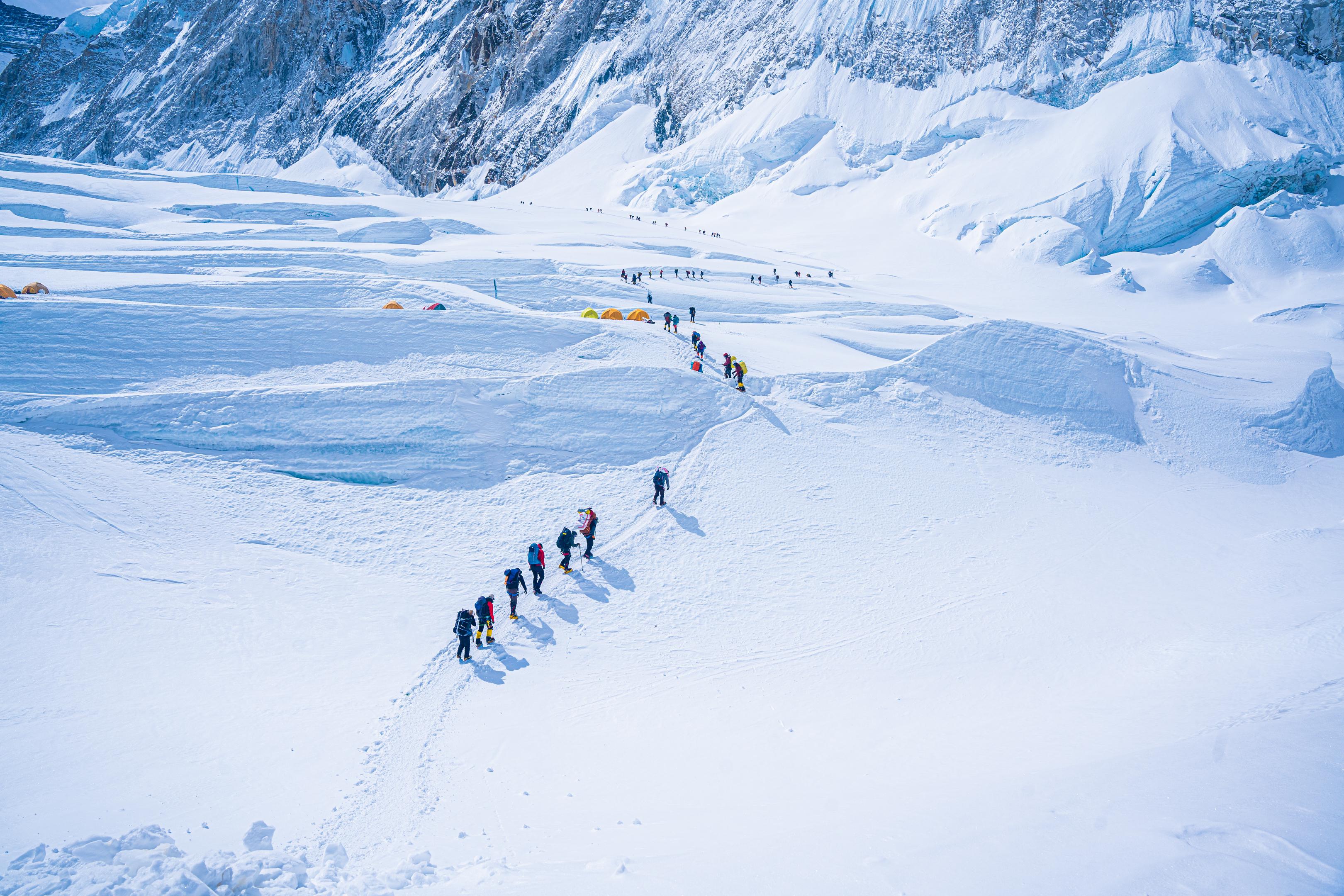
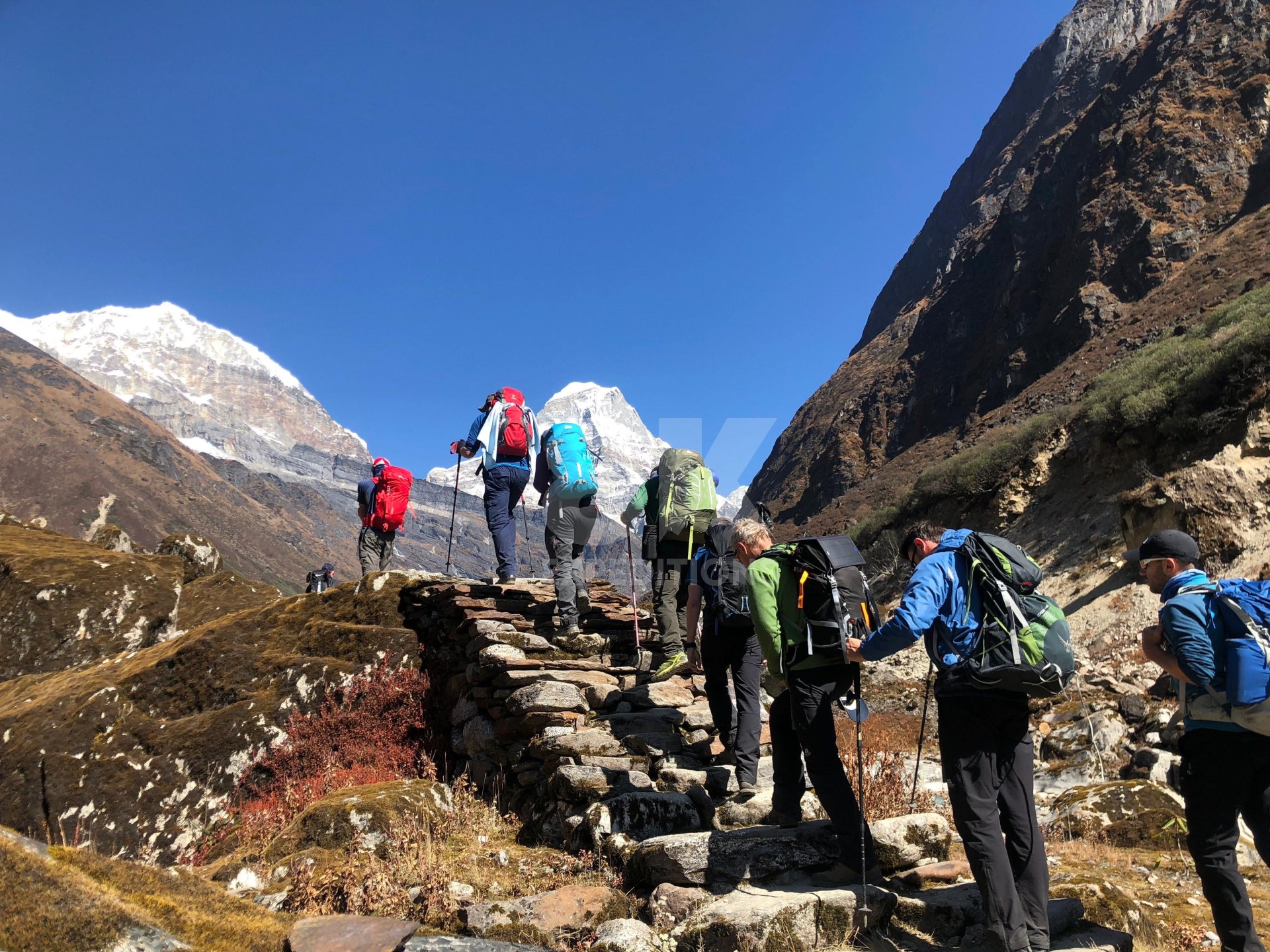
- Rugged Terrain : The Baltoro region involves rocky trails, uneven surfaces, glacier sections, moraine, and changing mountain conditions.
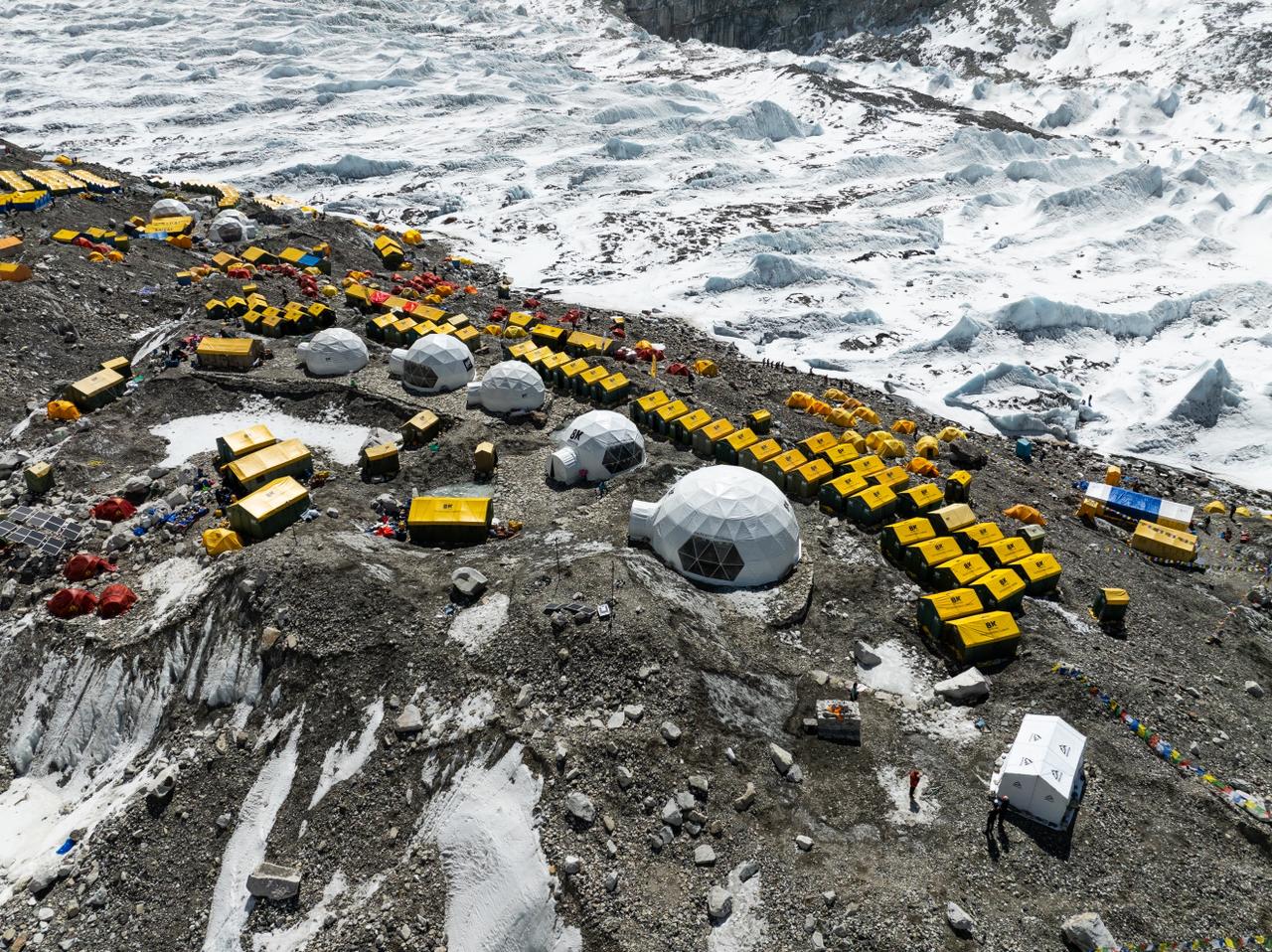
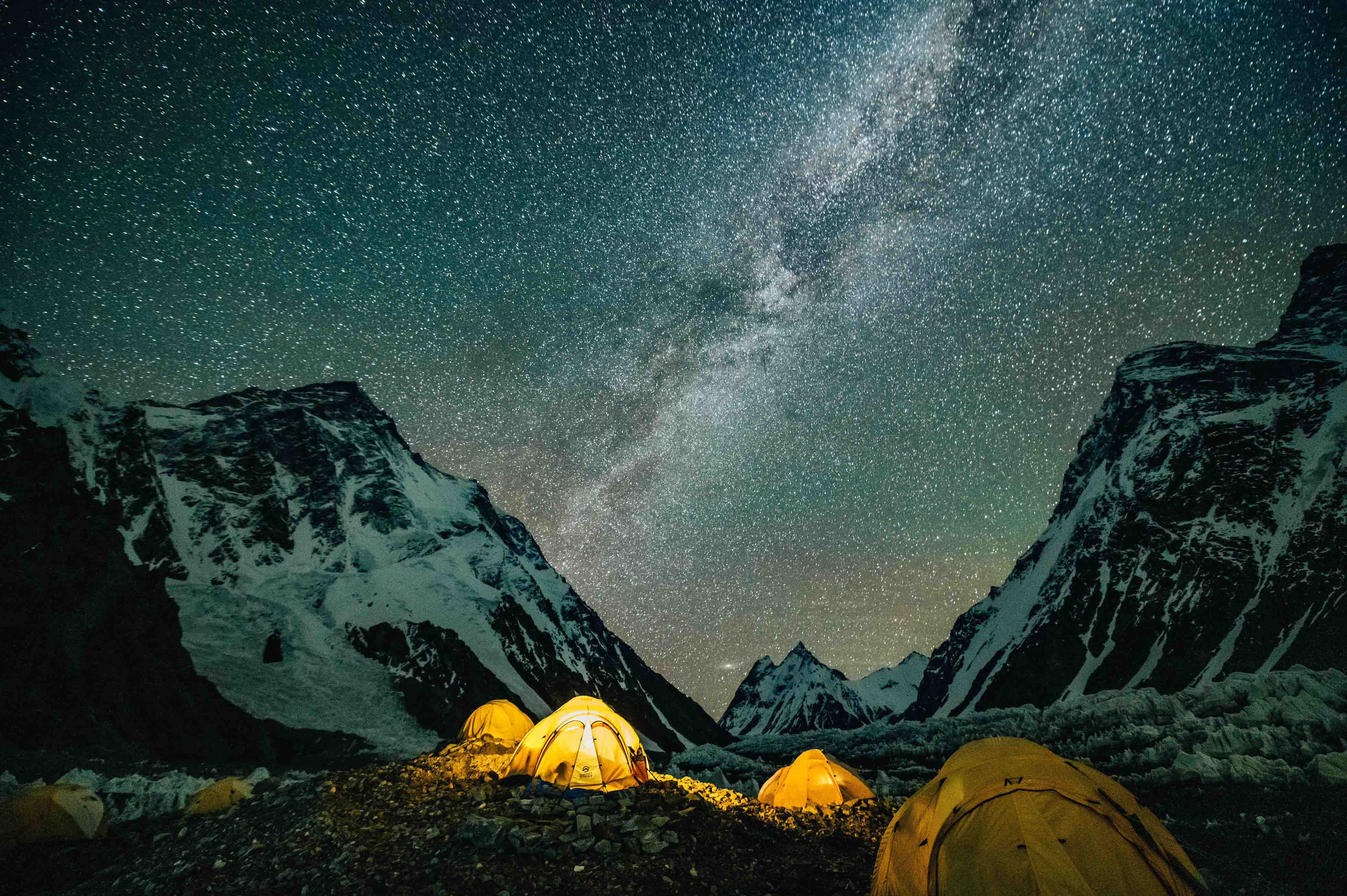
- Remote Environment : Unlike more developed trekking destinations, the K2 Base Camp route has limited infrastructure. Once you enter the Baltoro region, facilities become basic and camping becomes the standard accommodation.
What Is the K2 Base Camp Trek Cost in 2027?
The K2 Base Camp Trek cost depends on several factors, including duration, group size, private or group departure, hotel category, domestic transportation, trekking permits, guide and porter services, camping arrangements, meals, logistics, emergency support and contingency arrangements. Premium private departures generally have a different price structure from standard group departures.
What Can Be Included K2 Base Camp Trek?
A comprehensive K2 Base Camp package may include airport transfers, Islamabad accommodation, Skardu accommodation, domestic transportation, trekking permits & applicable fees, professional trekking guides, porters, camping equipment, meals during the trek, kitchen & camp support, trekking logistics, local transportation and emergency logistical support.
What May Not Be Included in K2 Base Camp Trek?
Depending on the package, the following may be excluded international airfare, Pakistan visa fees, personal insurance, evacuation expenses, personal equipment, personal expenses, tips, extra accommodation, and expenses caused by unforeseen delays. Note: Always review the operator's detailed inclusions and exclusions before making a booking.
What is the best time for K2 Base Camp Trek?
The principal trekking season for the K2 region is generally June to September with July and August being core months of the trekking season. Weather and trail conditions can vary considerably, however. Booking with sufficient flexibility is particularly useful because transportation and trekking schedules can be affected by mountain weather.
Do You Need Previous Mountaineering Experience?
No technical mountaineering experience is required for the standard K2 Base Camp Trek. However, previous experience with long-distance trekking can be extremely useful. You should be prepared for consecutive days of walking, high altitude, cold conditions, camping, limited facilities, rugged terrain and long trekking days.
Note: If you are new to high-altitude trekking, preparation should begin several months before departure.
How to Prepare for the K2 Base Camp Trek?
Physical preparation should focus on endurance rather than simply speed or strength. A useful training program can include: Cardiovascular Training Running, cycling, swimming, stair climbing, and uphill walking. Strength Training Focus on your legs, core, back, and overall functional strength. Long-Distance Hiking Gradually increase hiking distance and elevation. Multi-Day Training Practice walking on consecutive days to understand how your body responds to repeated exertion. Equipment Testing Wear your trekking boots and backpack during training before departure. The objective is to arrive at the Karakoram prepared not exhausted.
Is K2 Base Camp Trek Safe?
K2 Base Camp is a remote and demanding trekking destination, so safety should be treated as a fundamental part of the planning process. Important safety considerations include:
- Altitude: Monitor symptoms and follow the acclimatization schedule.
- Weather: Conditions can change rapidly in the Karakoram.
- Glacier: Glacier and moraine terrain require appropriate route management.
- Remoteness: Emergency response can take time because of the isolated nature of the region.
- Insurance: Travel insurance should specifically cover high-altitude trekking and appropriate emergency evacuation.
An experienced local team can assist with route management, logistics, weather monitoring and emergency procedures.
What are the differences between K2 Base Camp Trek and Everest Base Camp Trek?
Both are legendary Himalayan/Karakoram trekking experiences but their characteristics differ.
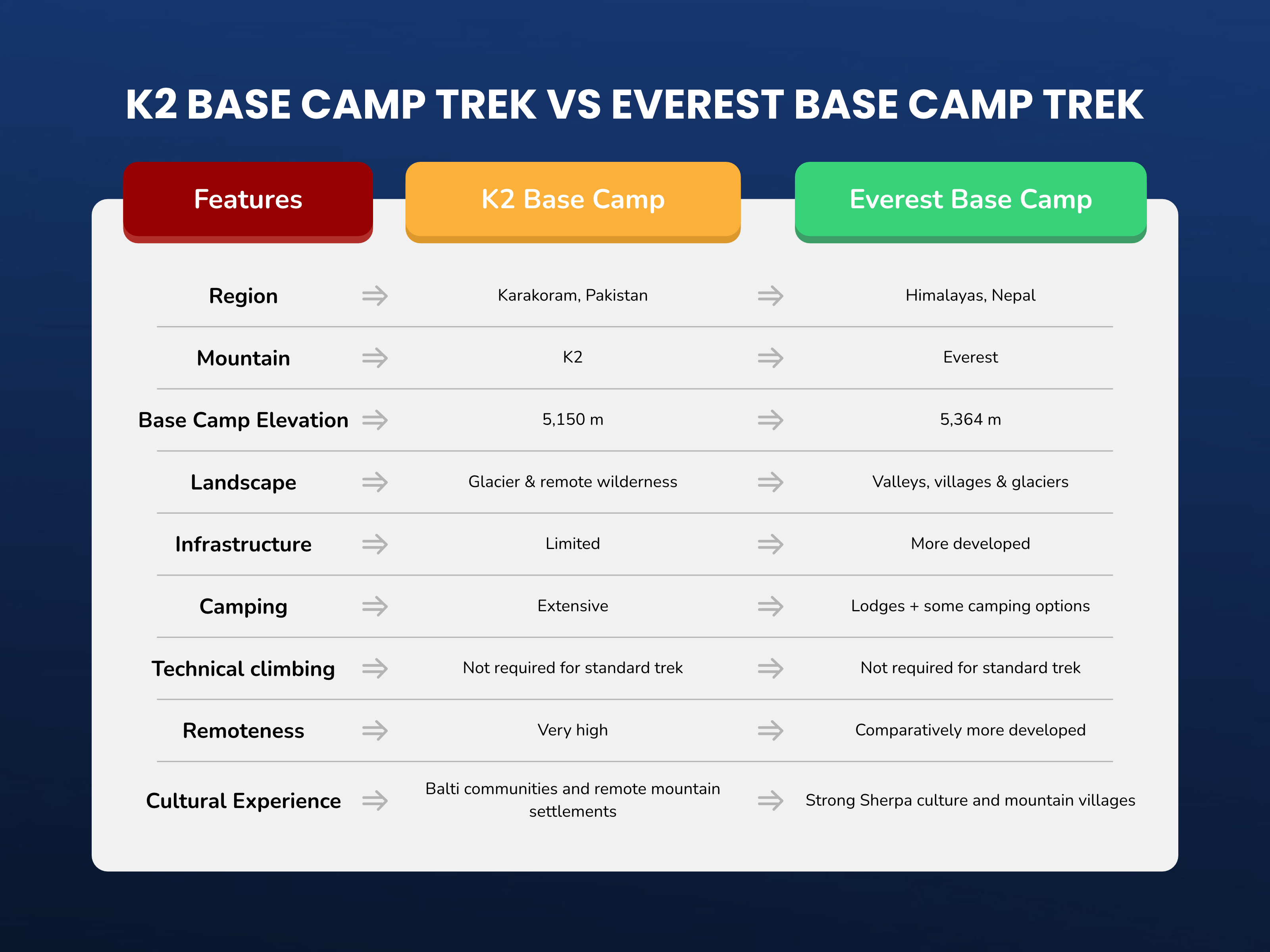
The K2 Base Camp Trek is particularly notable for its remote glacier environment and concentration of giant Karakoram peaks.
Can You Trek to K2 Base Camp Without Climbing K2?
Yes, Reaching K2 Base Camp does not mean climbing K2. The trek finishes at the base camp, while climbing K2 requires a completely different level of preparation, technical skills, equipment, permits and expedition logistics. For most trekkers, reaching base camp is the destination itself.
Why to Choose a Guided K2 Base Camp Trek?
The K2 region involves complex logistics that are difficult to manage independently. A professional trekking operator can coordinate with permits, transportation, hotels, guides, porters, camping logistics, meals, route planning, acclimatization, local coordination and emergency procedures For an adventure in such a remote region, professional logistical support allows trekkers to focus on the journey while the expedition team manages the operational details.
How Far in Advance Should You Book?
For a K2 Base Camp Trek 2027, early planning is recommended. Booking ahead gives you time to arrangements. For private groups, early booking can also provide greater flexibility when selecting departure dates and services.
How to Book Your K2 Base Camp Trek with 8K Expeditions?
Your K2 adventure begins long before you reach the Baltoro Glacier. At 8K Expeditions, travelers can plan their K2 Base Camp journey with professional expedition and trekking support, from initial trip planning through the return journey.
Booking Process
- Contact us through email (info@8kexpeditions) or WhatsApp (+977-9818288444) Share your preferred travel dates and number of participants.
- Choose Your Package Review the itinerary, services, inclusions, exclusions and pricing.
- Confirm Your Departure Complete the required booking formalities and documentation.
- Prepare for the Trek Receive the equipment checklist, preparation guidance, and pre-departure information.
- Begin Your Karakoram Journey Travel from Islamabad toward Skardu, Askole, Baltoro Glacier, Concordia and ultimately K2 Base Camp.
Start Your K2 Journey with K2 Expeditions
Is K2 Base Camp Trek difficult?
Yes. It is a challenging high-altitude trek involving long walking days, rugged terrain, glacier sections and elevations above 5,000 m.
How high is K2 Base Camp?
K2 Base Camp is approximately 5,150 m (16,900 ft) above sea level, depending on the specific seasonal location.
How many days is K2 Base Camp Trek?
A typical program takes approximately 18 days, including transportation, trekking, acclimatization and contingency time.
Do I need mountaineering experience?
No. Technical climbing experience is not required for the standard K2 Base Camp Trek, although previous trekking experience is beneficial.
What is the best month for K2 Base Camp Trek?
The principal trekking season is generally June to September, with July and August among the core months.
How much does K2 Base Camp Trek cost?
The price depends on the itinerary, group size, permits, accommodation, transportation, guides, porters, meals and level of service. Contact 8K Expeditions for a current 2027 quotation.
Is K2 Base Camp Trek safe?
It involves genuine high-altitude and remote-environment risks. Proper acclimatization, experienced guides, appropriate equipment, weather awareness and suitable insurance are important.
Can beginners do K2 Base Camp Trek?
A physically prepared beginner can undertake the trek, but it should not be treated as an easy trek. Endurance and high-altitude preparation are important.
What is the difference between K2 Base Camp Trek and K2 Expedition?
The trek ends at K2 Base Camp. A K2 Expedition involves technical climbing above base camp and requires substantially different skills, equipment, permits and preparation.
How do I book K2 Base Camp Trek 2027?
Contact 8K Expeditions with your preferred dates and group size to receive the latest itinerary, pricing, inclusions, preparation guidance and booking requirements.
Booking Open for:
K2 Expedition : Book Now
K2 Base Camp : Book Now
Nanga Parbat Expedition : Book Now
Broad Peak Expedition : Book Now
Gasherbrum I Expedition : Book Now
Gasherbrum II Expedition : Book Now