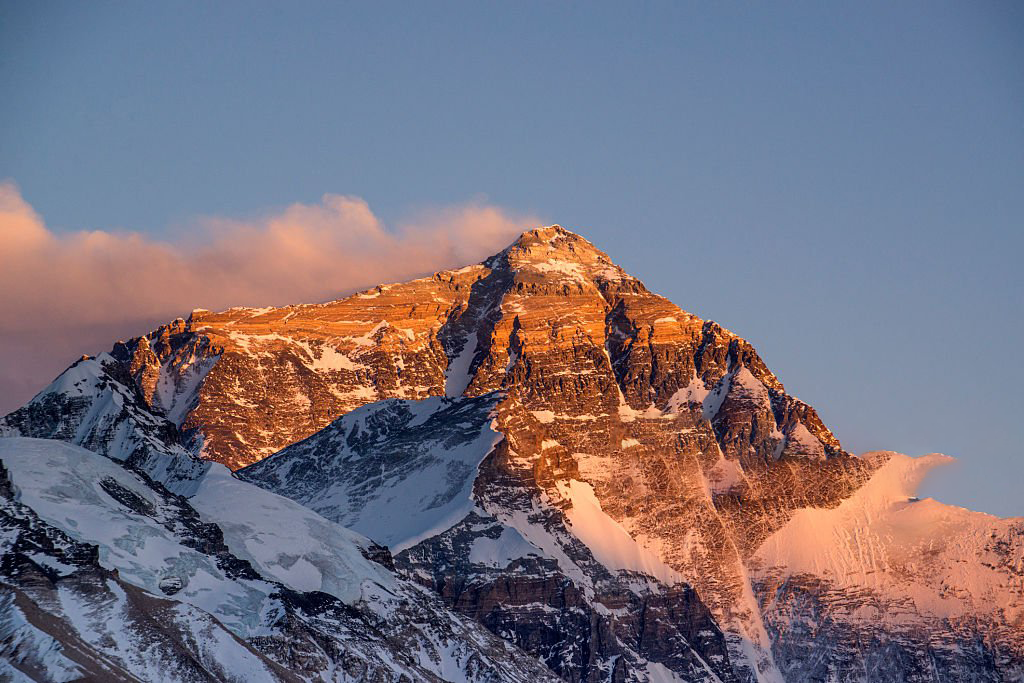
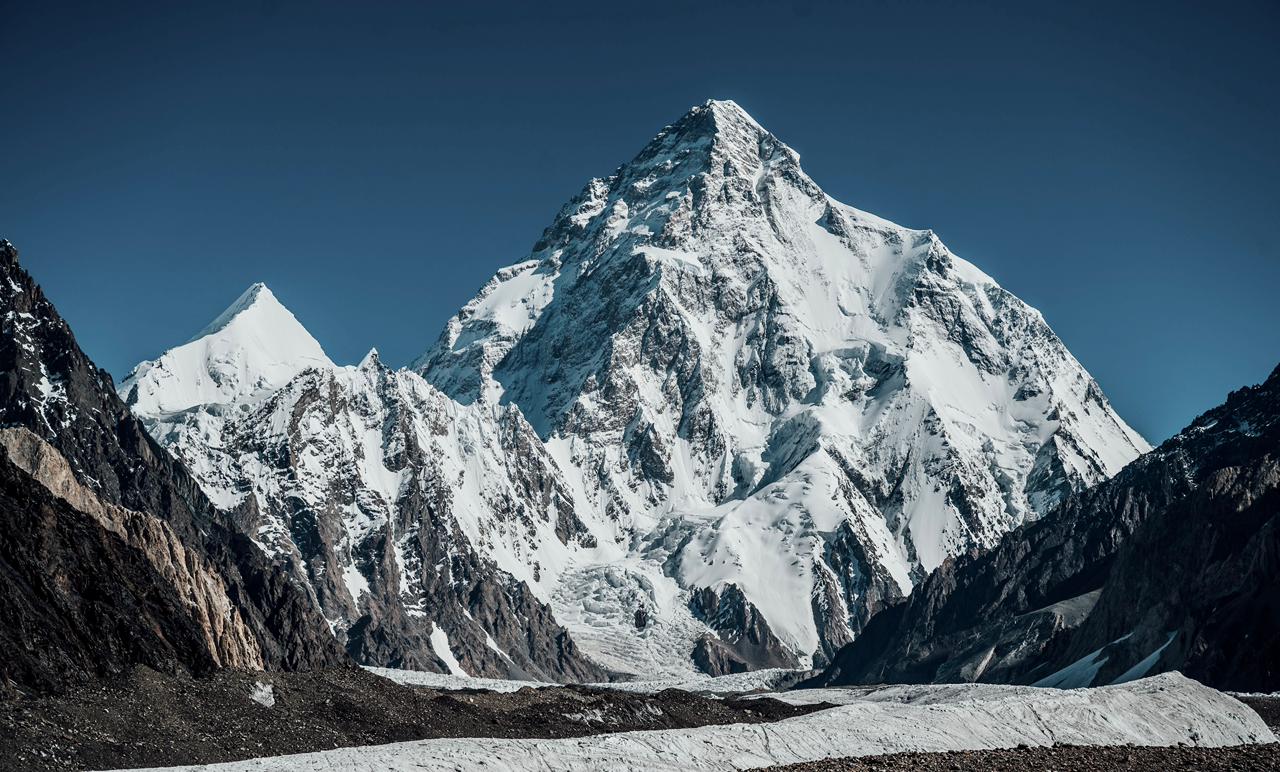
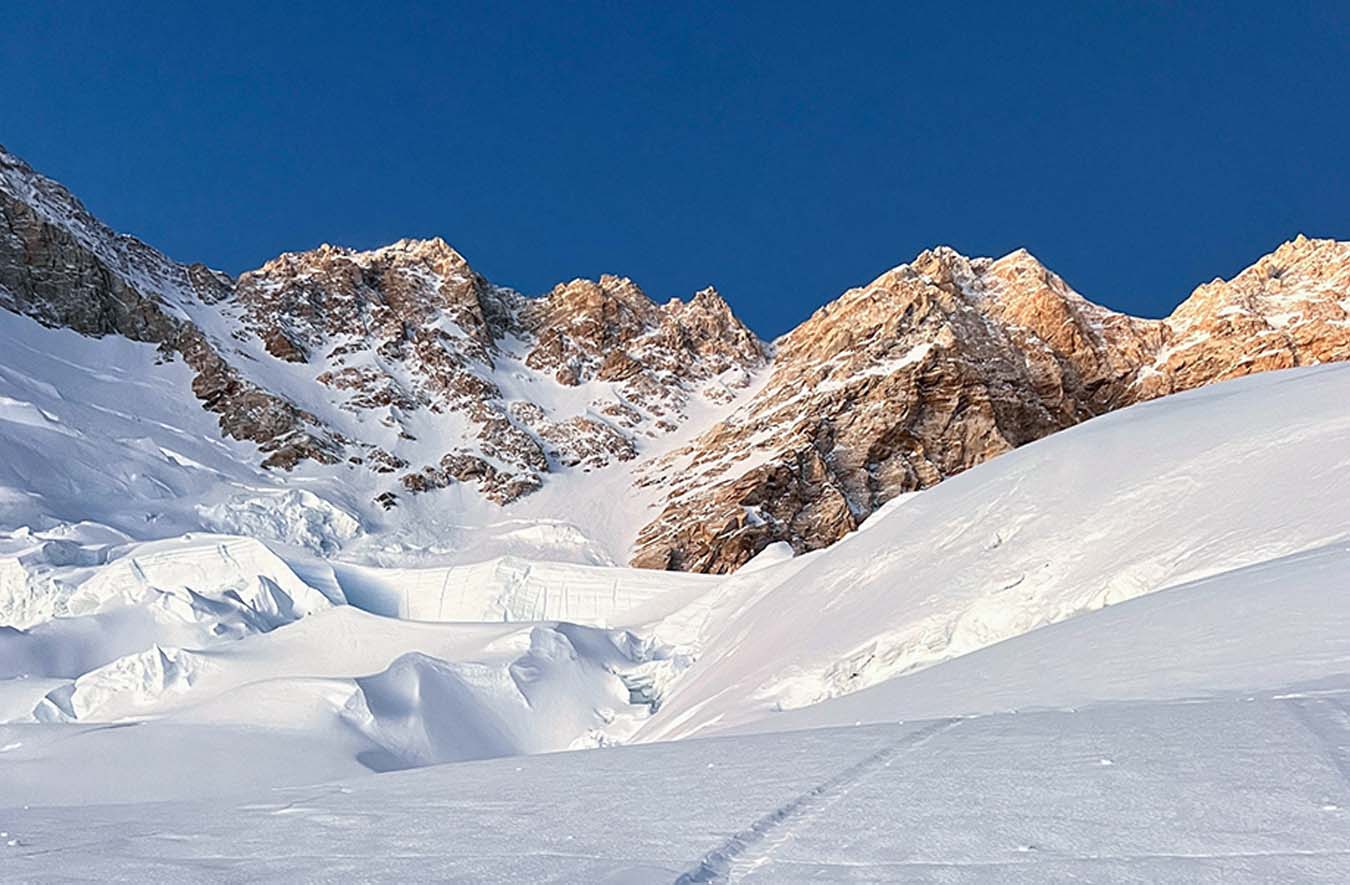
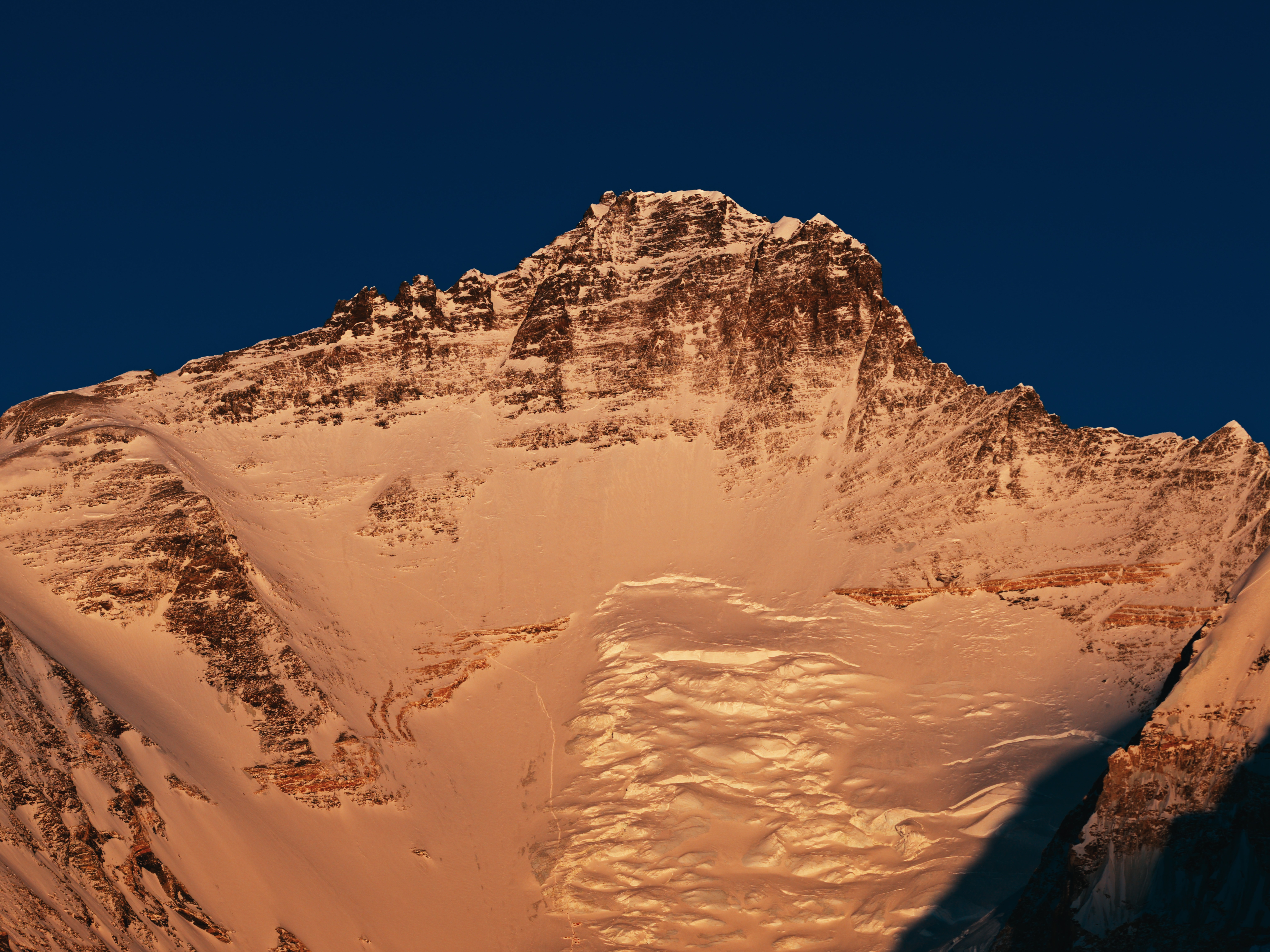
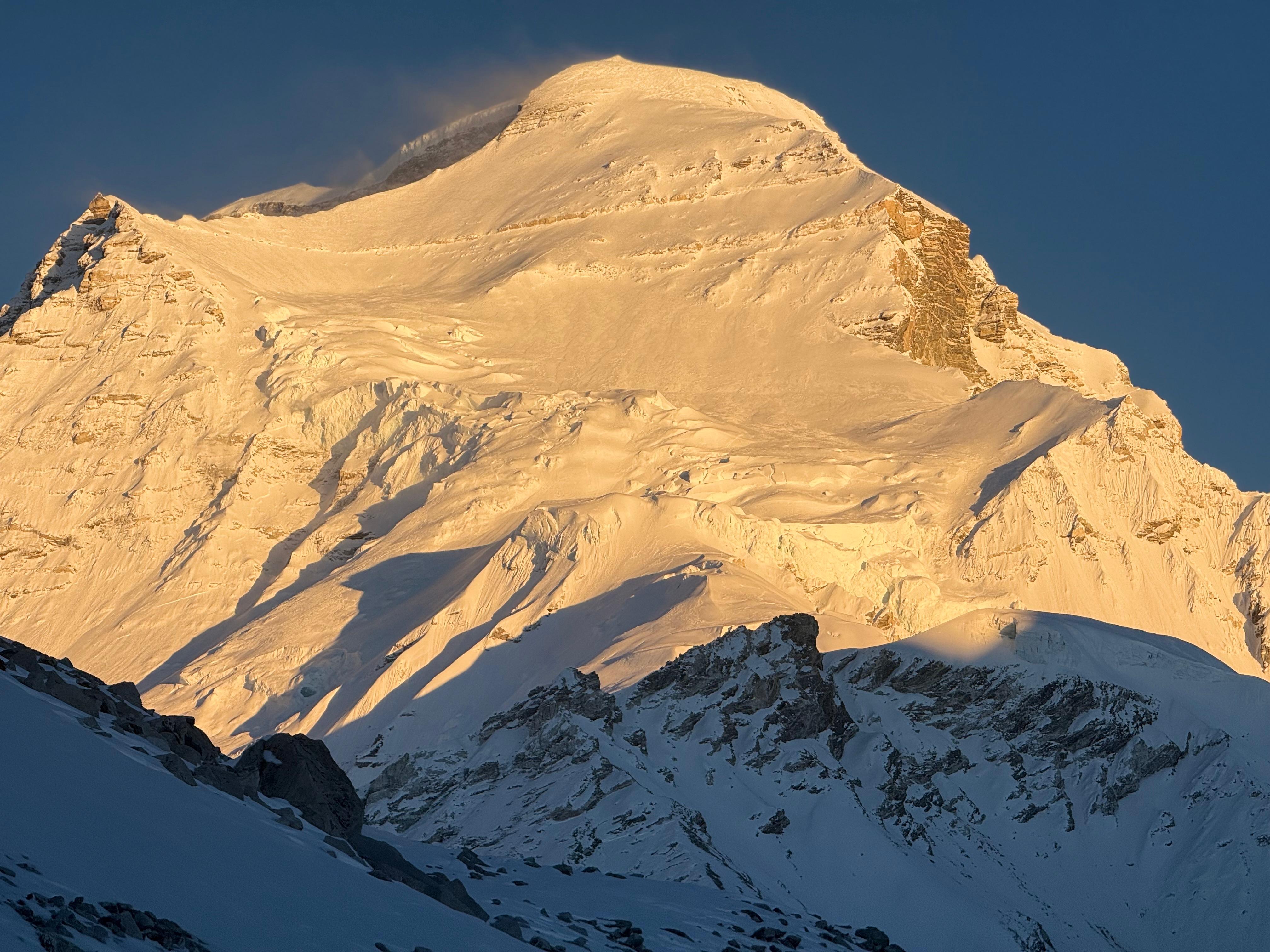
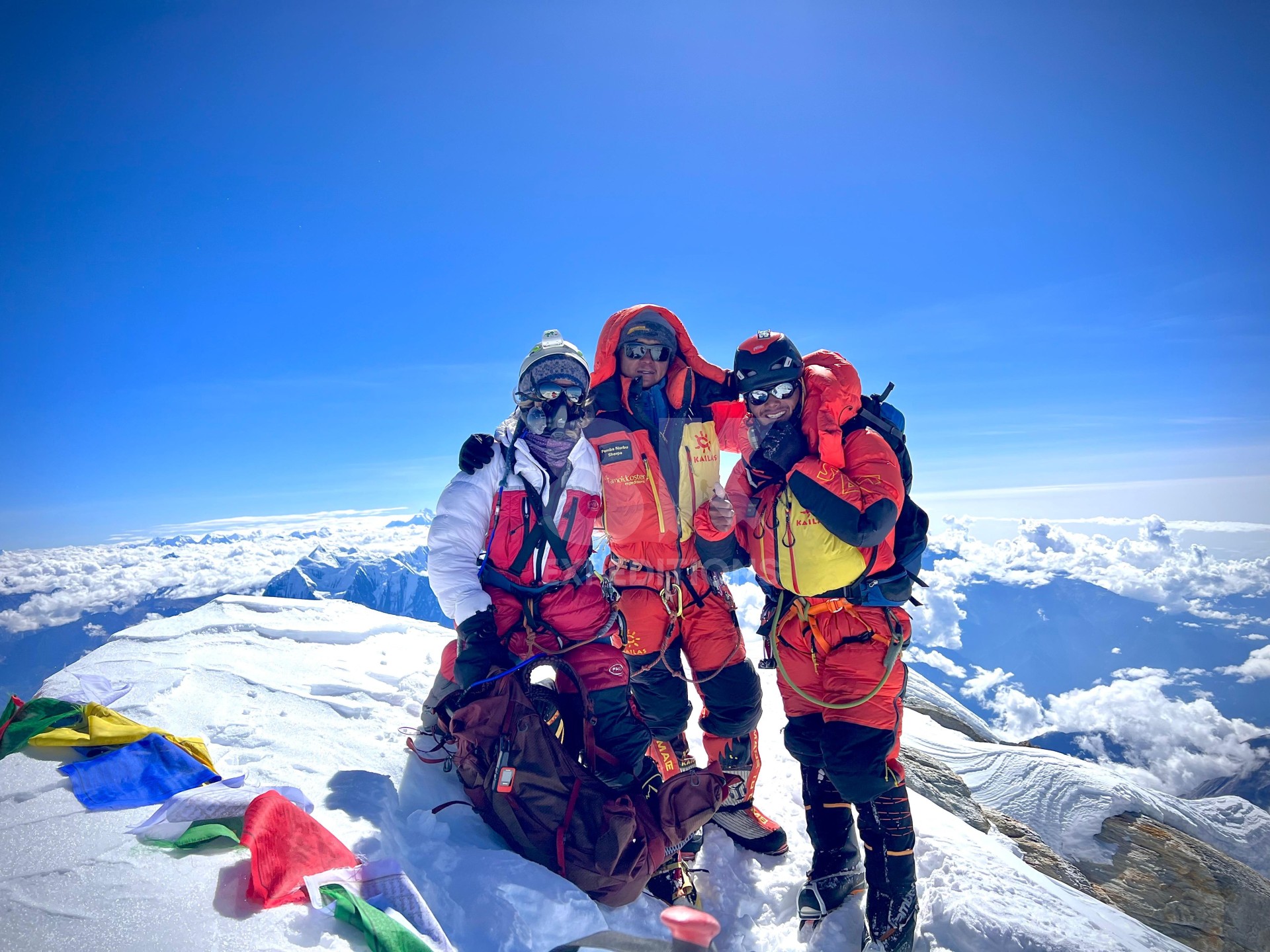
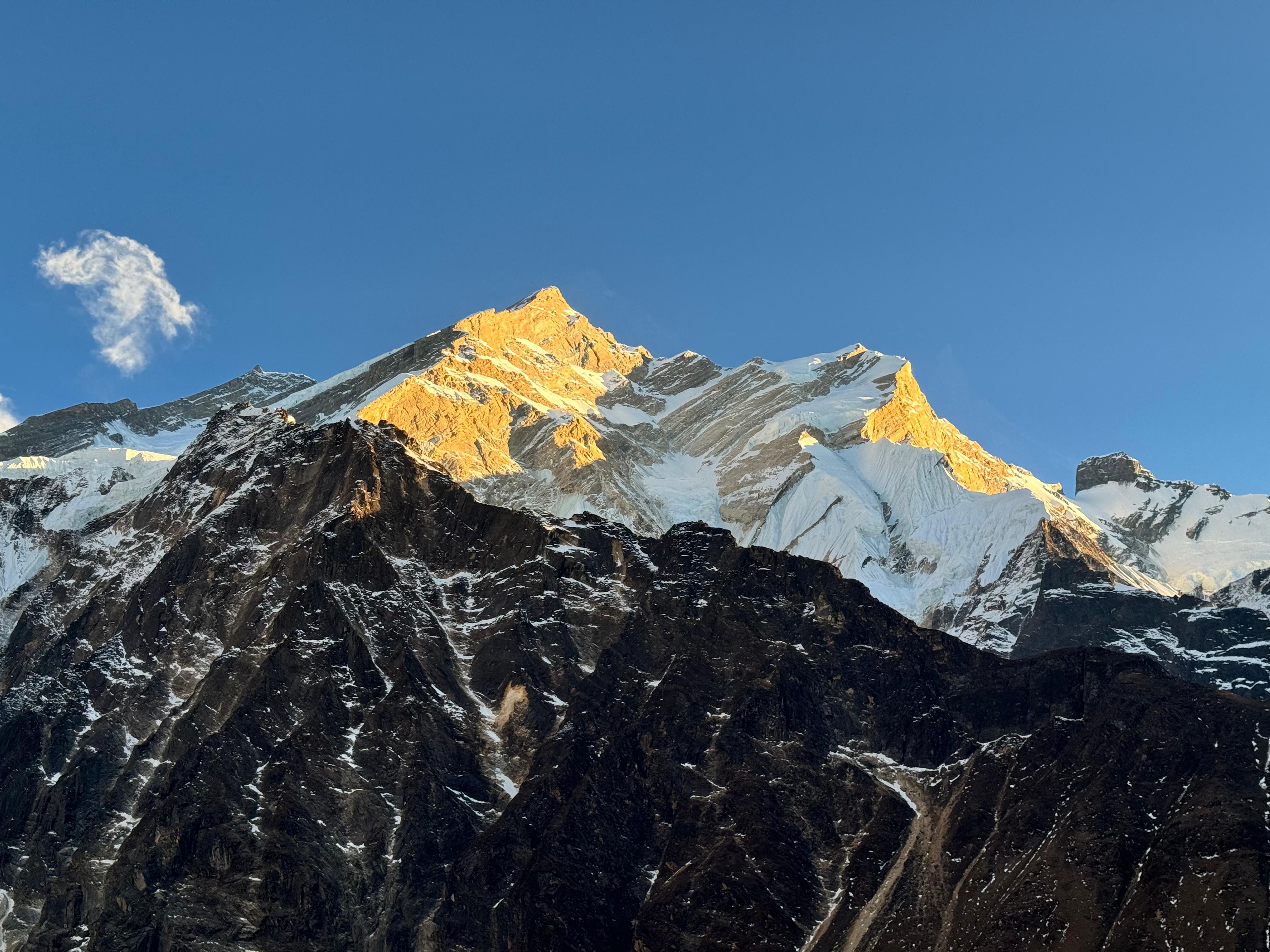
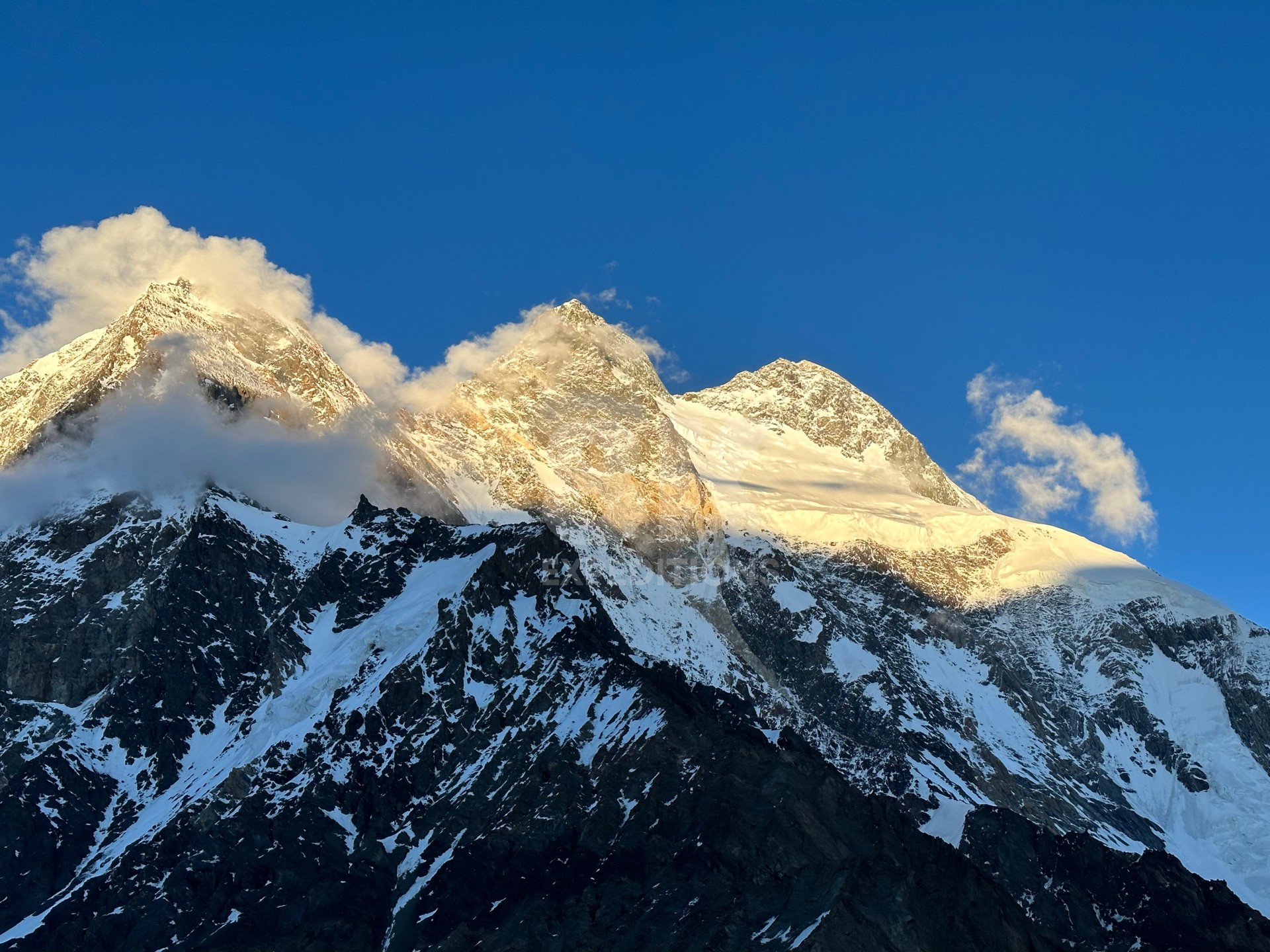
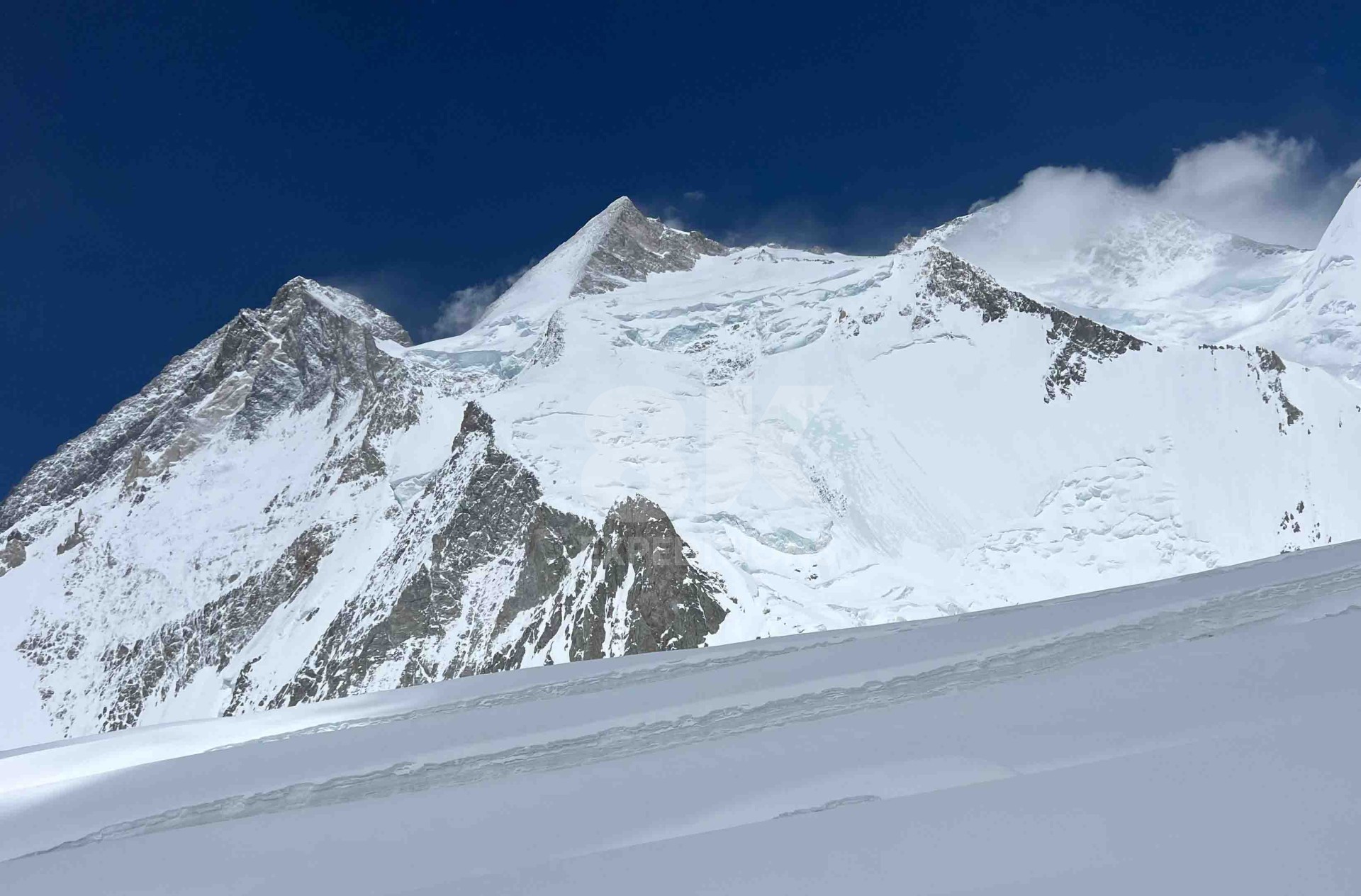
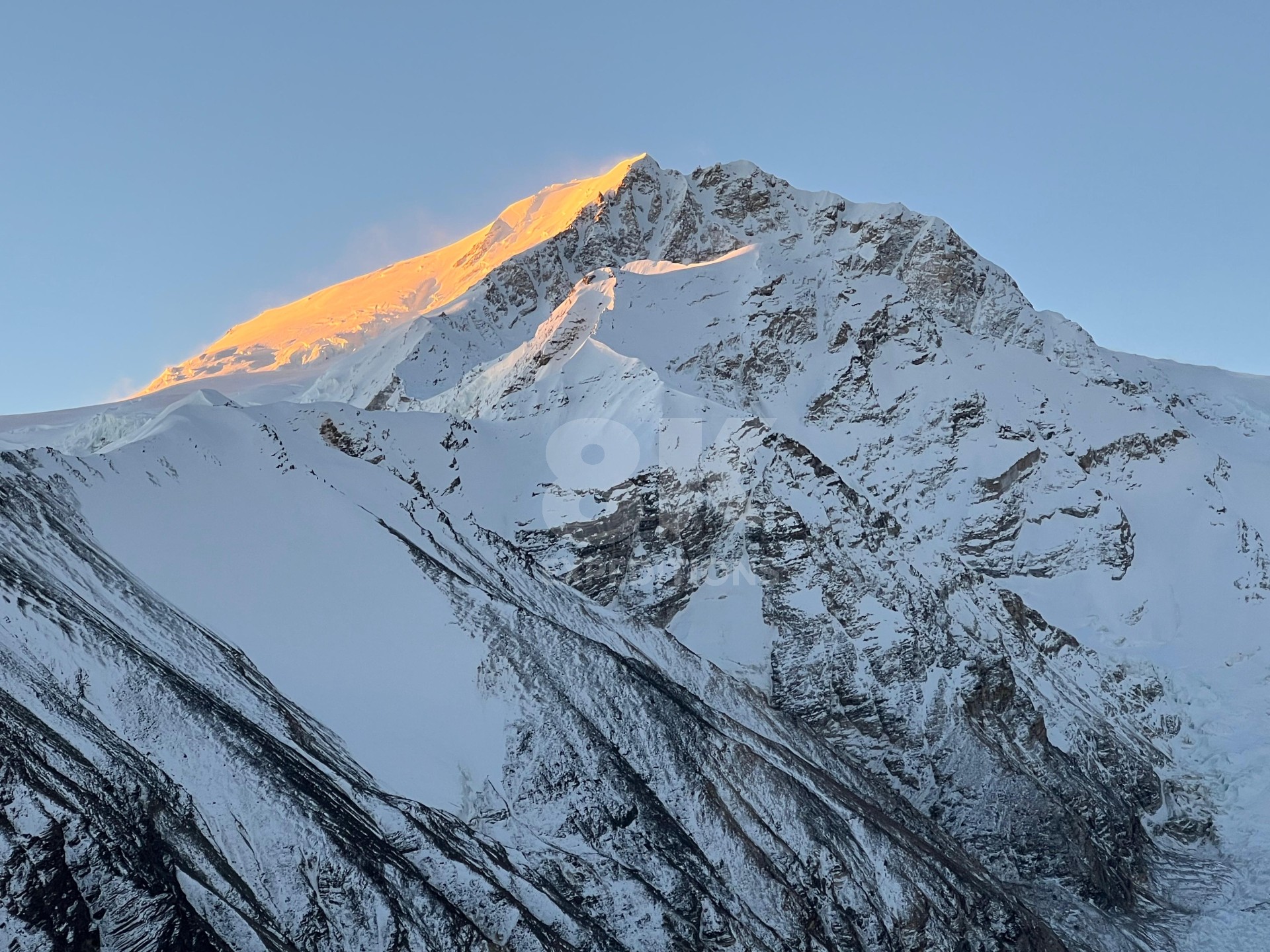
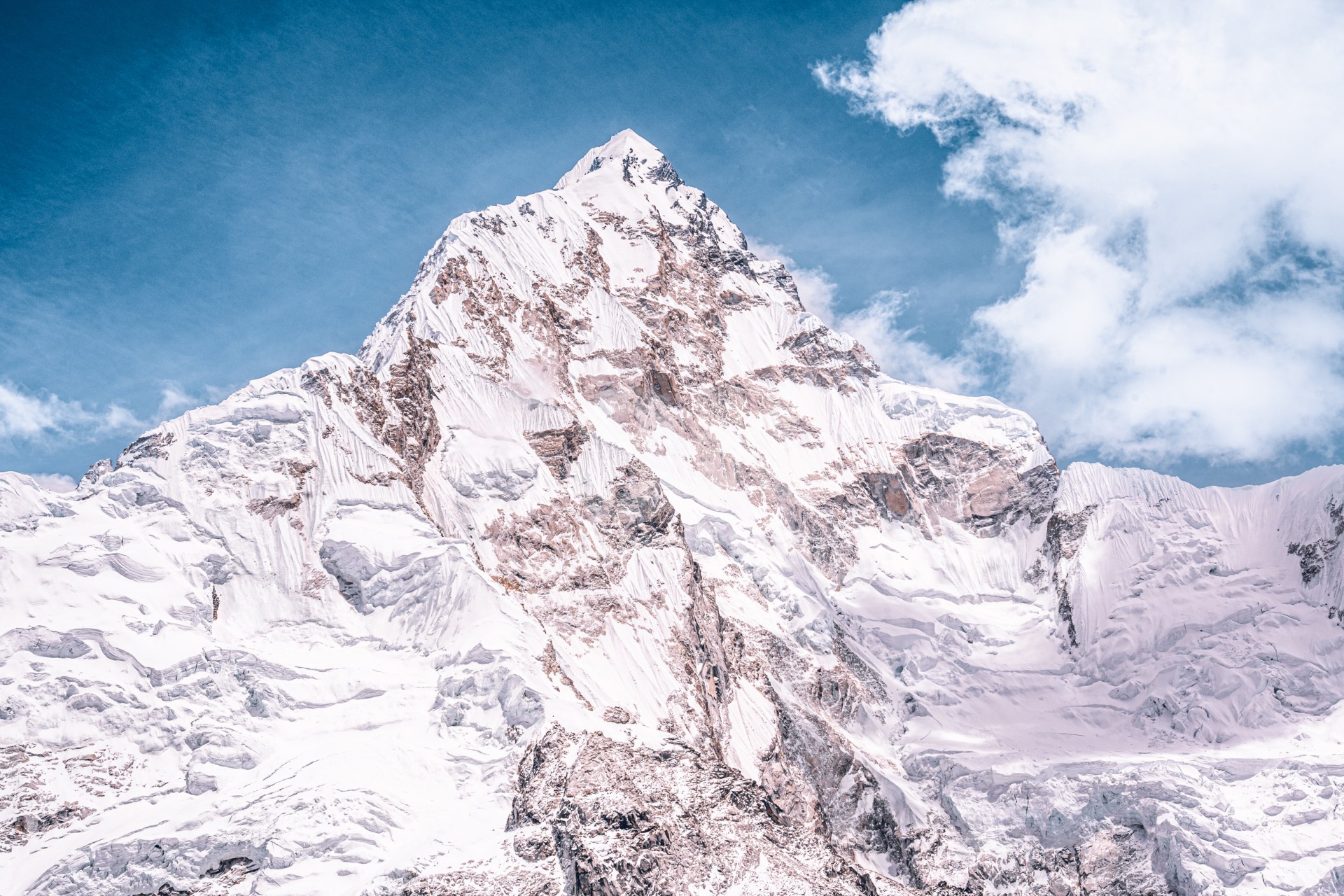
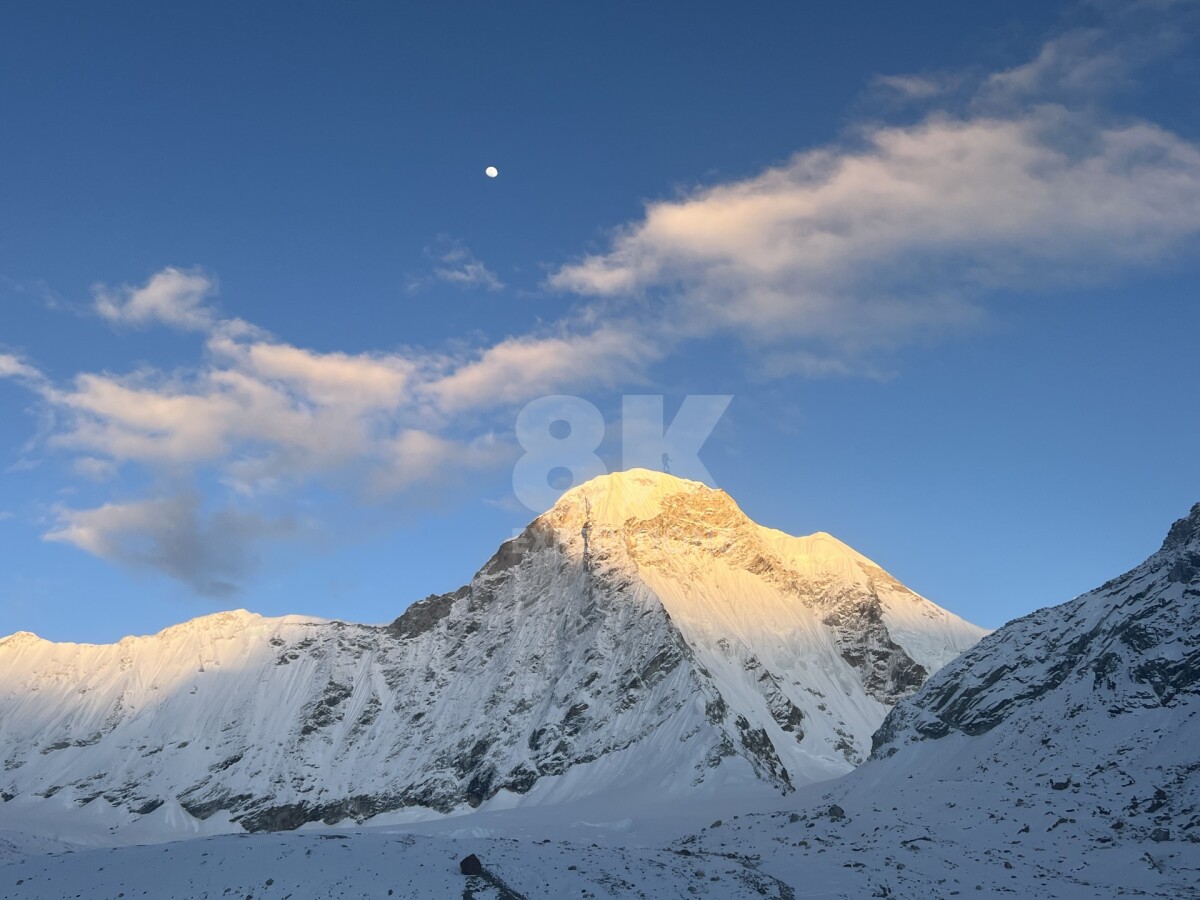
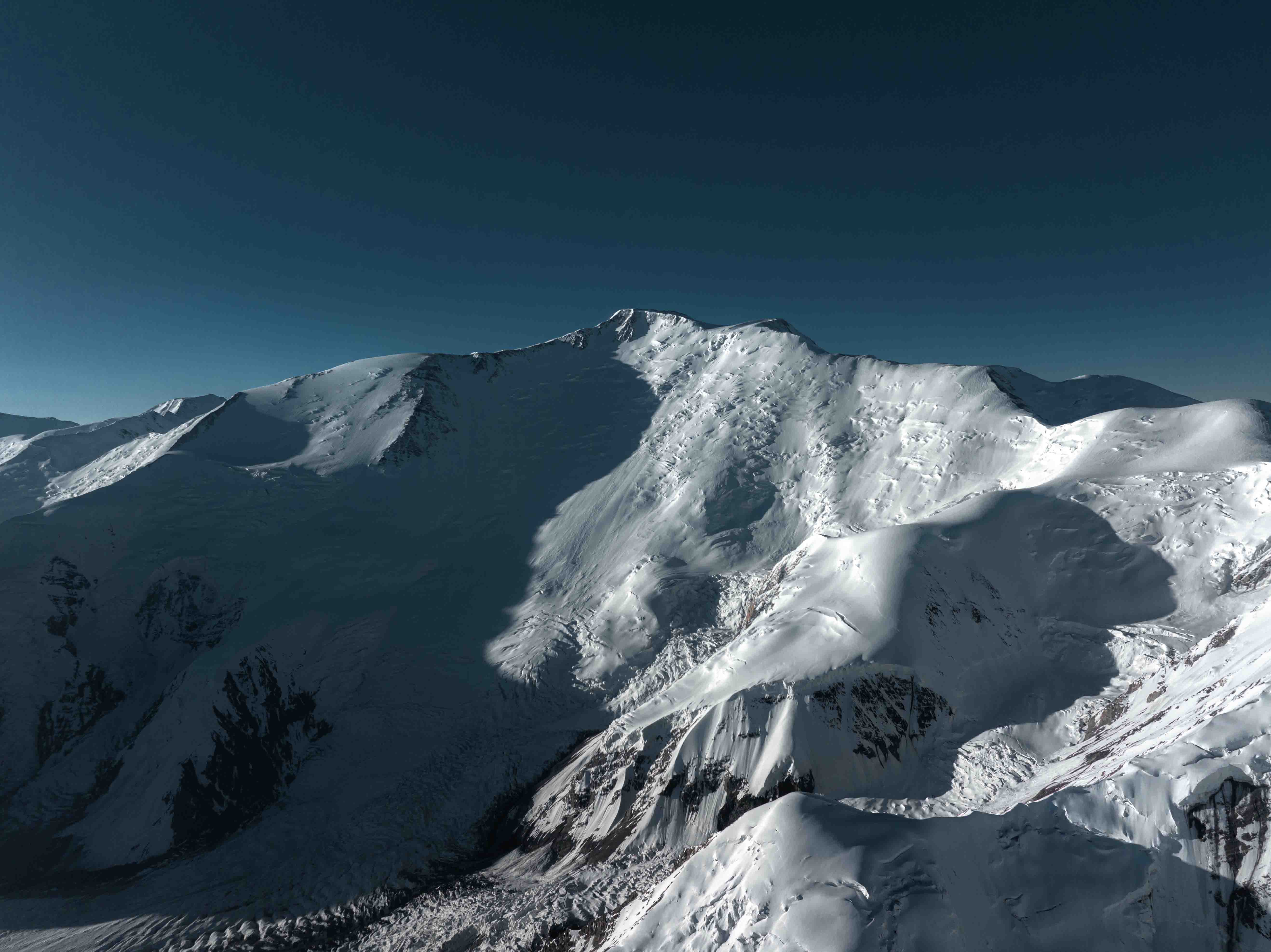
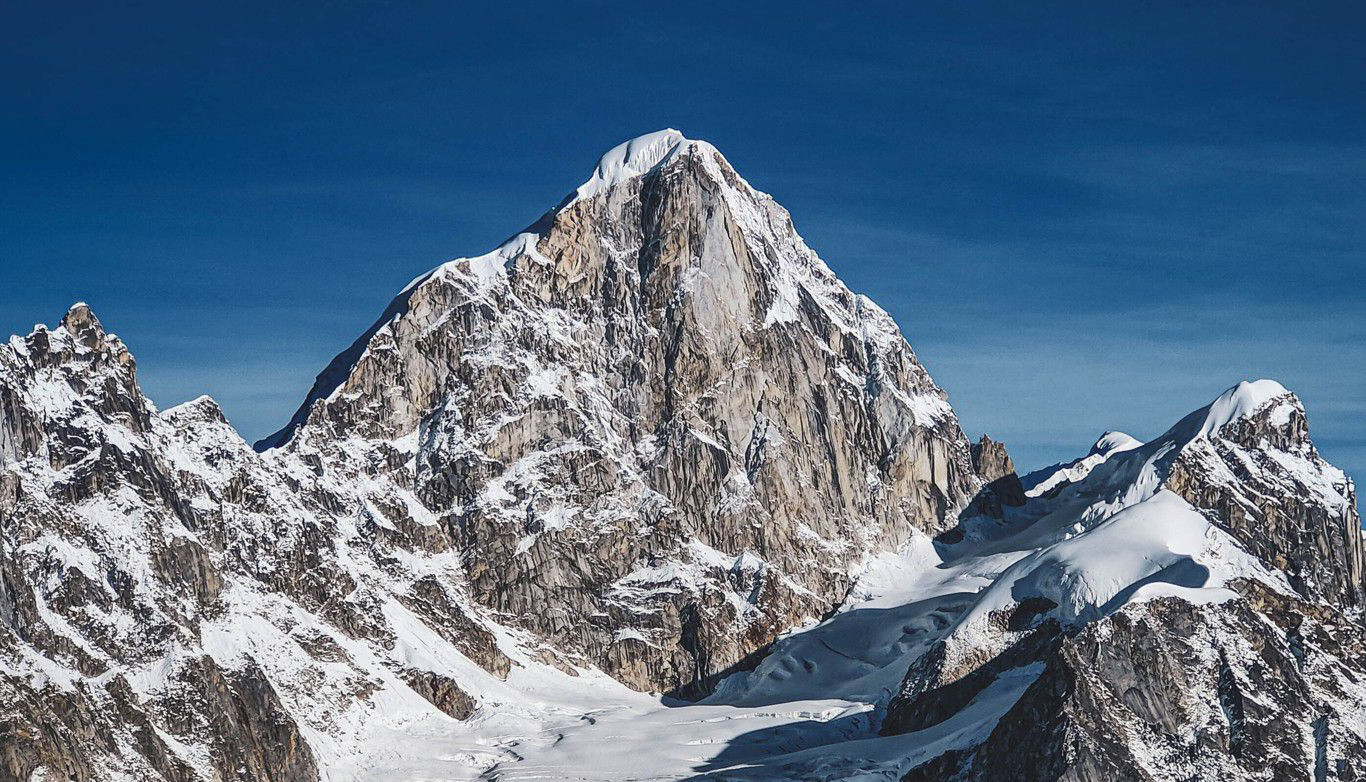
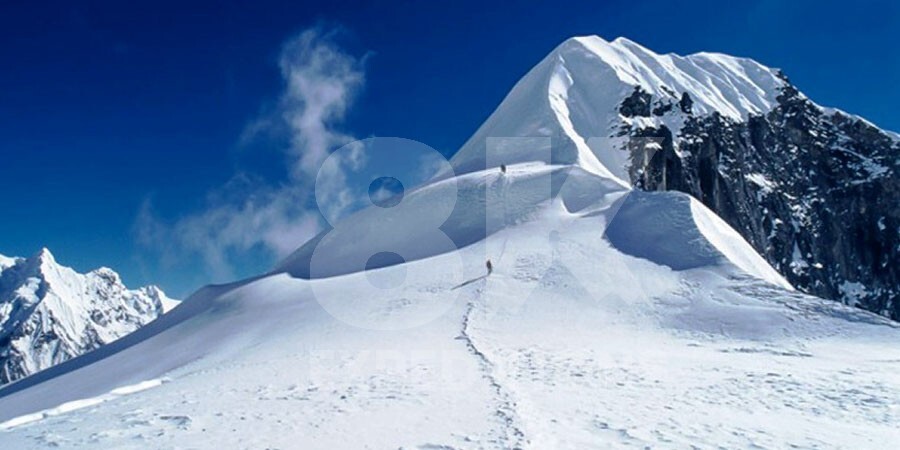
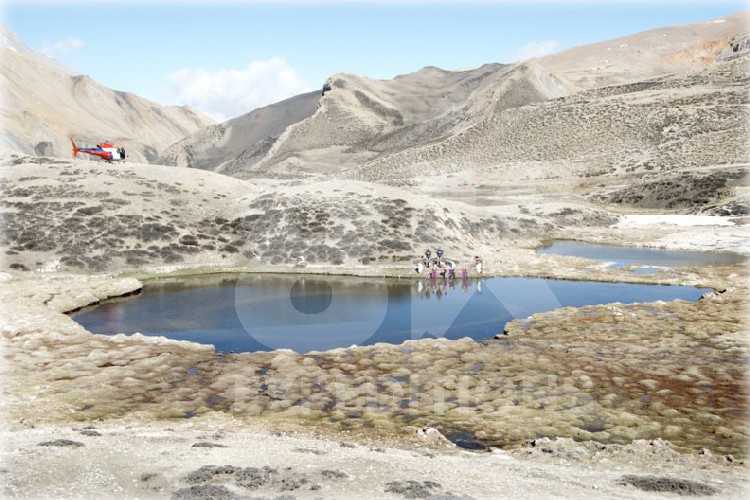
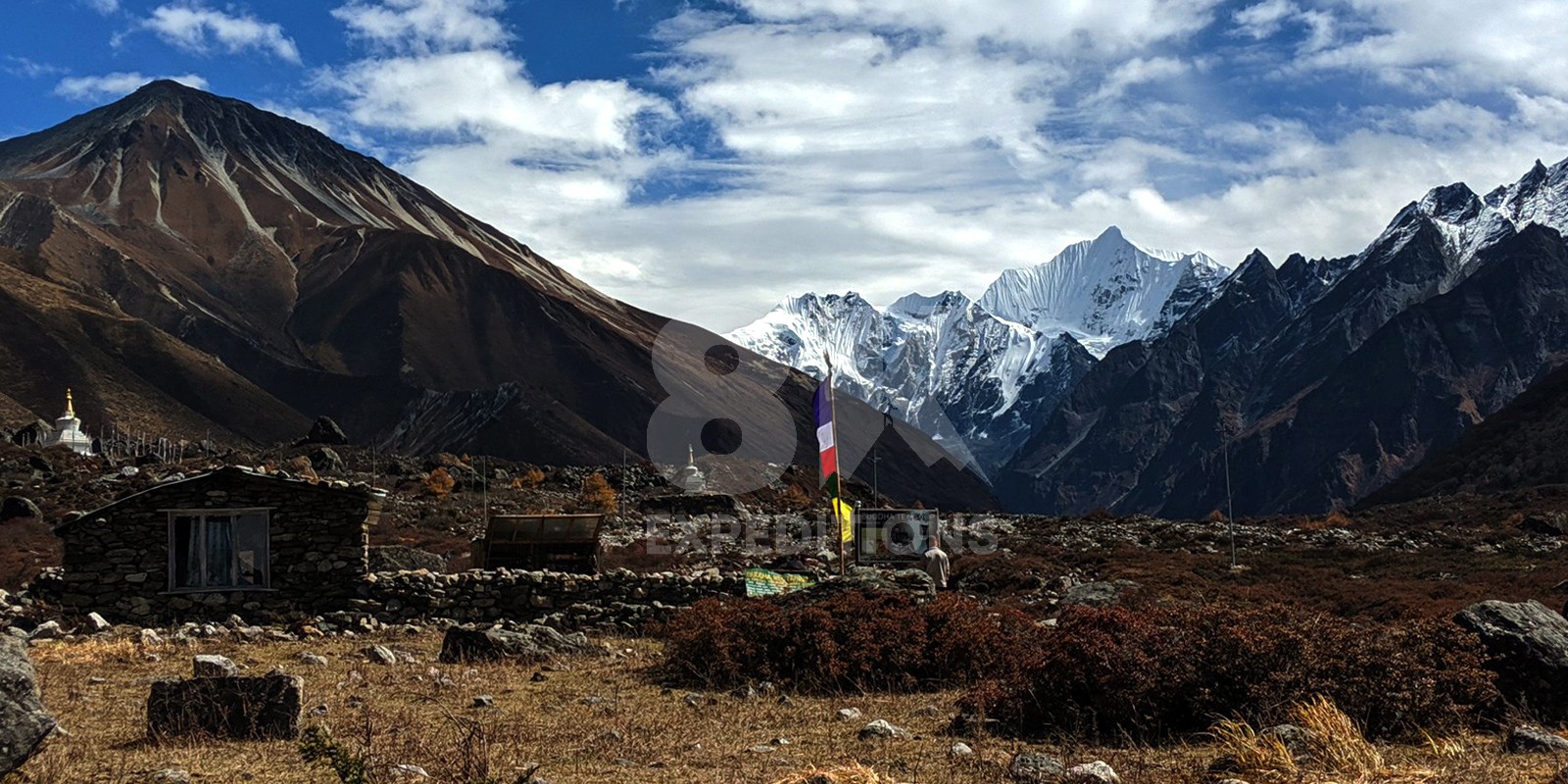
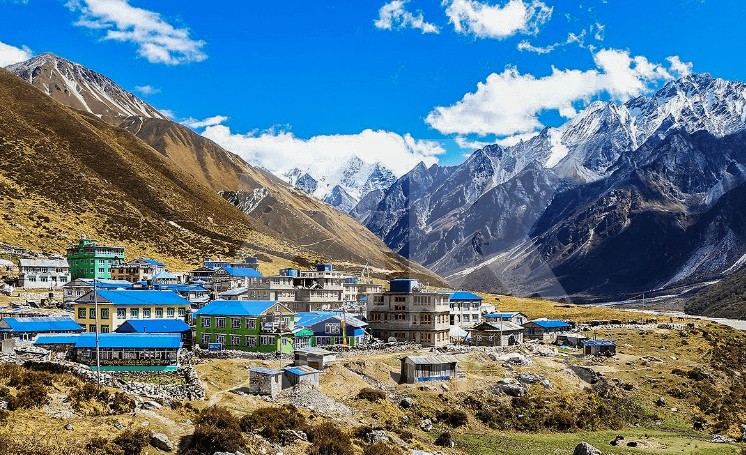
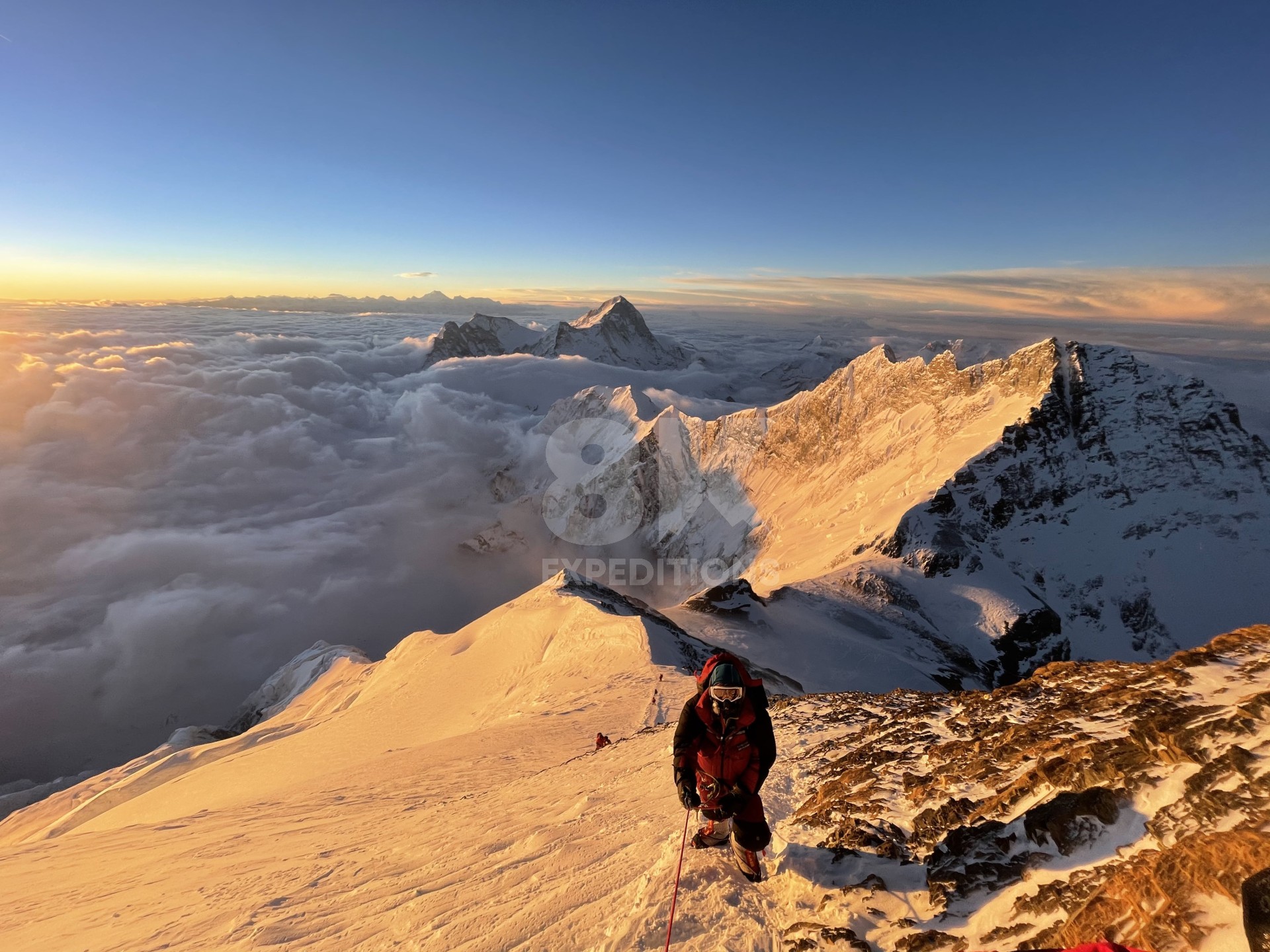
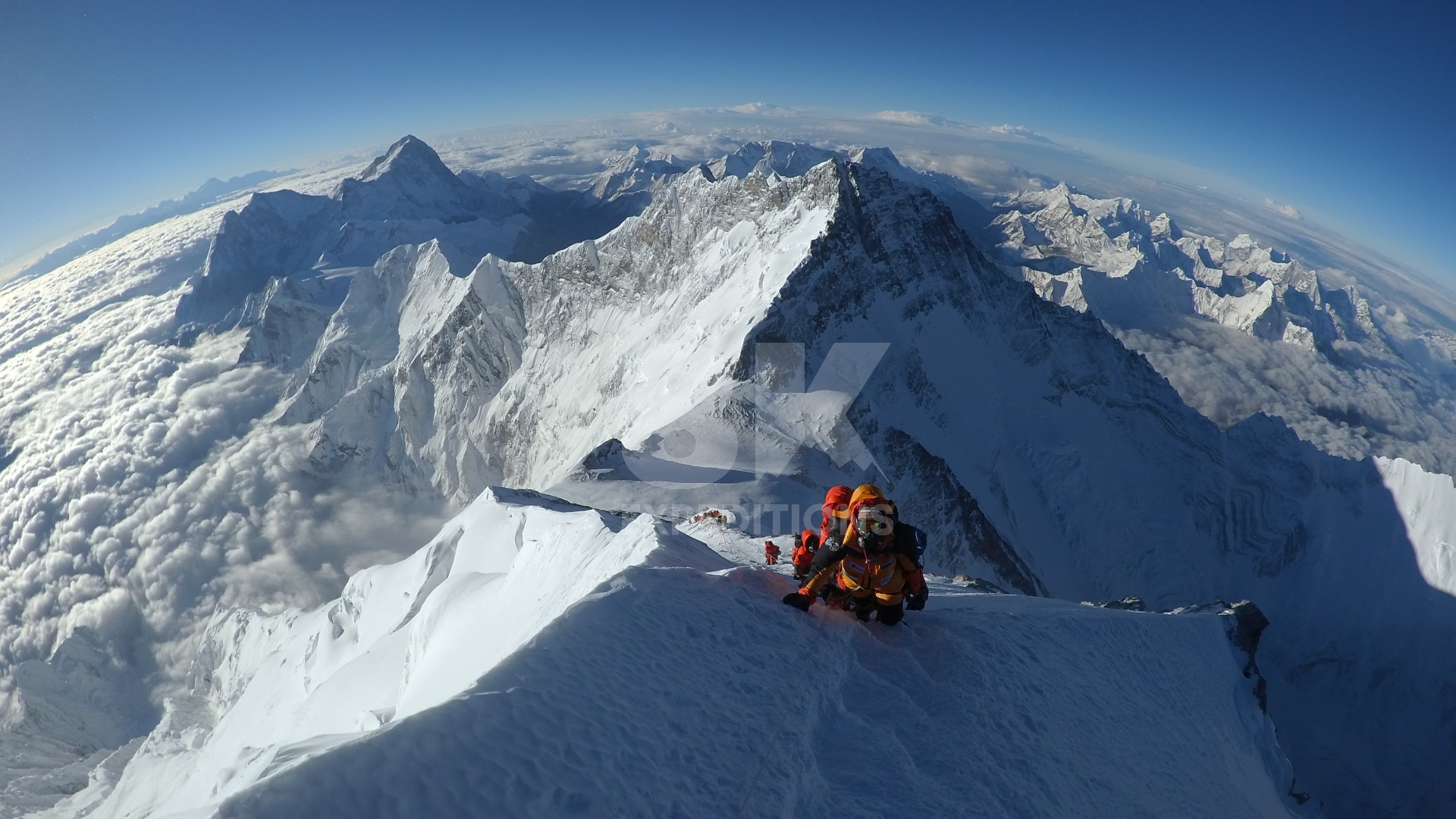
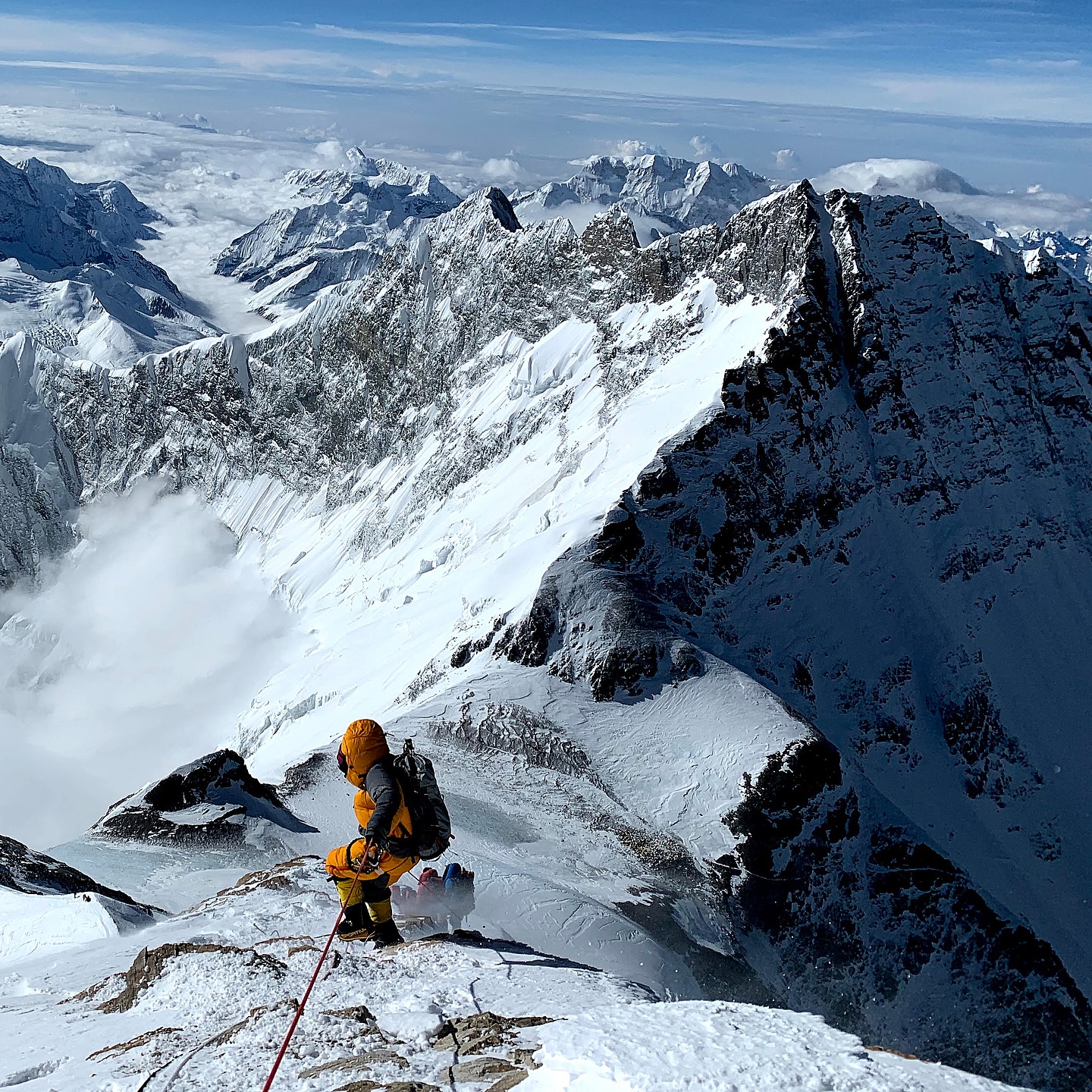
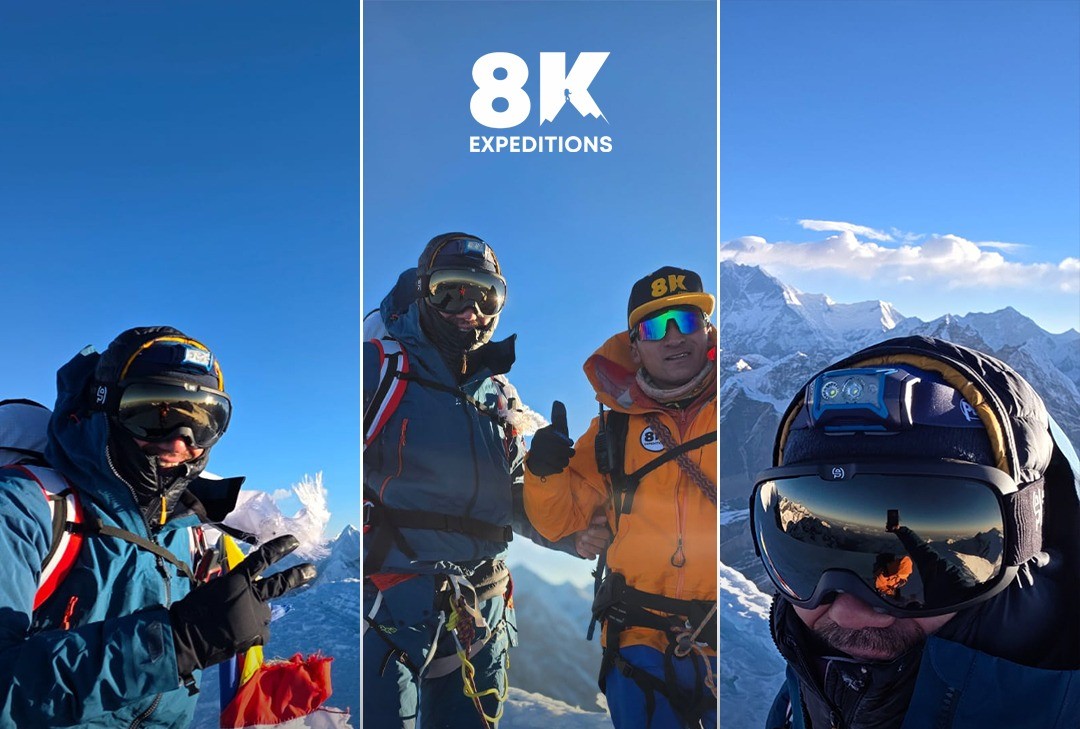
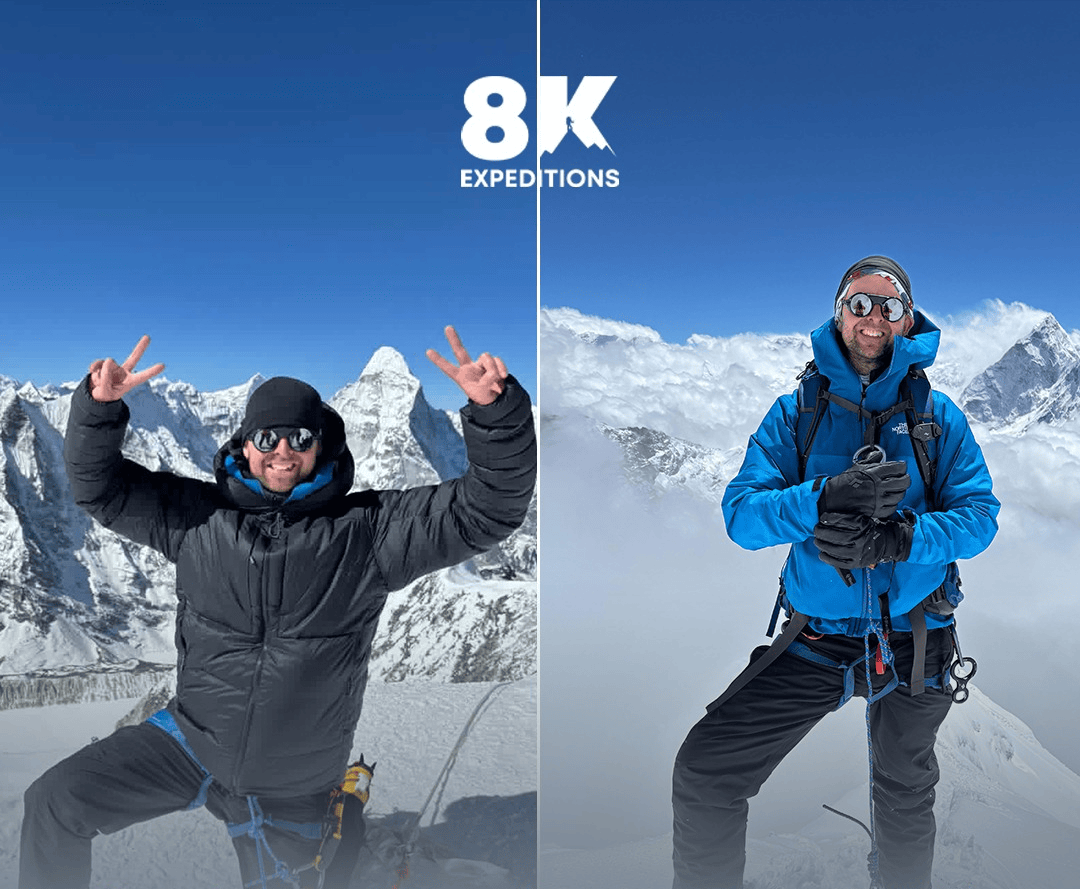
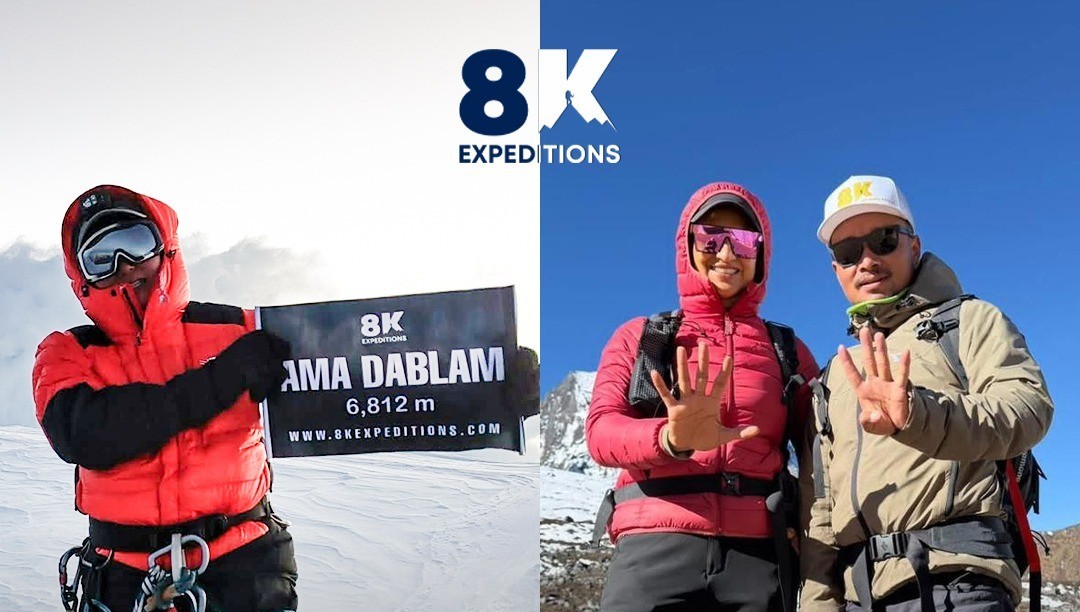
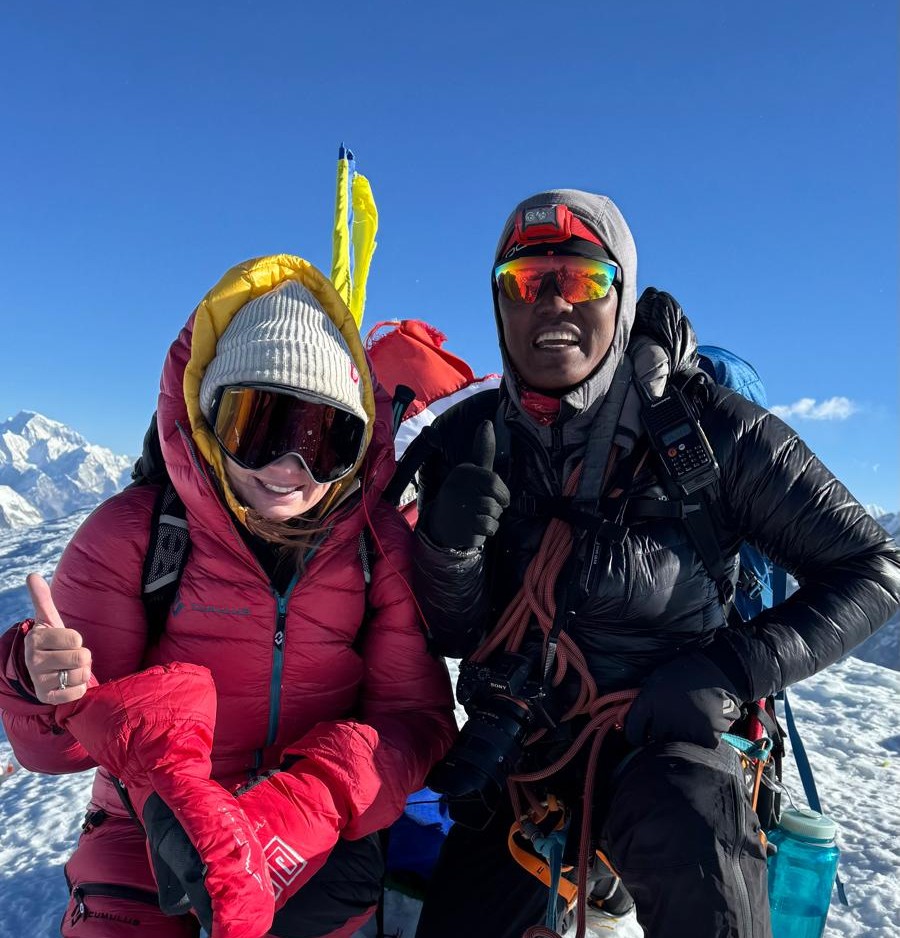
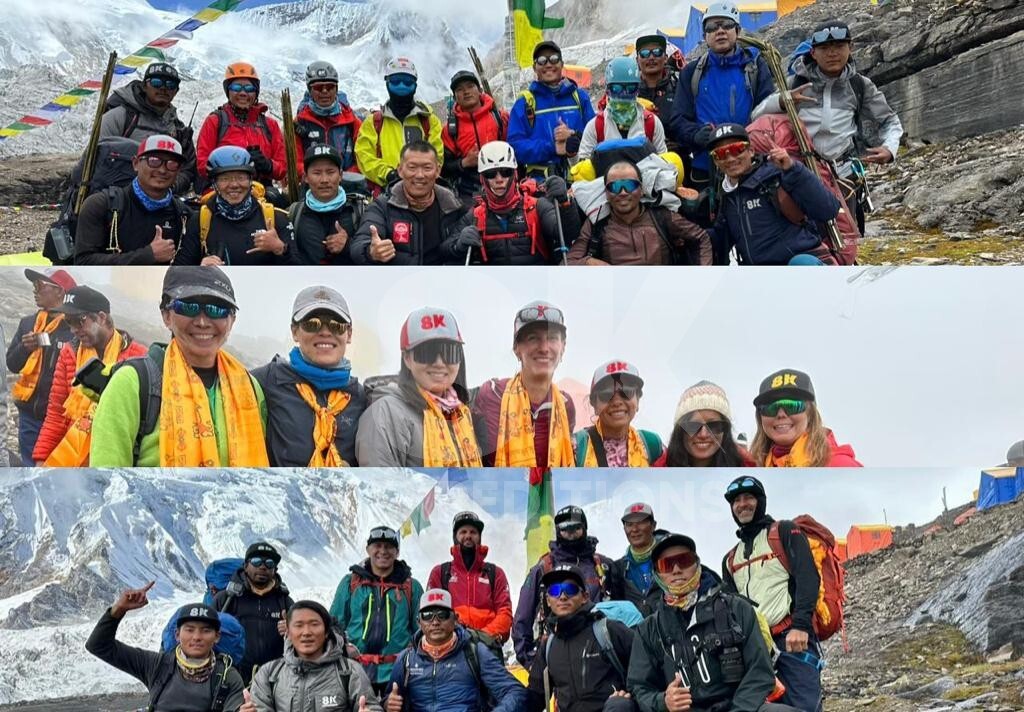
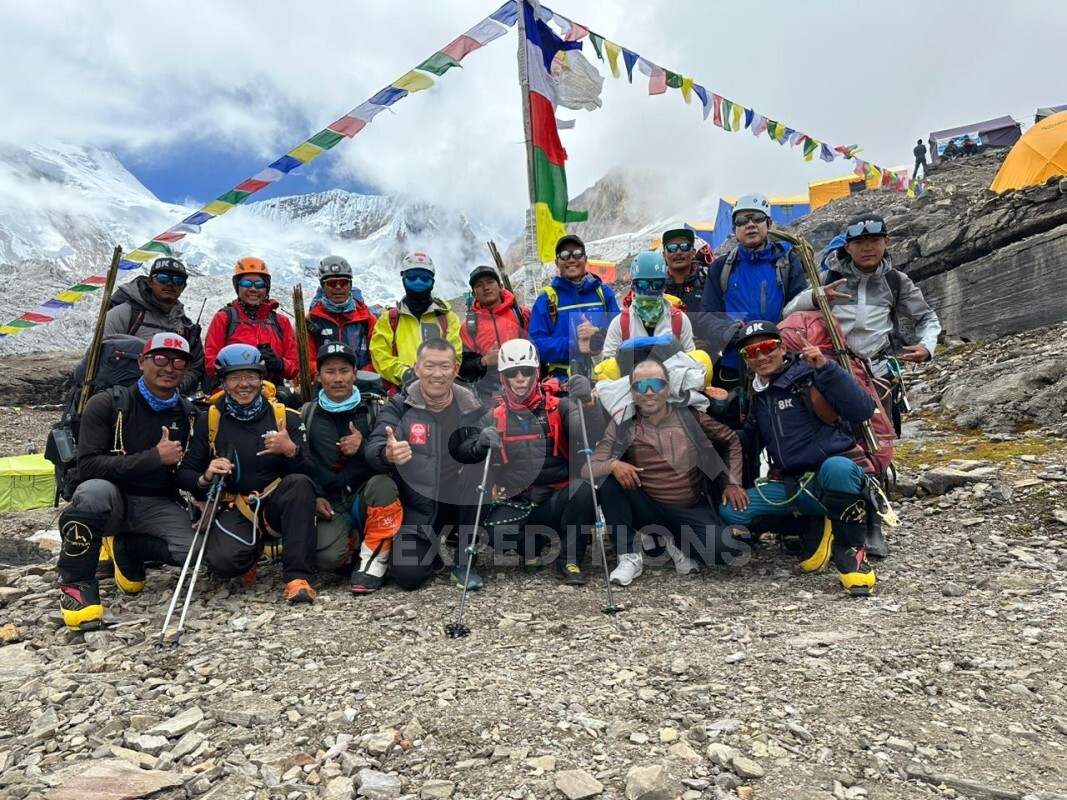
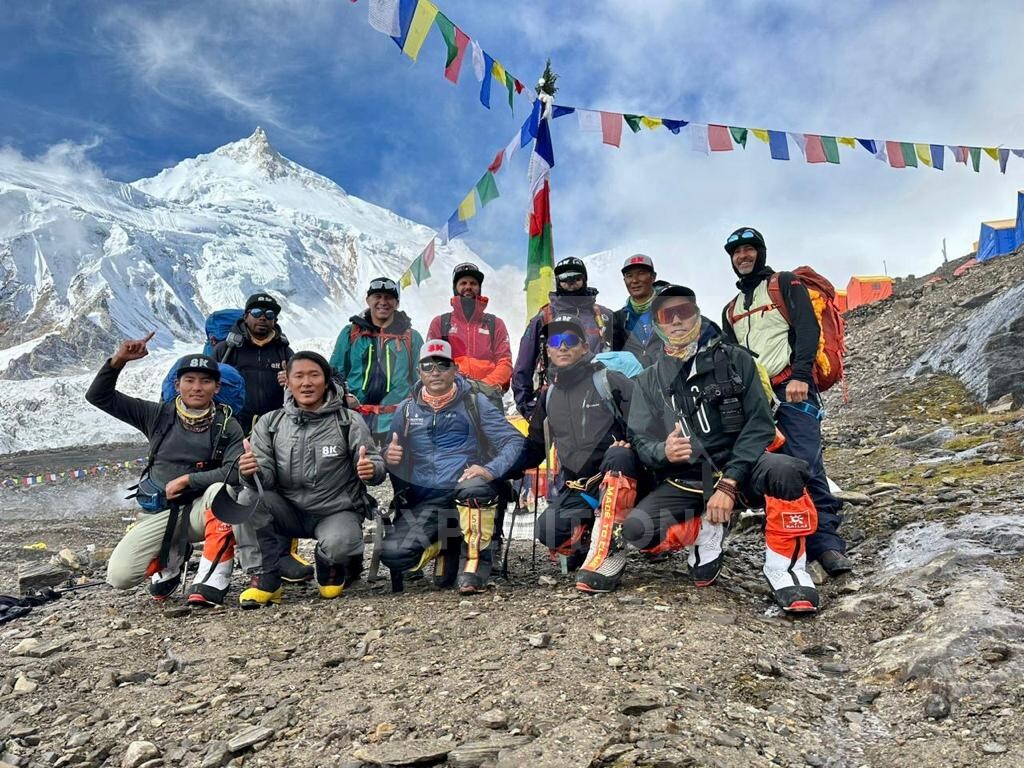
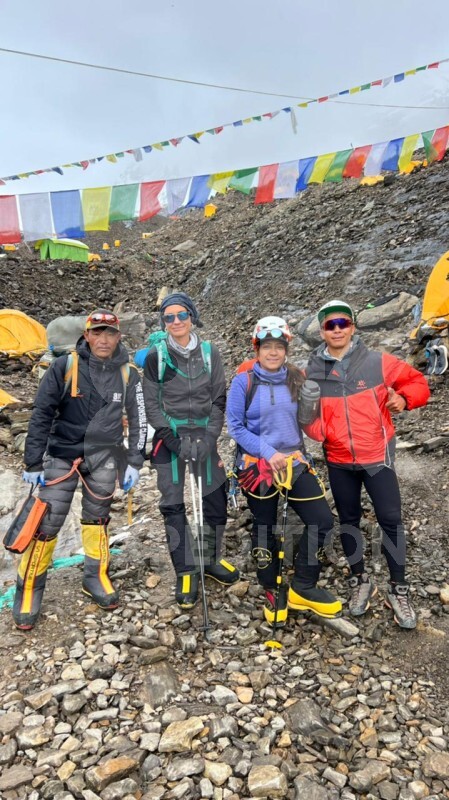
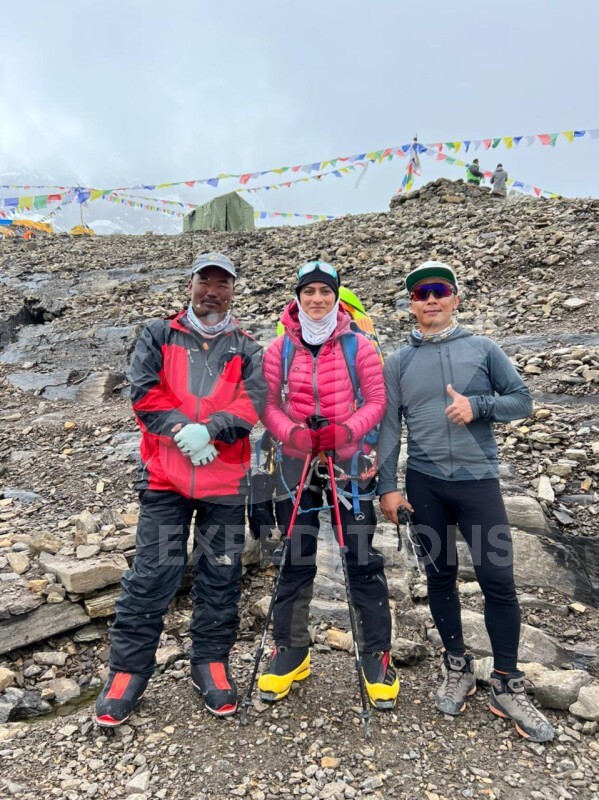
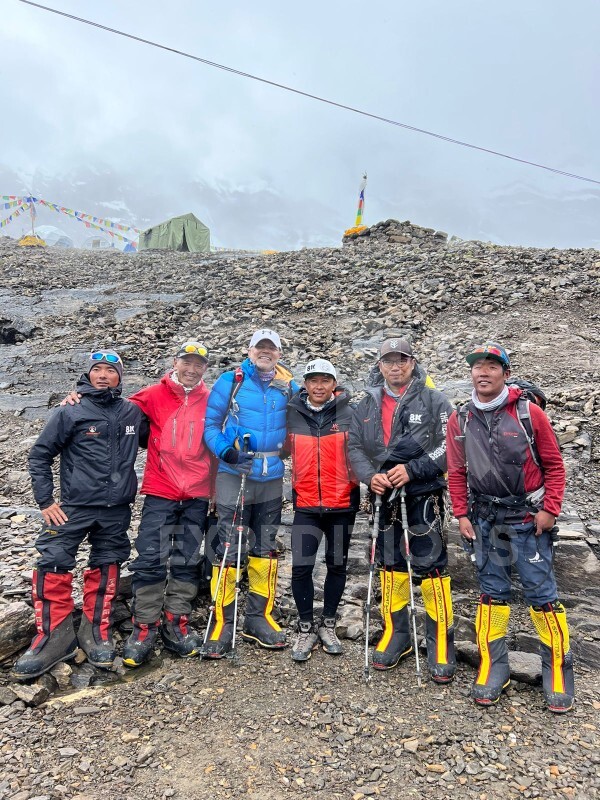
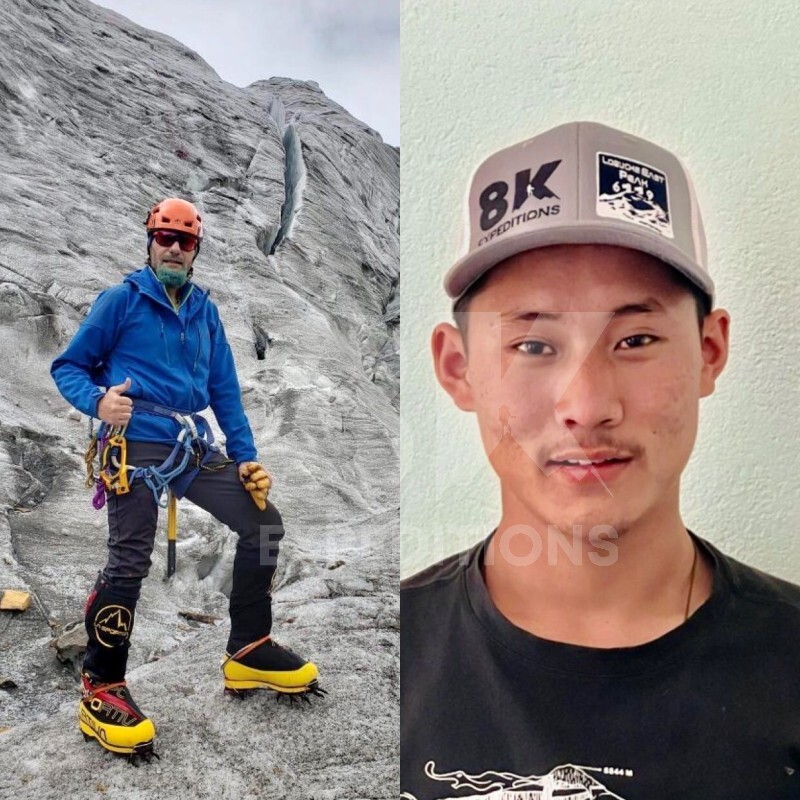
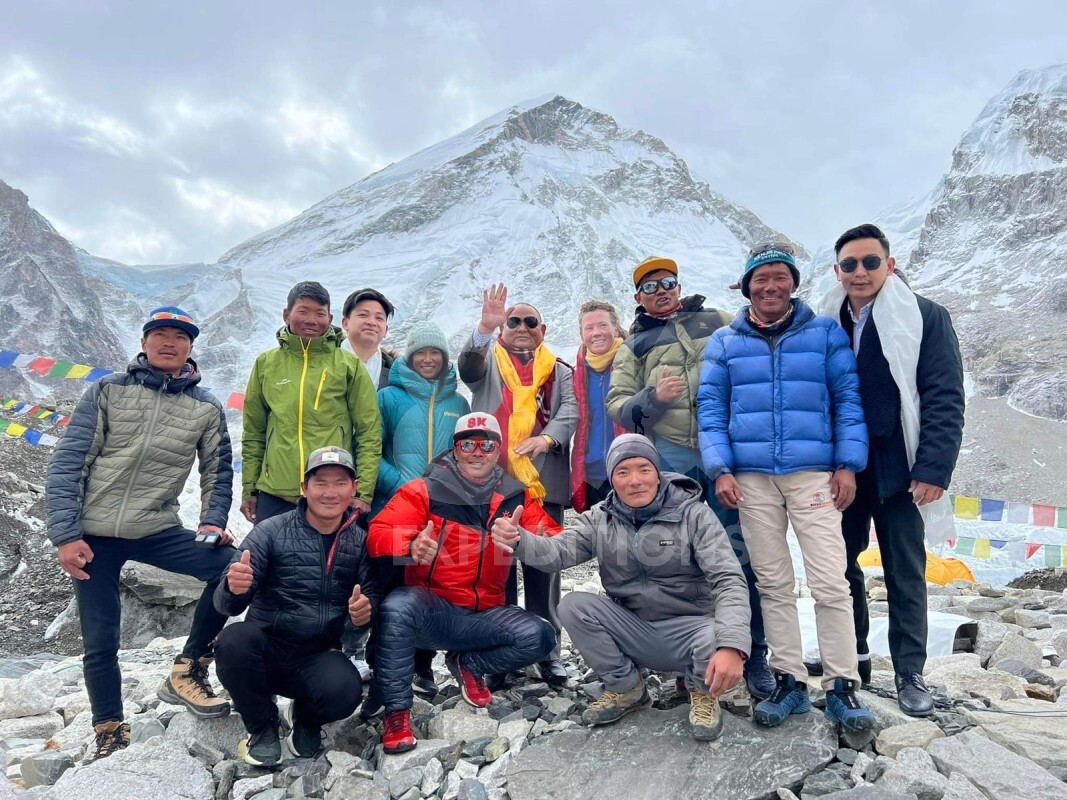
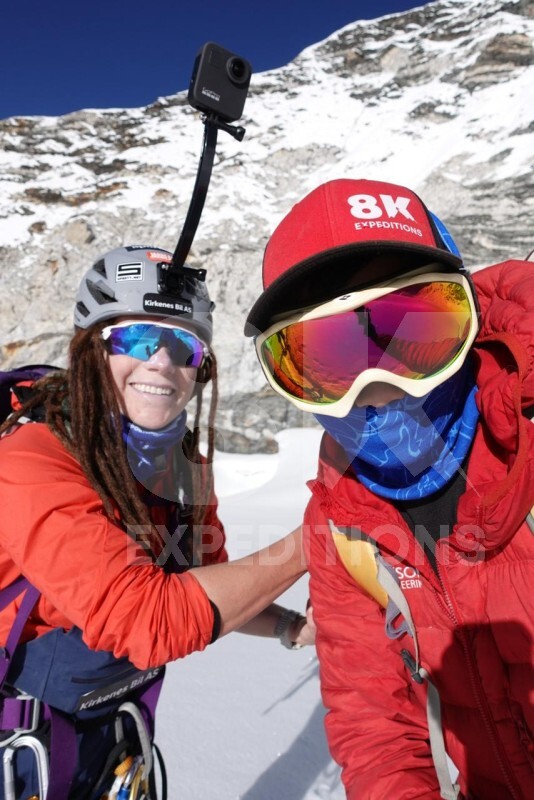
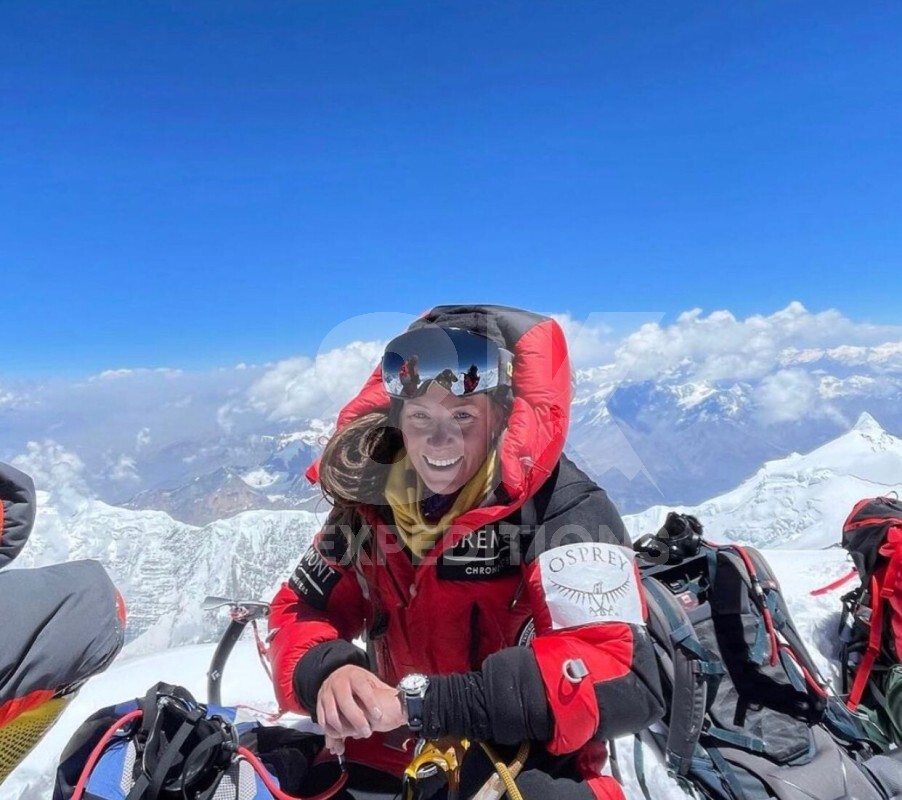
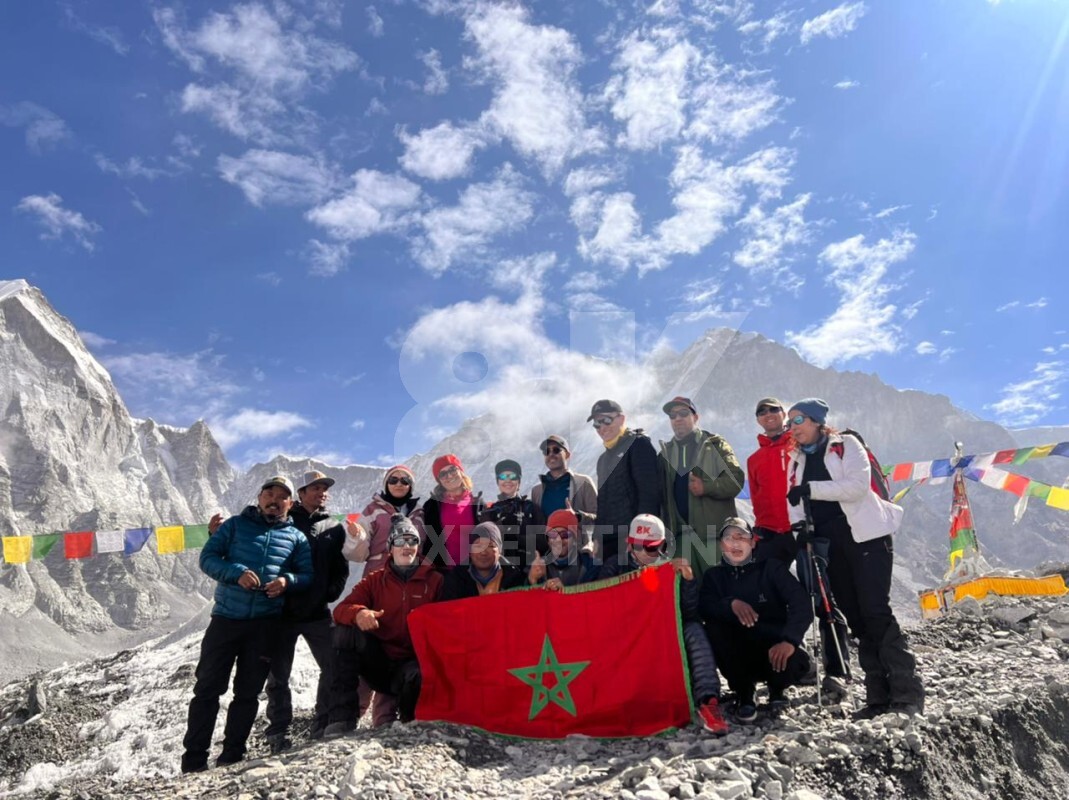
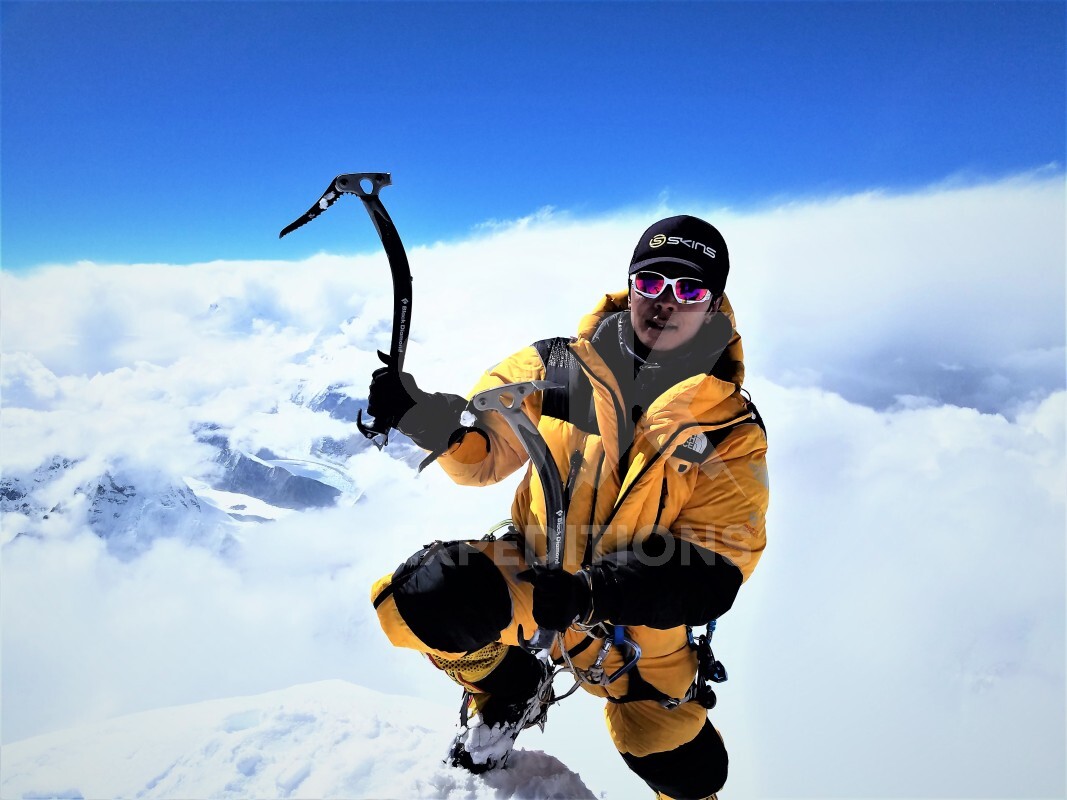
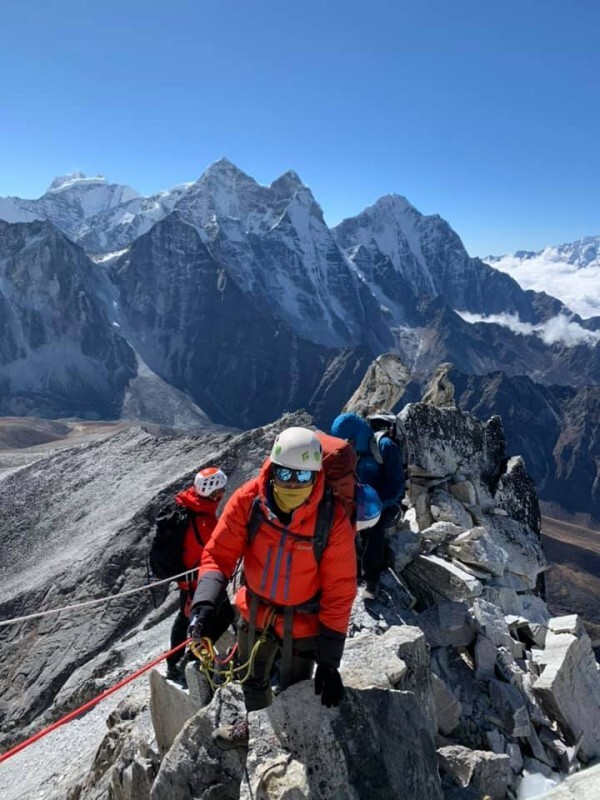
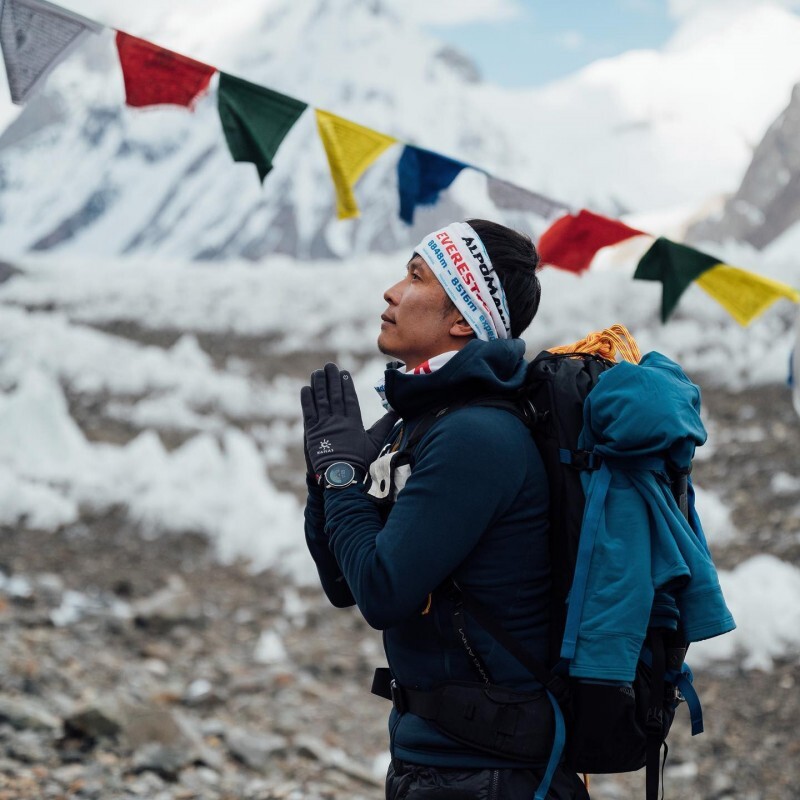
Everest Expedition South Col, is not just a travel package but an enterprise that incorporates the feeling, passion, and continuous efforts of thousands of climbers every year, a lifetime experience that changes your life forever, an attempt to stand on the top of the world, an overwhelming journey to the land of Himalayas.
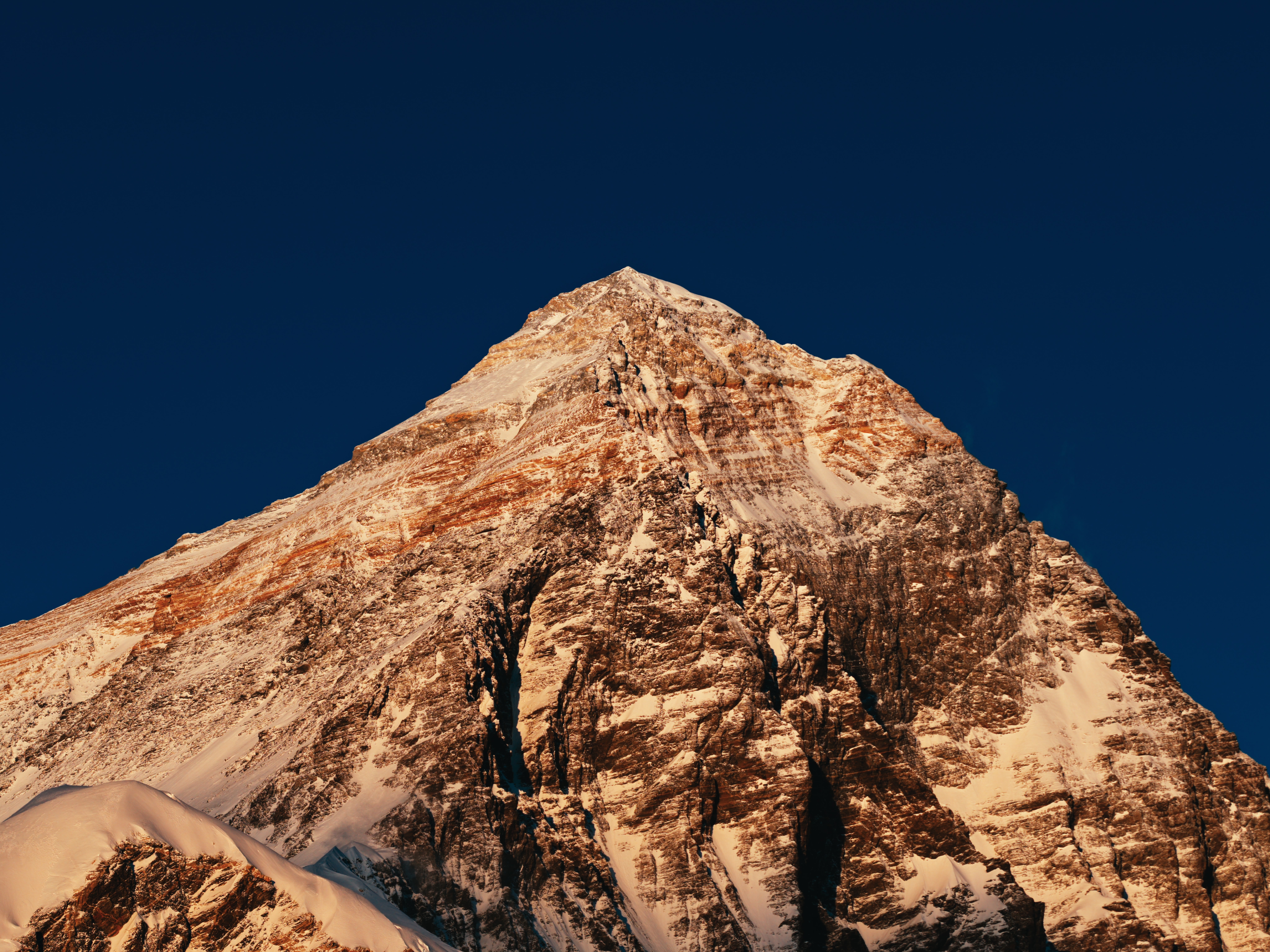
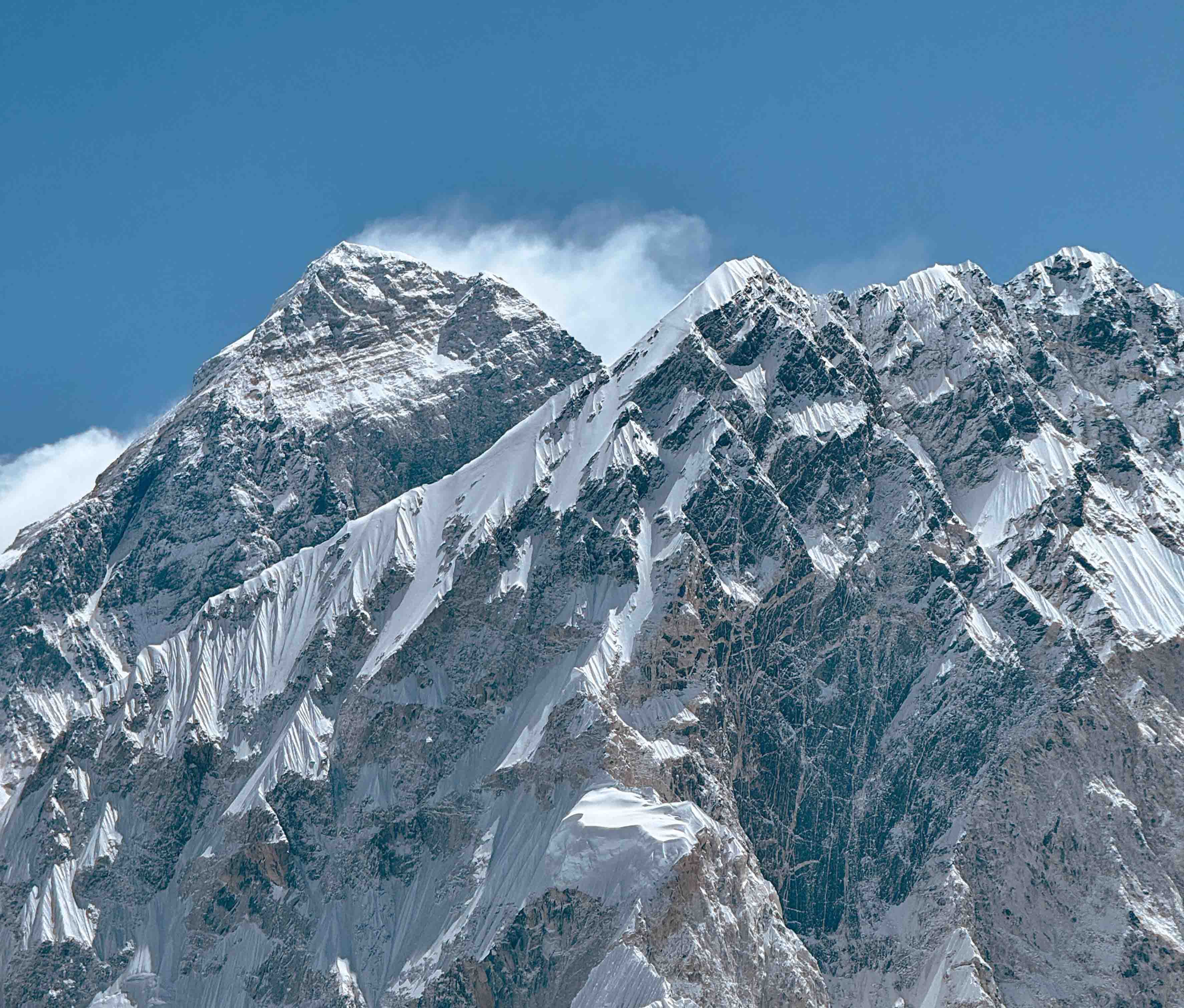
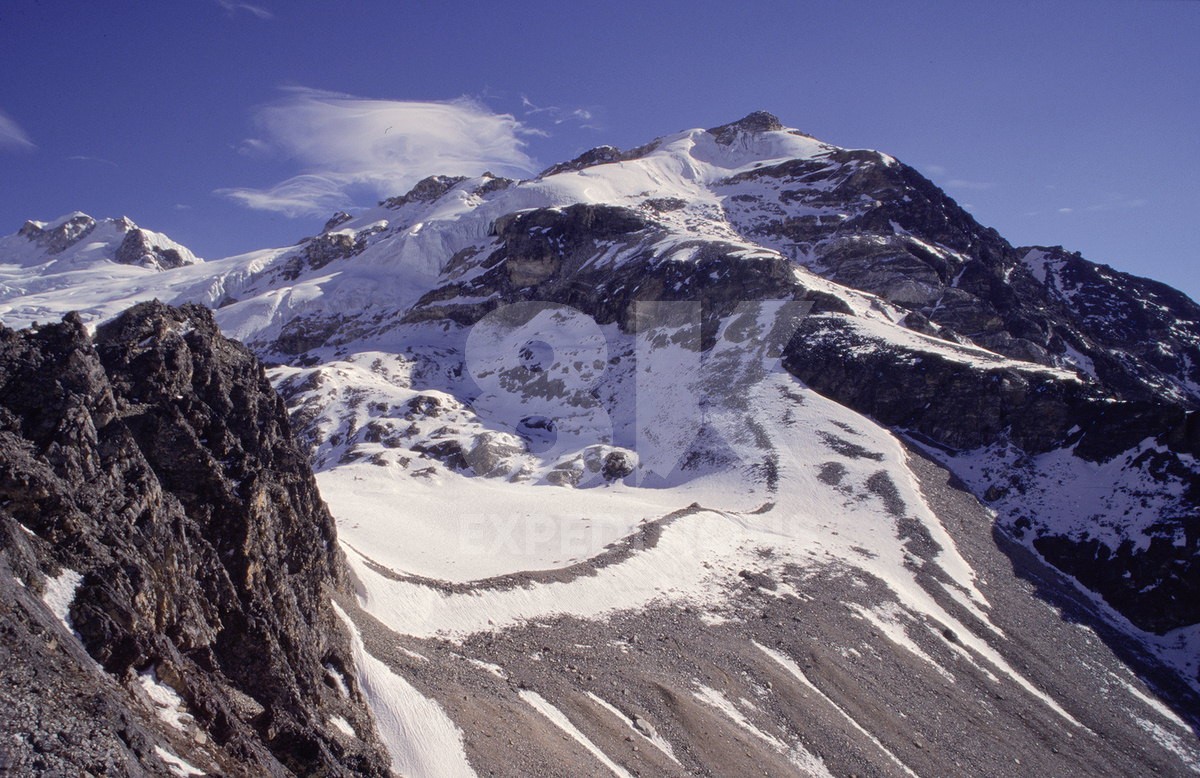
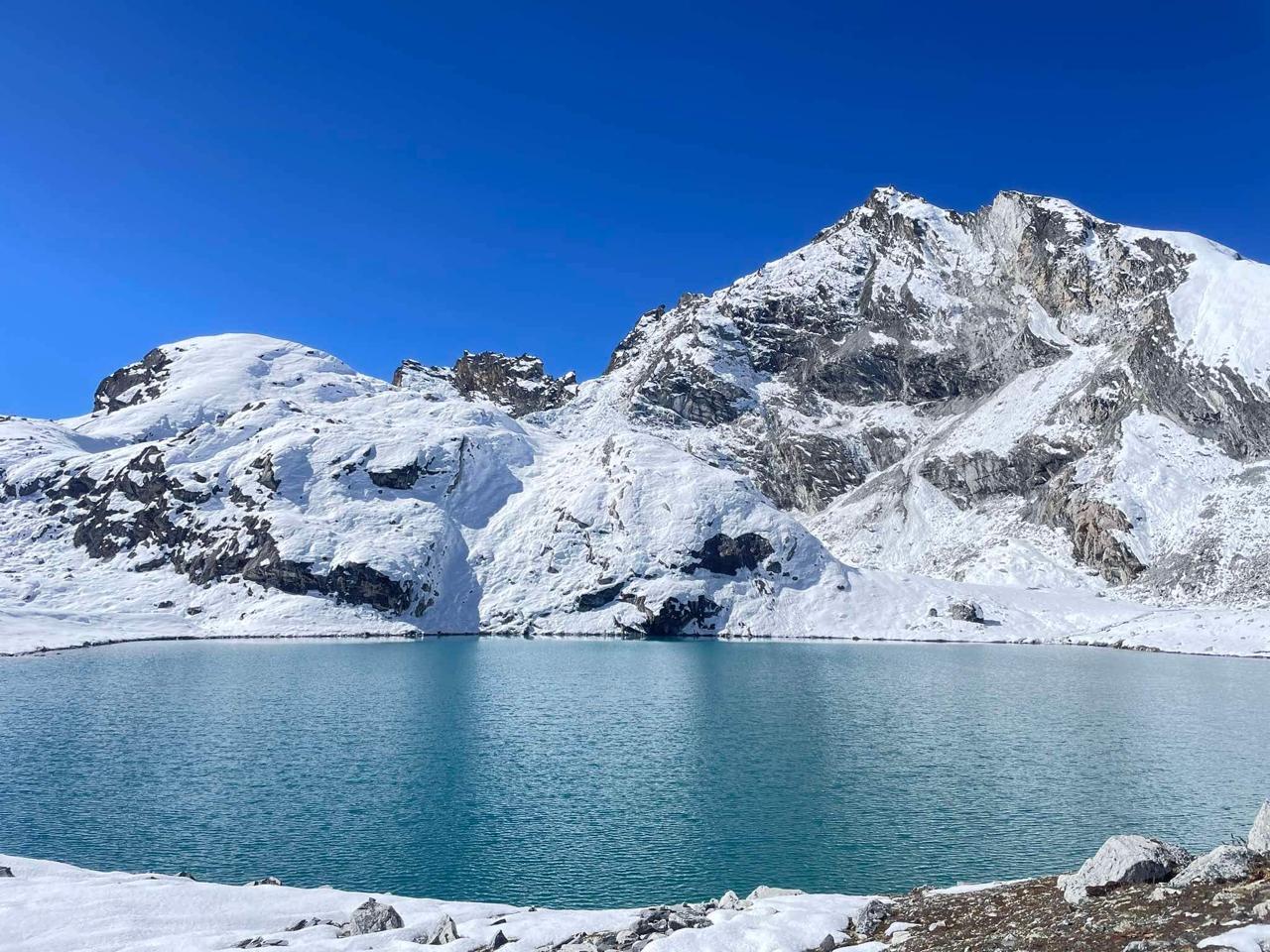
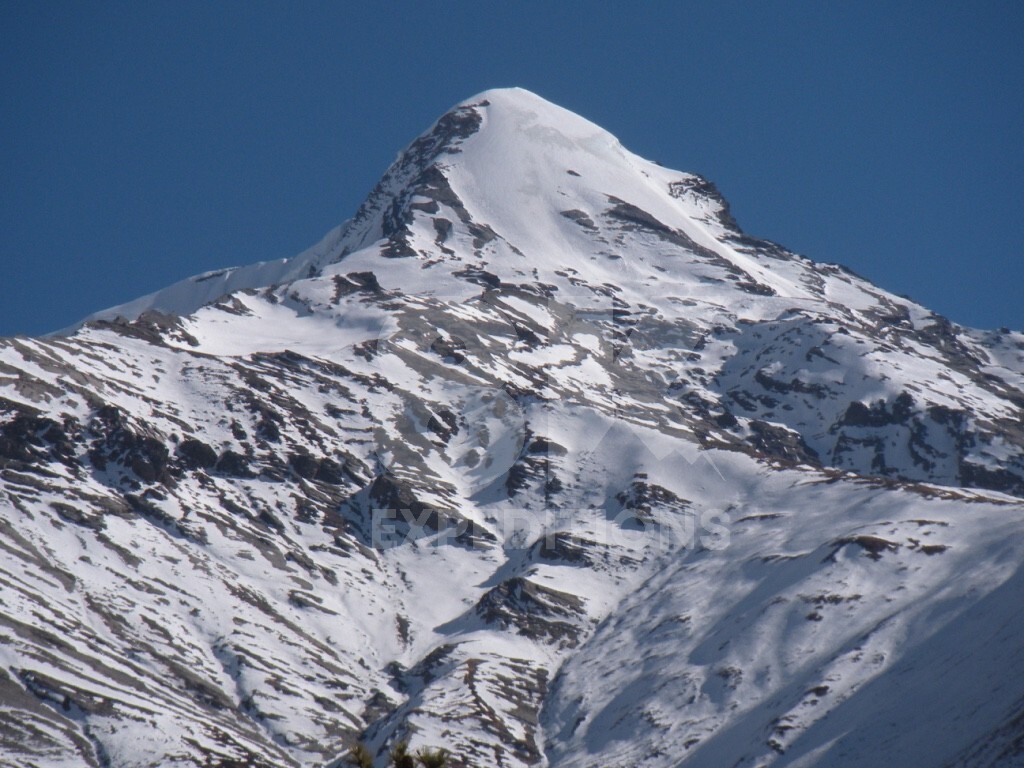
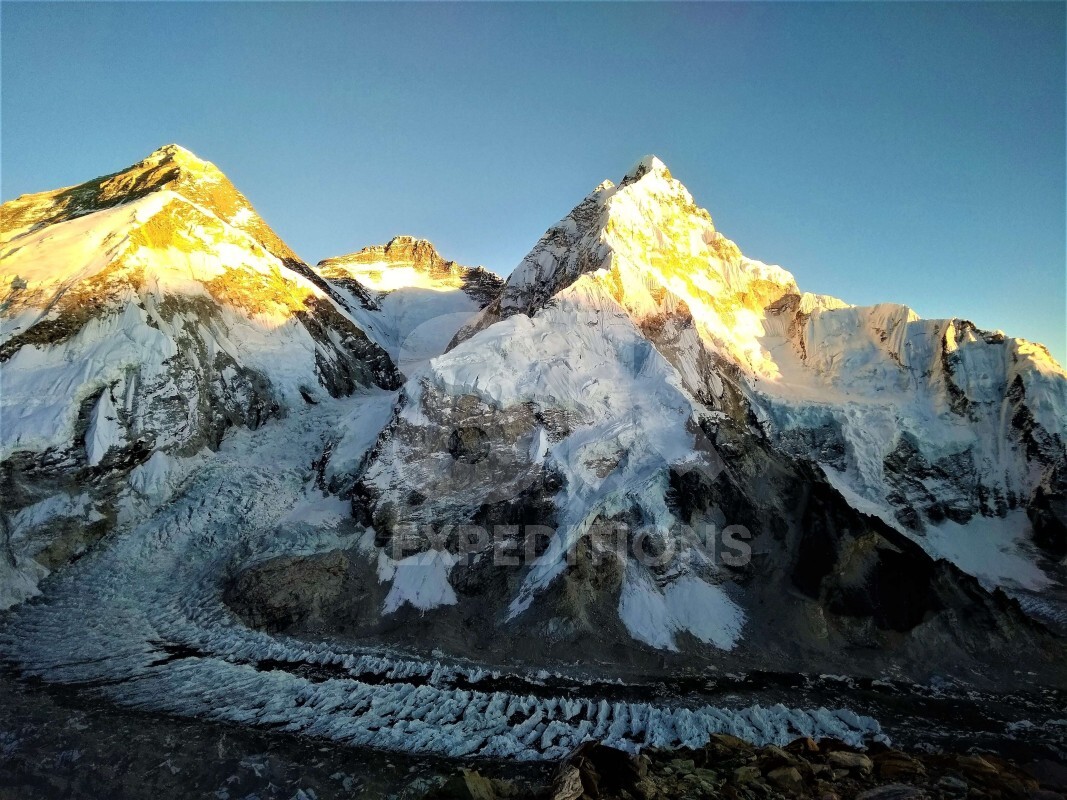
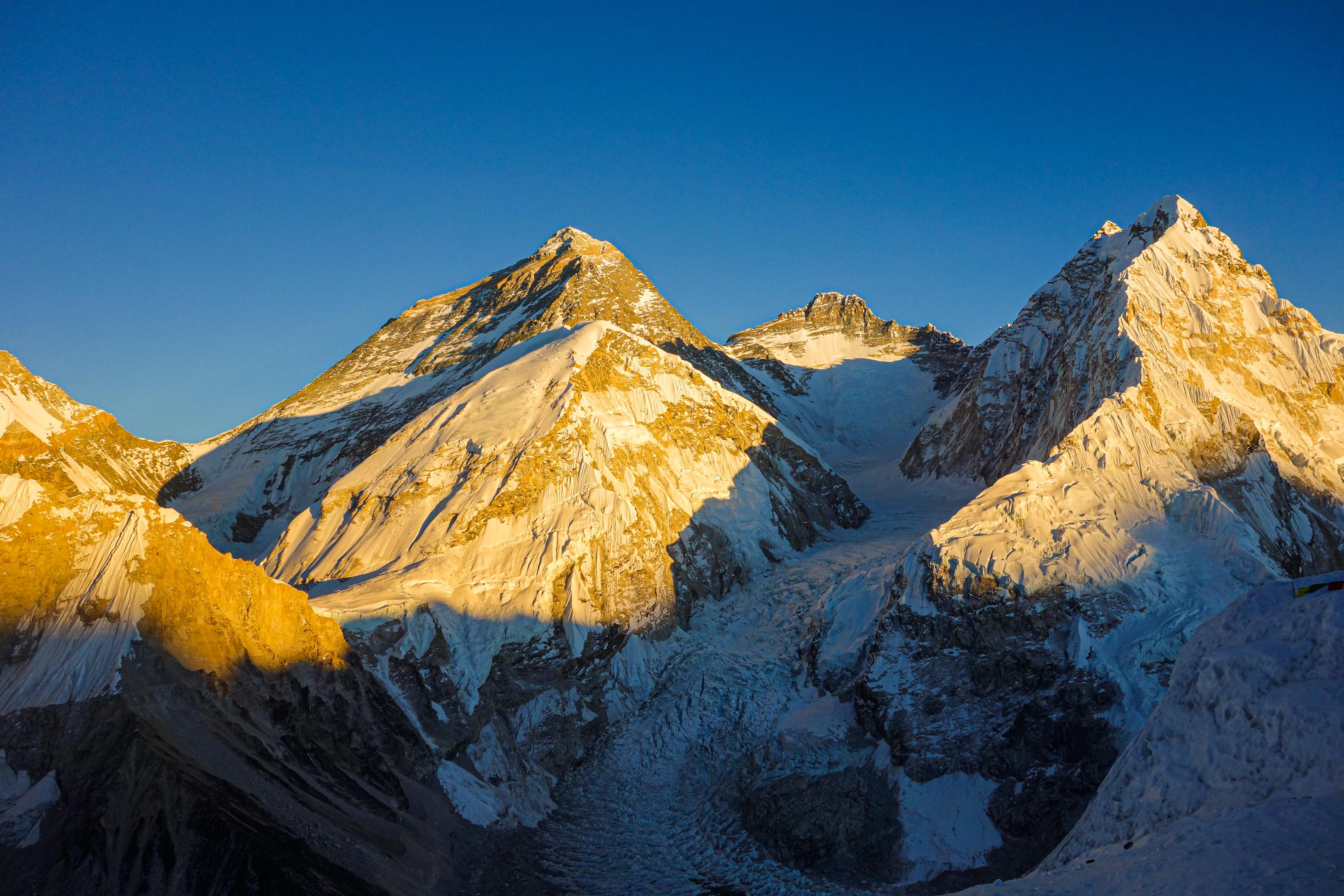
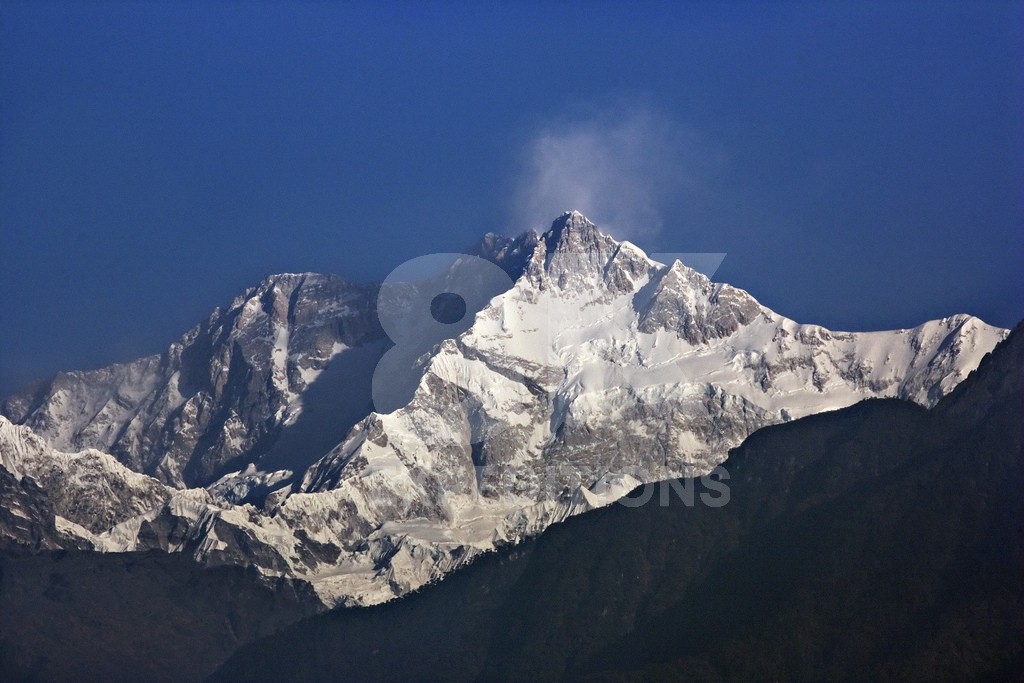
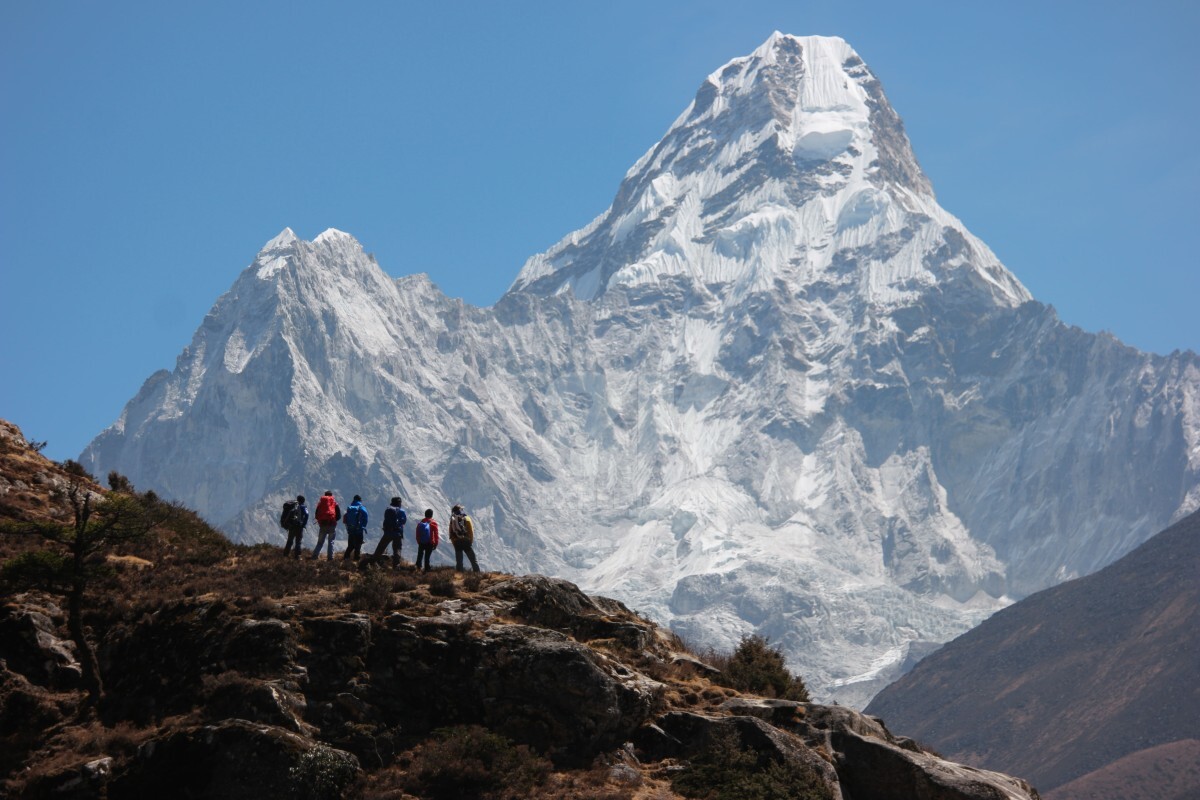
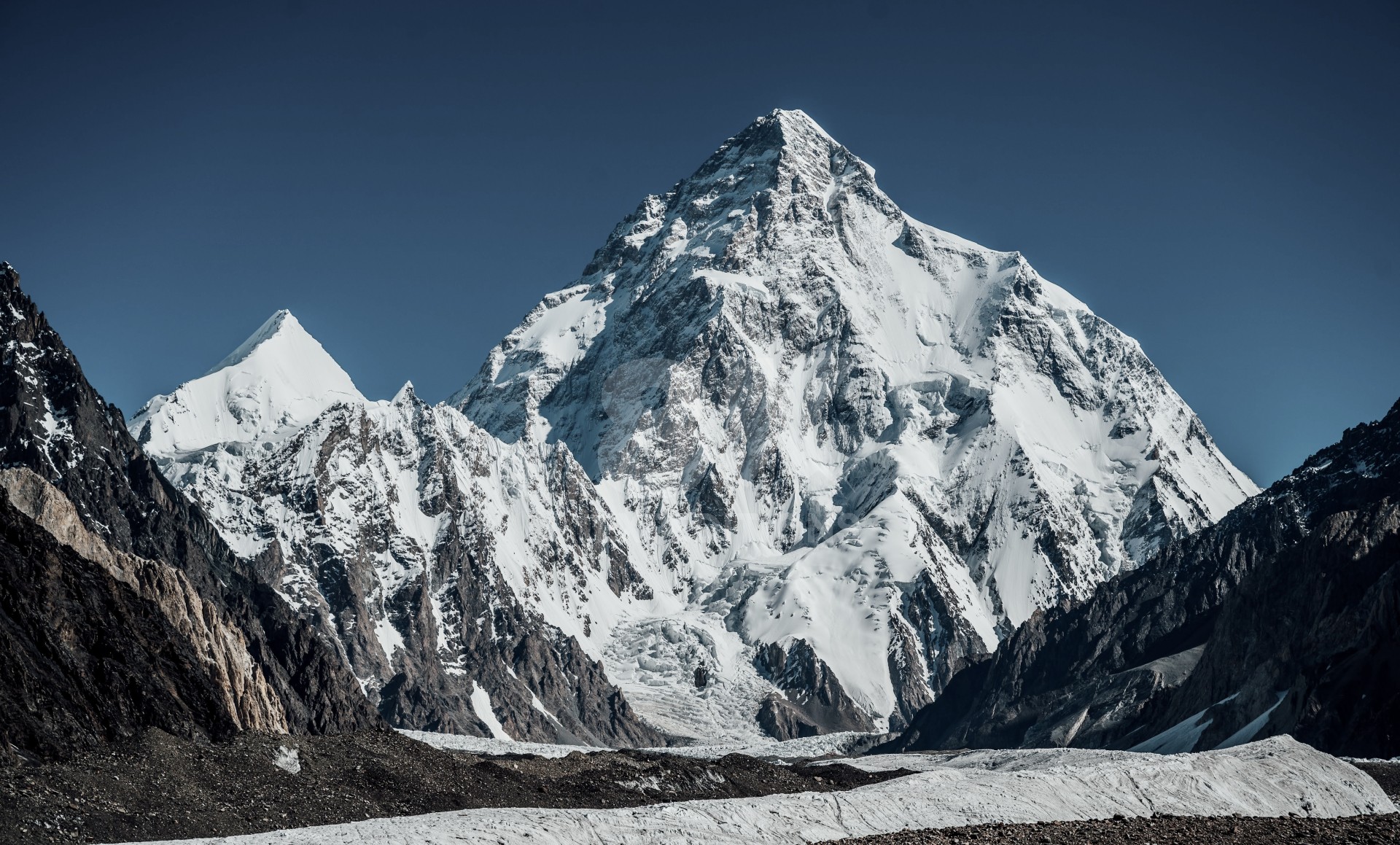
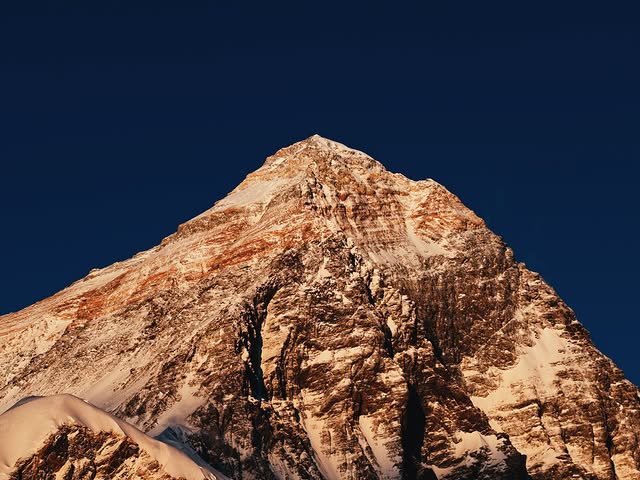
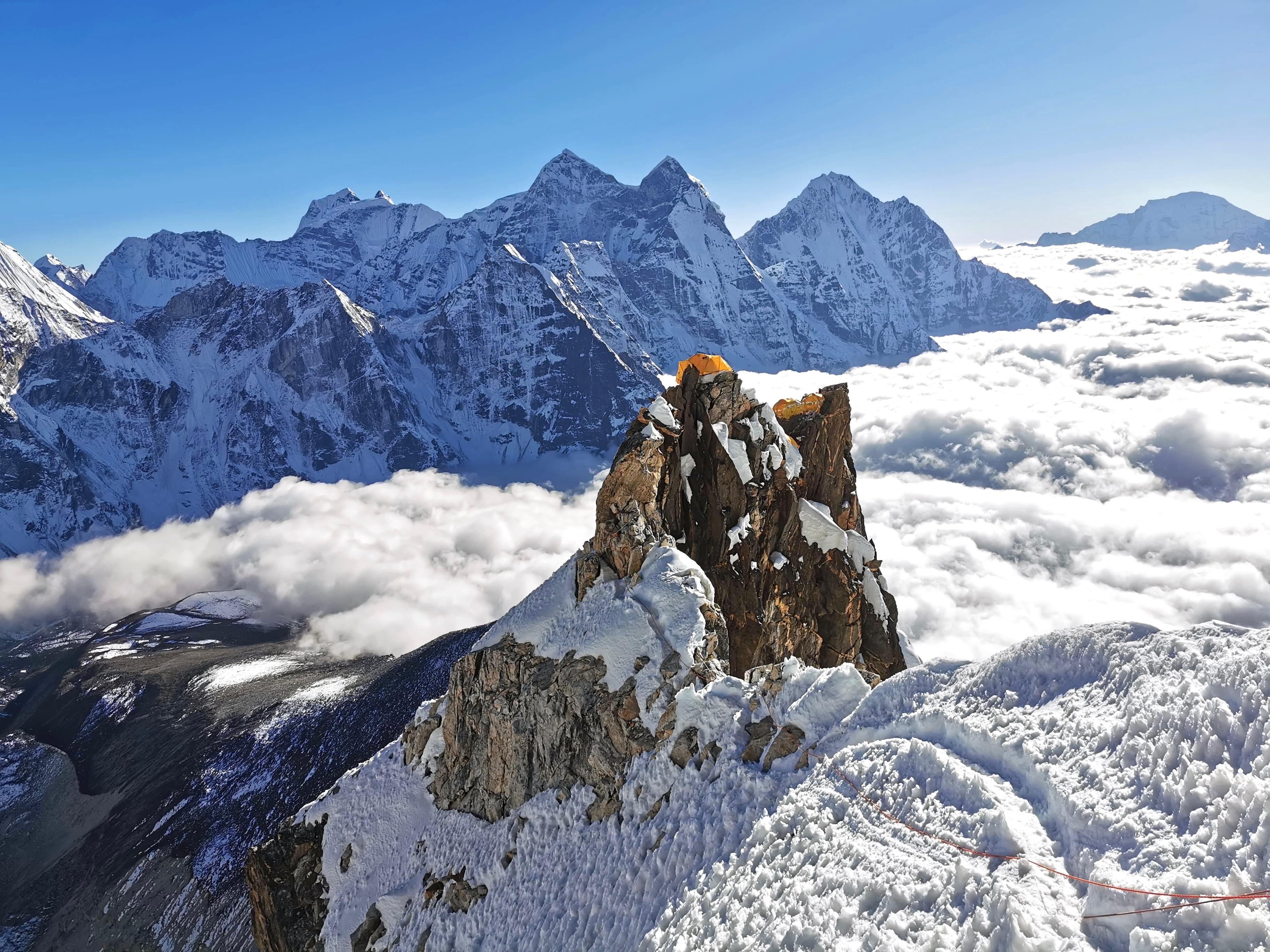
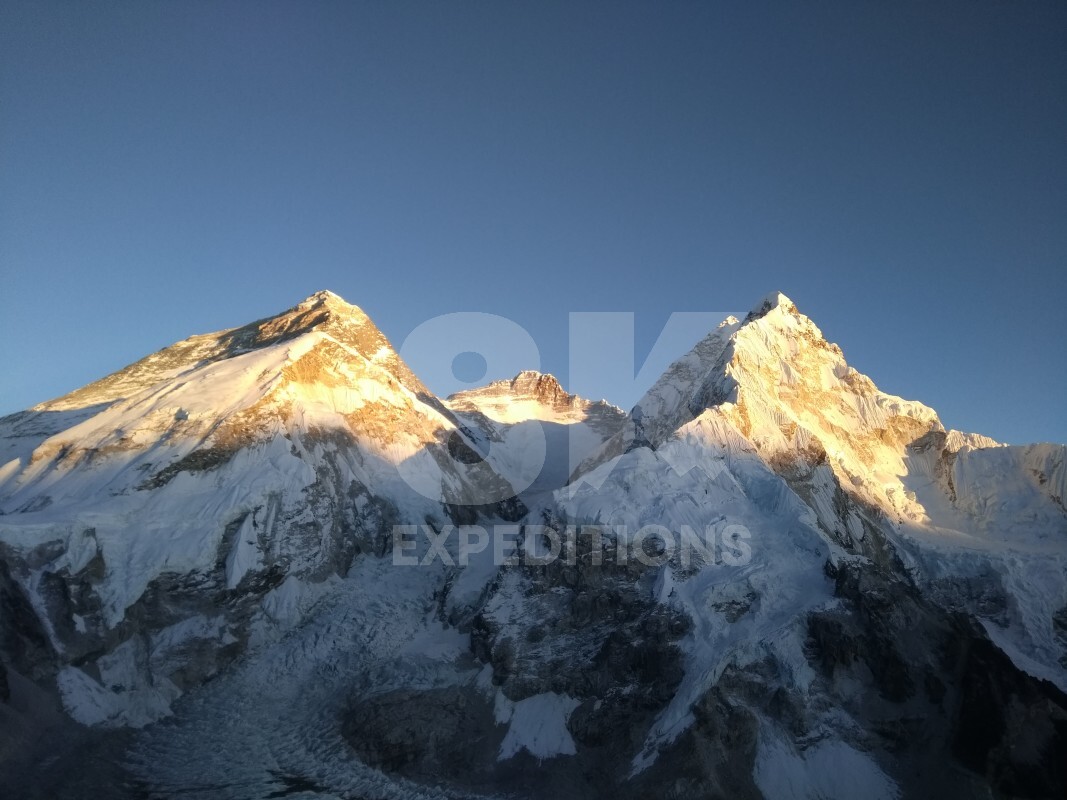
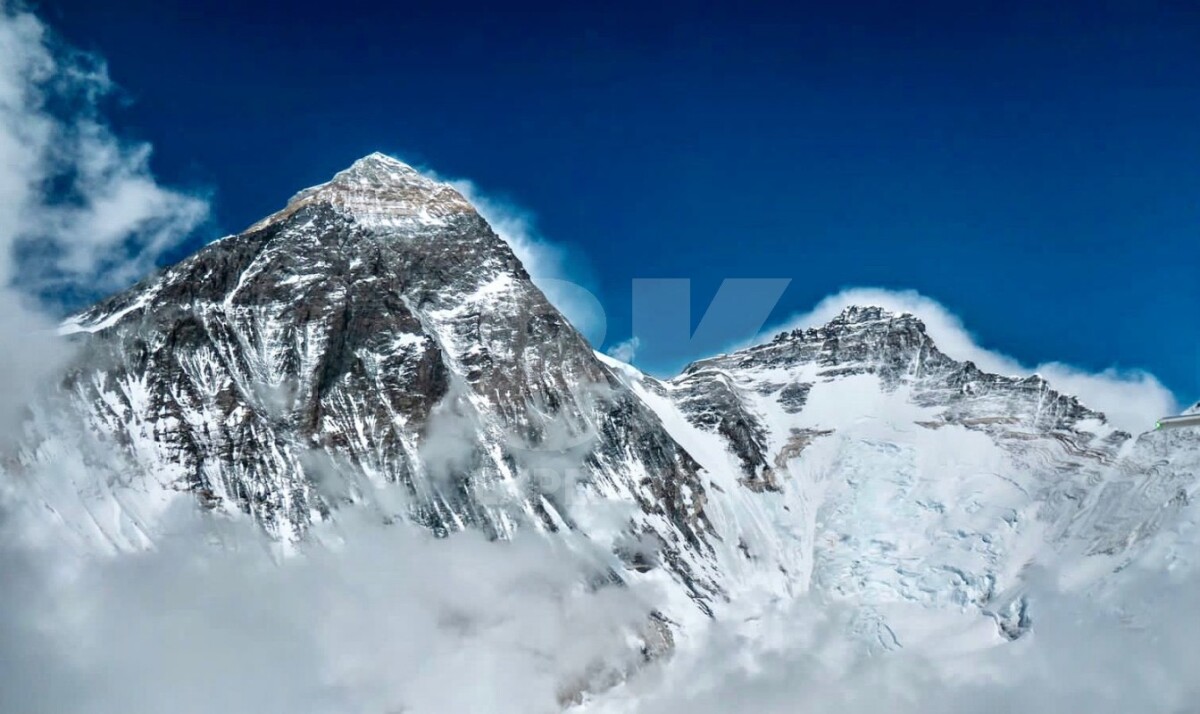
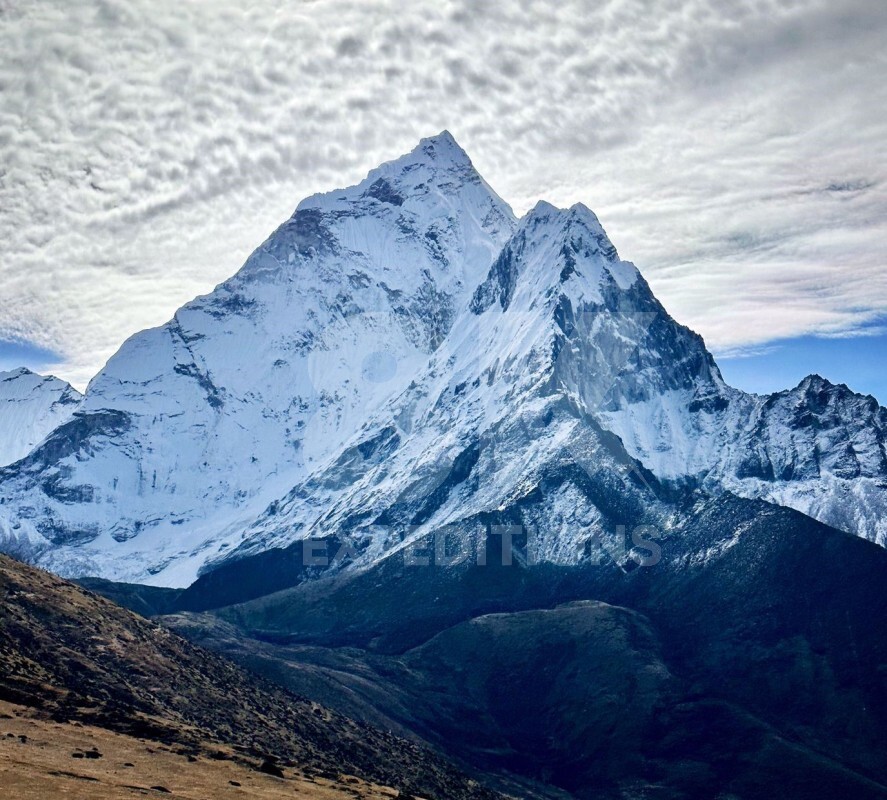
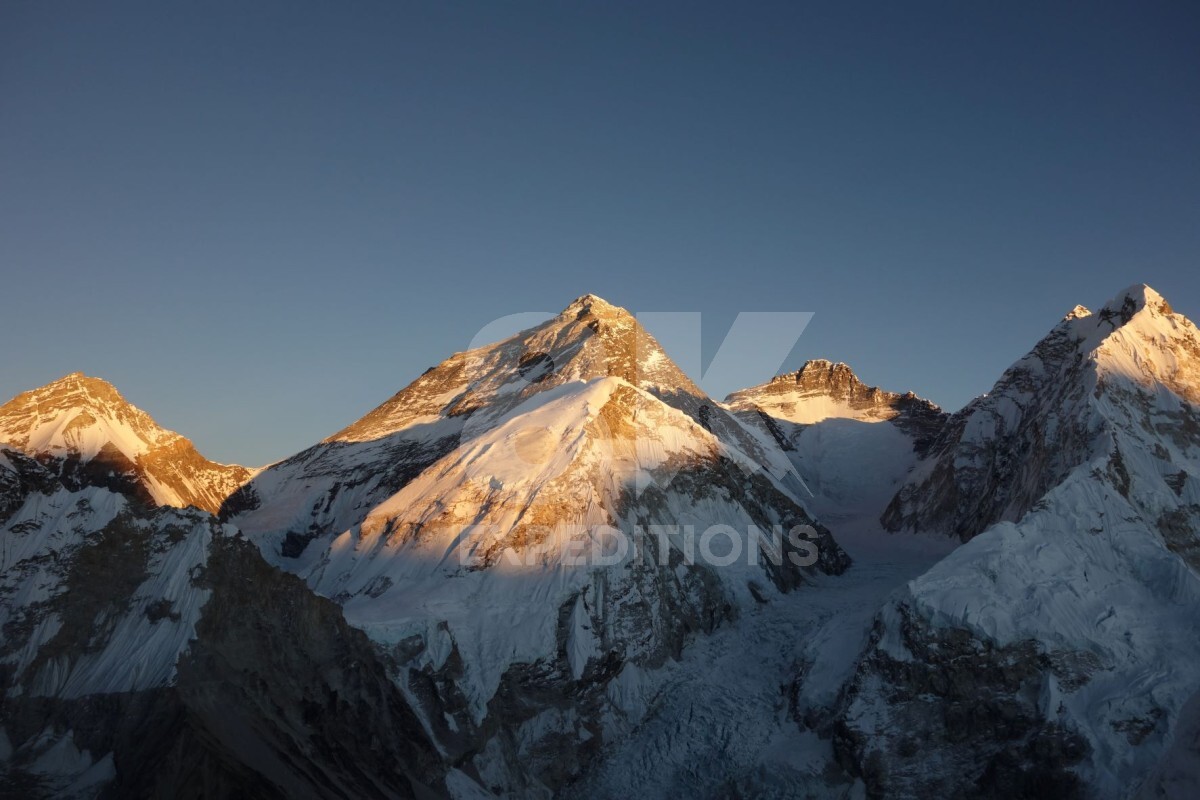
Residing in the Mahalangur Range of the Himalayas, standing tall at the height of 8,848.86 m, boasting the title of the highest mountain in the world, Mount. Everest in the Eastern Part of Nepal is a top choice among travel destinations in the world. Besides Mt. Everest/Sagarmatha/Chomolungma itself, there are other beautiful mountain ranges in the periphery like Lhotse, Ama Dablam, Pumori, Nuptse, and Lobuche East to name but a few. One may choose peak climbing, Trekking, Expeditions, or a customized trip by combining any of these adventurous activities in the Mount Everest Region. The Glacial Lakes and Icefalls are breathtaking as well as spine-chilling that one cannot resist but behold.
The other major attraction of the area is Sagarmatha National Park, one of the World Heritage Sites, which is home to a number of floras and faunas dominant to the Himalayan Region. It is home to some endangered species like Red Pandas, Musk Deer, Snow Leopards, and many more.
Everest Expedition South Col: History
In 1852, Mount Everest was recognized as the highest point on the Earth’s surface by the Government Survey of India (Great Trigonometrical Survey). In 1856, Four years after the identification, The Mountain which was known as Peak XV was renamed after Sir George Everest- British Surveyor General and officially announced Mt. Everest. The conquest to summit Mt. Everest was inception in 1921 via the north side as Nepal was restricted for foreigners at that time. But it was in the year 1953, 32 years after the first attempt, the roof of the world was first time stepped by New Zealander, Sir Edmund Hillary and Tenzing Norgay Sherpa. Since then, thousand of mountaineers have dared to reach the summit. The successful summit rate of Sagarmatha is 69.60% of which the total summit is 10,658 from both sides via Nepal and China.
Mt. Everest Expedition South side: Best Season to climb
The best season to go on the expedition to Climb Mount Everest Expedition is between April to May when winds are calmer, the days are sunny, temperatures are mild and the trail is gorgeous with dense green forests, raging rivers and streams, the soothing sounds of the birds and animals and the uninterrupted views of the grand massifs throughout the trail. The overall journey gets even more beautiful during these months. Contact Us to know more about our fixed departures for Mt. Everest Expedition and Everest and Lhotse | Double 8000ers Expedition being led by 8K esteemed mountaineers.
Everest Expedition : Risks associated with Climbing
Every reward comes with certain risks. And when it's the Climbing Standard Mount Everest (8848.86m) Expedition South Nepal in 2027, where the climbers have to traverse the Death Zone, a zone above 8000 m, risks are sure to be associated. While risks like altitude sickness can be handled by proper acclimatization, other severe risks like heavy snowfall, rain, storms, and avalanches can be avoided. Objective risks like natural disasters are out of human control.
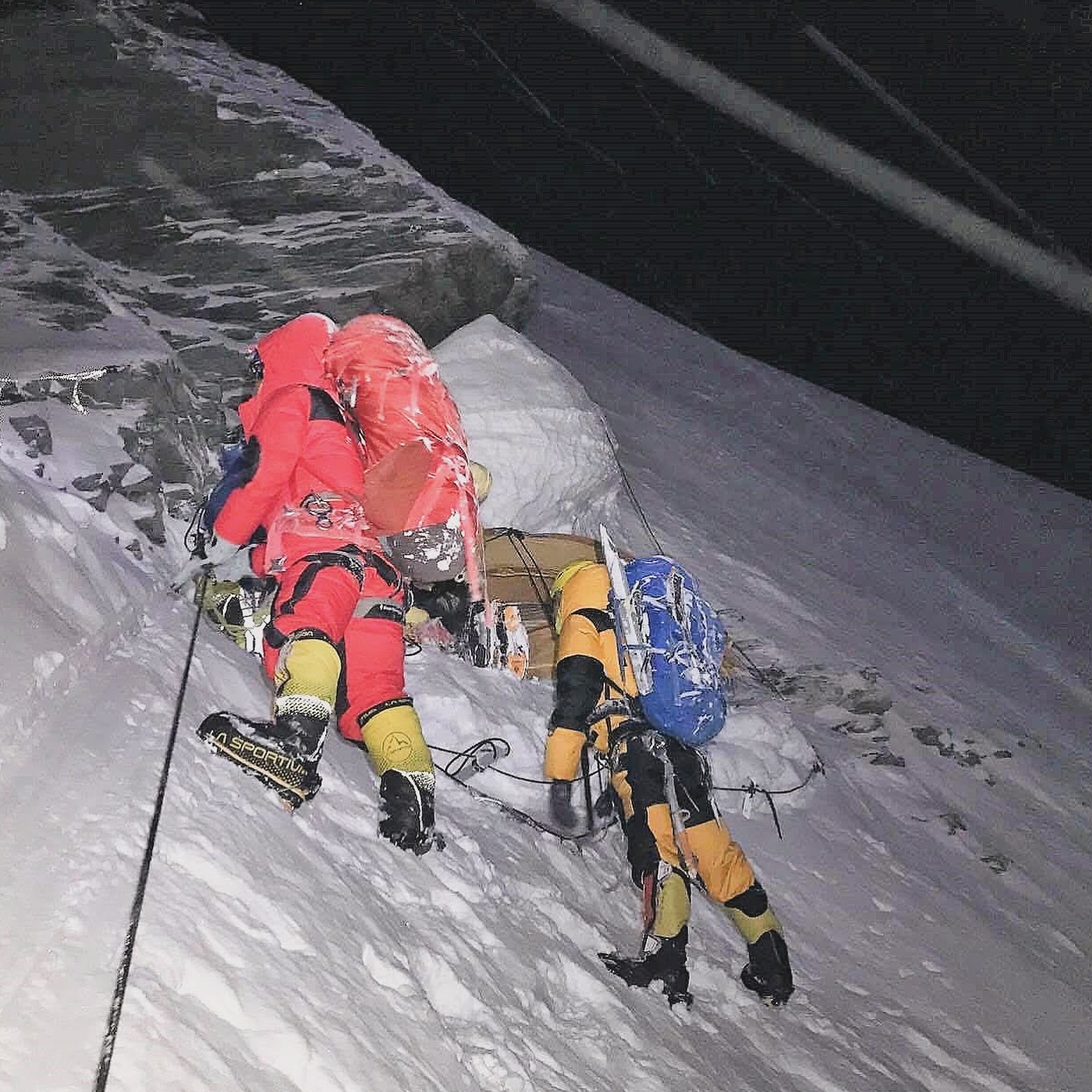
The other emerging issue with expeditions is the traffic jam that takes place in the “Death Zone” which requires climbers to wait until they get their turn to the summit. This can be well managed and minimize the risk.
(NOTE: We use constant climate monitoring to grasp the best time for a summit.)
Everest Expedition South Col, Nepal: Preparing for the majestic Mountain
Mount Everest (8848.86m) Expedition South Col Nepal is tough but highly rewarding as well. So, prepare yourself psychologically and physically to withstand all possible hazards that may come across your path during the journey.
Mount Everest (8848.86m) Expedition South Col Nepal is challenging but worthy. We will train you very well to be in the Himalayas by providing you with all technical know-how and techniques. We will have enough time at the Base Camp to let you prepare yourself before the ascent.
The summit lies at a higher altitude and can cause altitude sickness but proper acclimatization and enough oxygen will help you go through. We will always have extra bottles of oxygen in case of emergencies. This is why one must go on an expedition to any of the 7 thousand before heading to Everest. This will not only help you gain experience in the high altitude but also familiarize you with all the gears and equipment while handling extremely cold temperatures, gaining great crampon using skills on and off the rock, snow, ice, rappelling with a pack on, and using ascenders and jumars on a fixed-line. Along with tolerance at a high altitude, you need strength, endurance, and strong cardiovascular conditioning.
NOTE: Prioritize your training efforts with the following techniques assuming you are in good health and injury-free.
Climbing Conditioning: Uphill climbing with a backpack, walking, and staircase climbing
Strength training for lower body and core
Cardiovascular Training: Include both aerobic and anaerobic workouts with and without pack-weight
Flexibility Training: Include stretches for overall body
Upon your arrival at the TIA, you will need to fulfill some official procedures to obtain the Nepal Entry Visa at the Immigration counter. One of our 8K representatives will be waiting to welcome you at the Arrivals. After the meet and greet, you will be transferred to the hotel booked for you to rest. There you can freshen up and rest.
On the second day, we will fulfill all our official procedures including necessary documentation, obtain permits, and other formalities needed for our expedition. Then you will have time for sightseeing around the city.
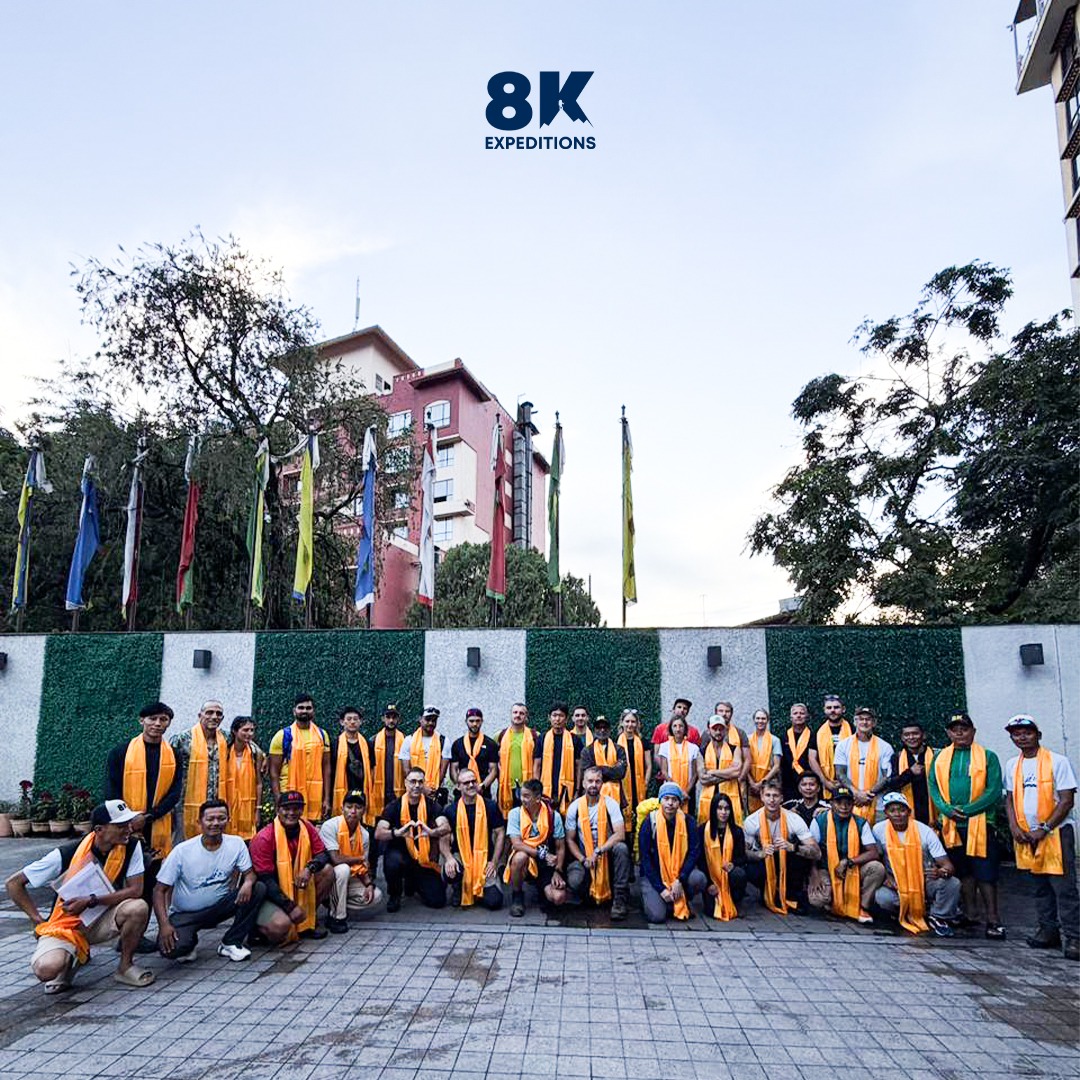
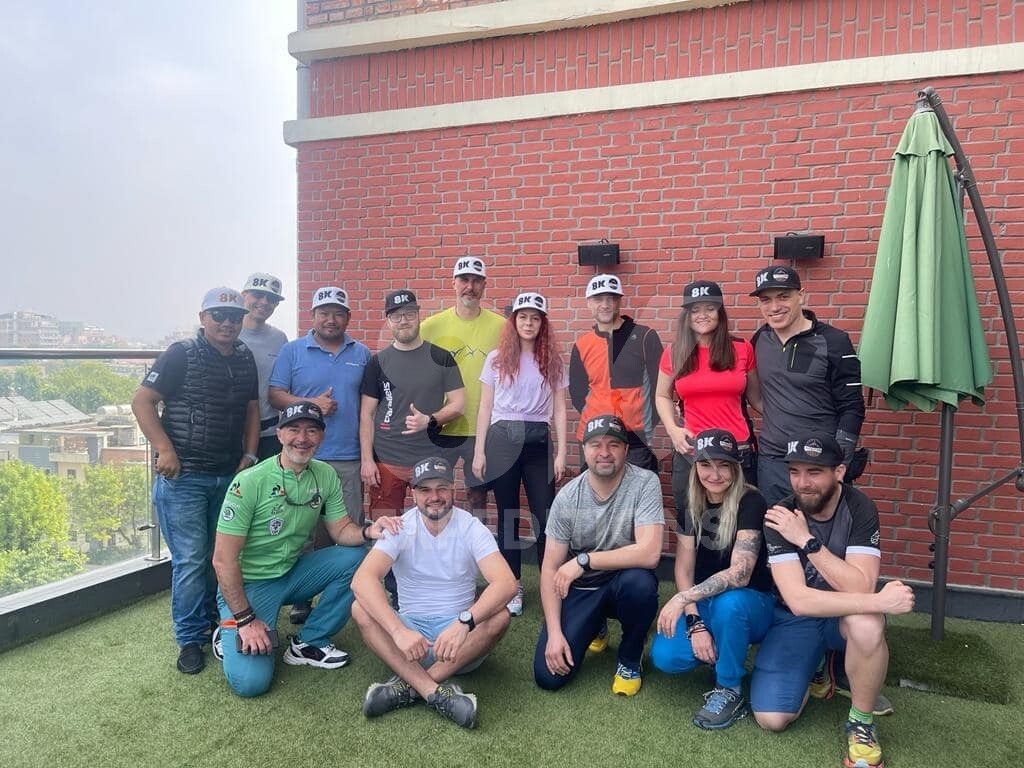
The next day, we will start our preparation for our expedition. We will now pack our bags, do some necessary shopping, re-check everything that we need (Especially medicines and essentials). Briefings will be made about every aspect of the expedition and all gears and equipment, trip duration, accommodation, facilities at the base camp, and all related to the expedition. It is also an opportunity for you to communicate and introduce yourself to your fellow climbers and teammates.
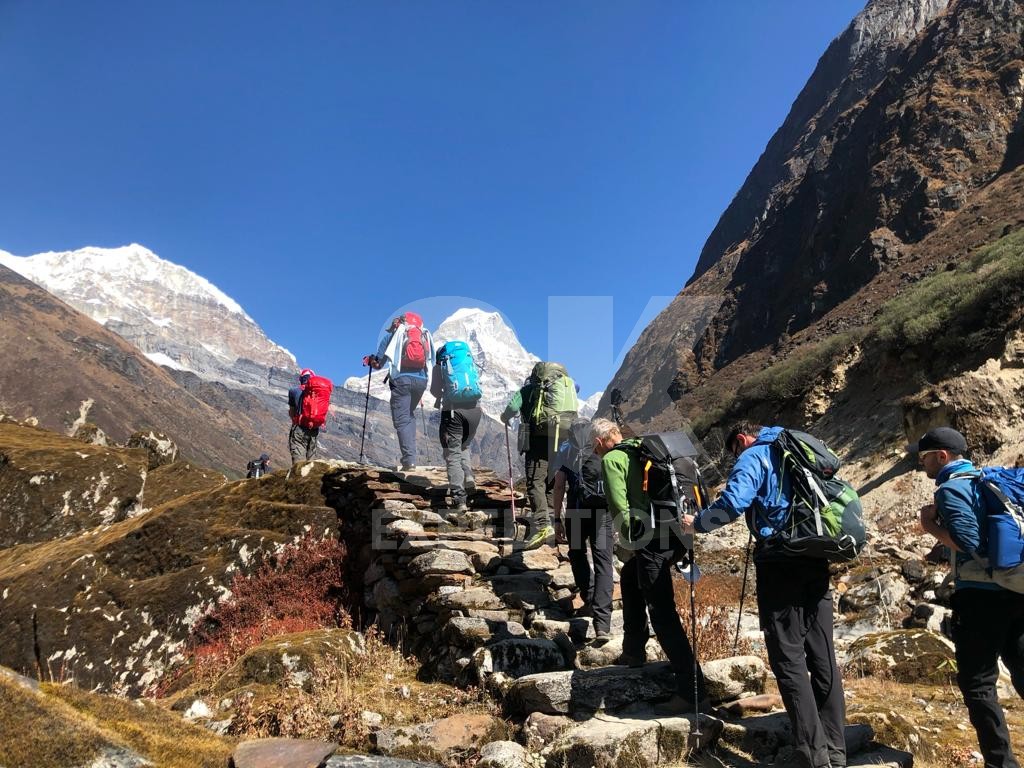
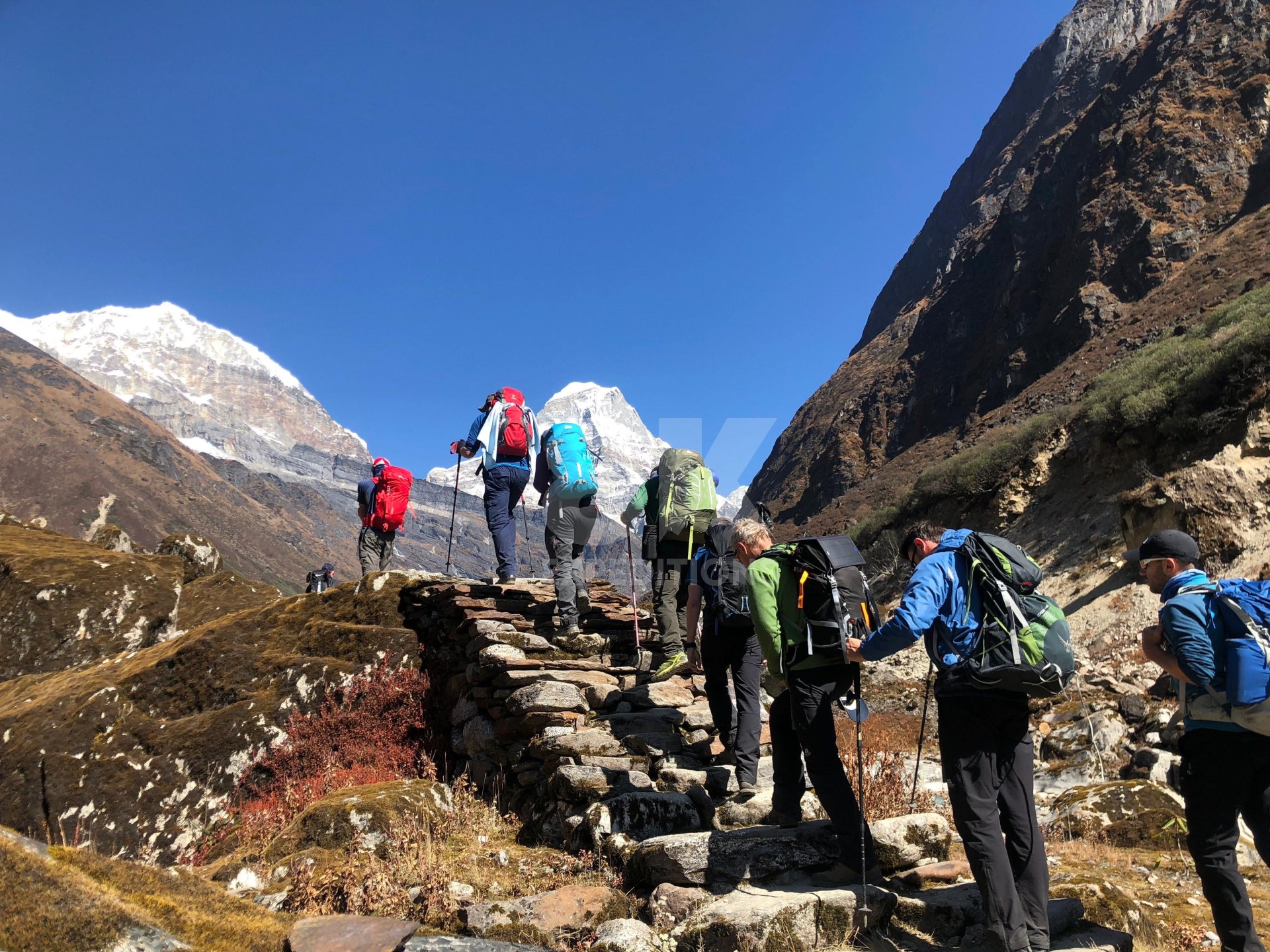
After an amazing breakfast, we will take a thrilling flight to Lukla Airport early in the morning. The flight gives you a bird’s eye view of the valleys, rivers, hills, and gradually mountain ranges. Even though the flight is only for half an hour, it does not fail to mesmerize you now and then. As we land at Lukla Airport, which is already exciting, we start our trek to Phakding, our destination for the day. After obtaining the permit for the region, we will slowly move through the settlements on a mixed trail of dirt, stone pathways, and some rocky sections at times. This is an easy start, so make sure to enjoy all the greeneries, floras, and faunas as you walk. The trail takes you over several suspension bridges and along the Dudh Koshi river. Enjoy the rest of the day at Phakding.
After Phakding, we move towards another beautiful destination, Namche Bazaar, which is the commercial point of the Khumbu region. Passing through the dense luscious forests of pine, juniper, Rhododendron, looking out for animals in the Sagarmatha National Park, climbing the stairs, enjoying the rages of rivers at some points, and mostly walking uphills are the major activities of the day’s trek. This trek will be long and tiring as we start gaining significant elevation. As we reach Namche, we rest at our hotel and enjoy our dinner. The next day, we hike up to Everest View Point (3900m) & decend back to our Hotel to acclimatize where we can also go around the village area and experience some local sherpa culture. We can also visit the Everest Photo Gallery and the Sherpa Museum while in Namche.
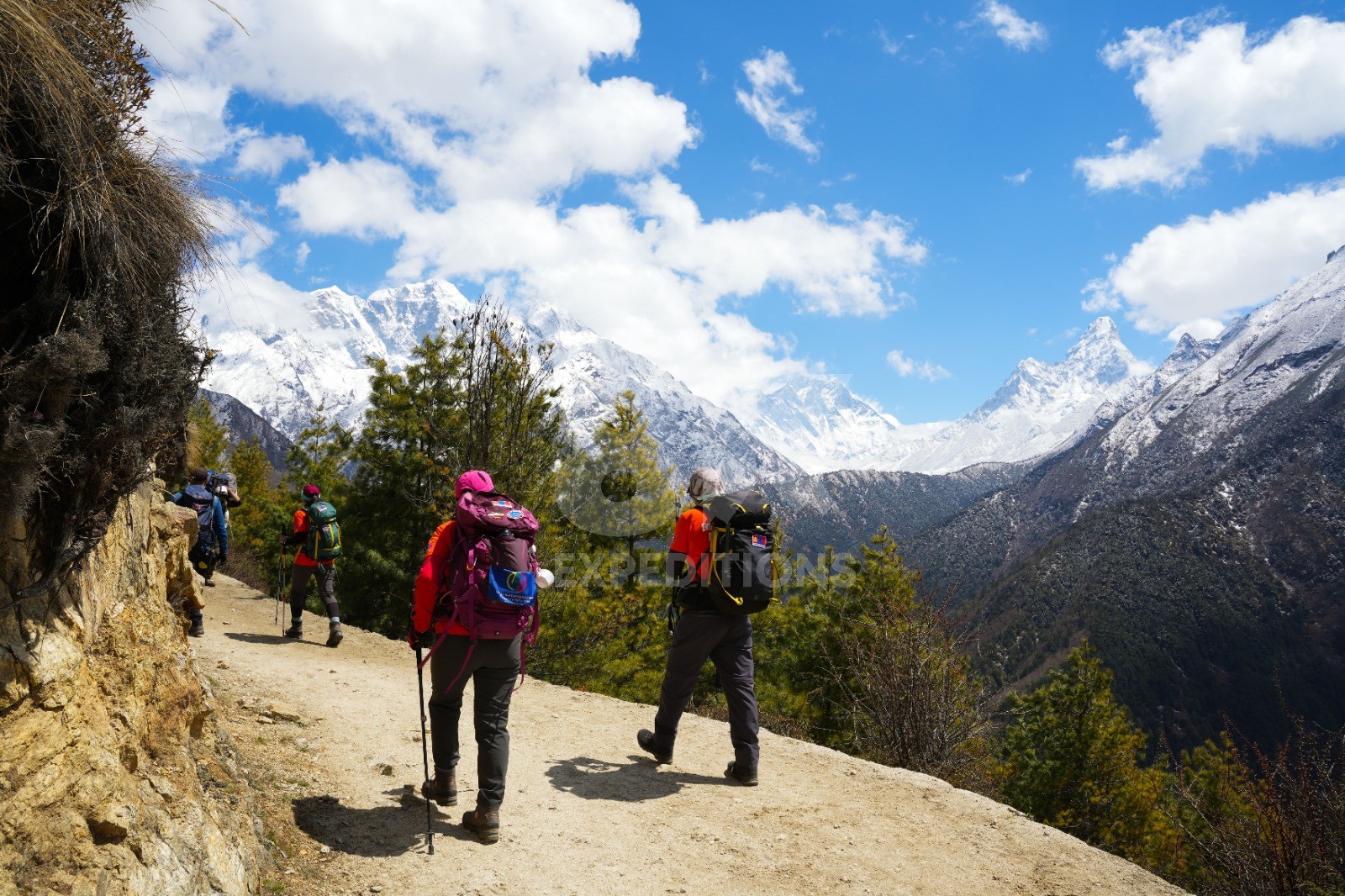
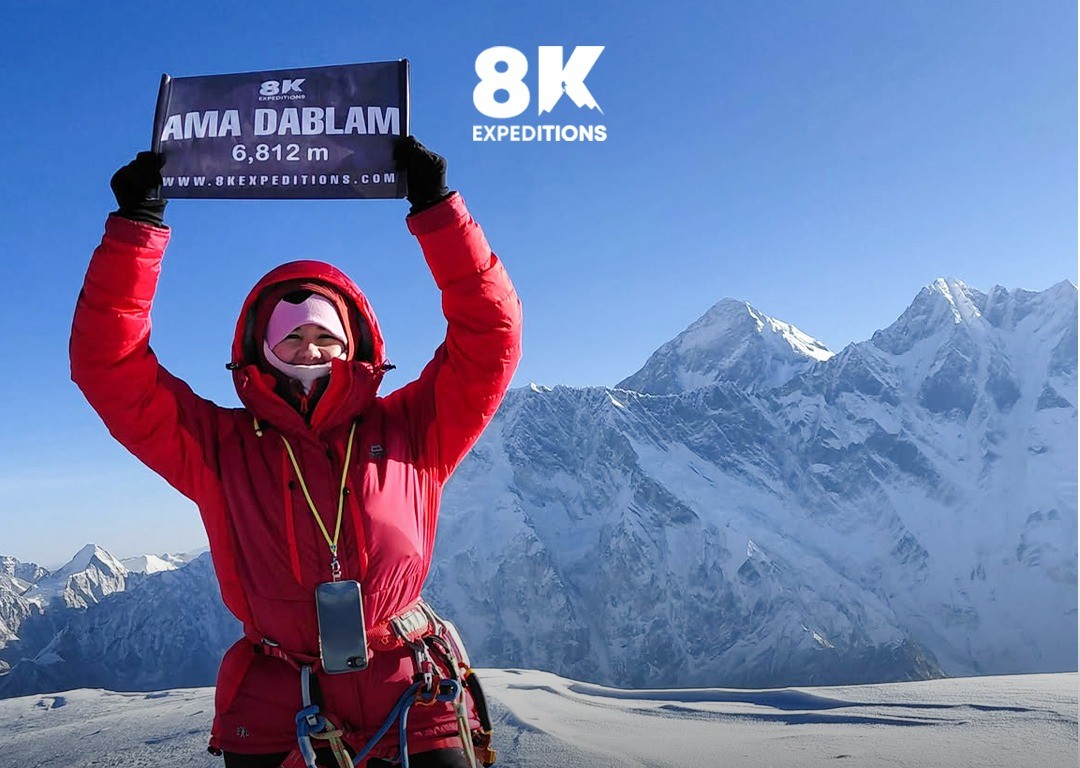
After a day’s rest and acclimatization at Namche, we then approach one of the most beautiful and tranquil parts of this Expedition, the Tengboche monastery. Tengboche monastery is one of the most popular monasteries among Buddhists around the world. The views of Mt. Everest, Nuptse, Lhotse, and Ama Dablam are visible towards the north while Thamserku and Kangtega stand towards the south with striking views. We will also join in some prayer ceremonies and rest for the day.
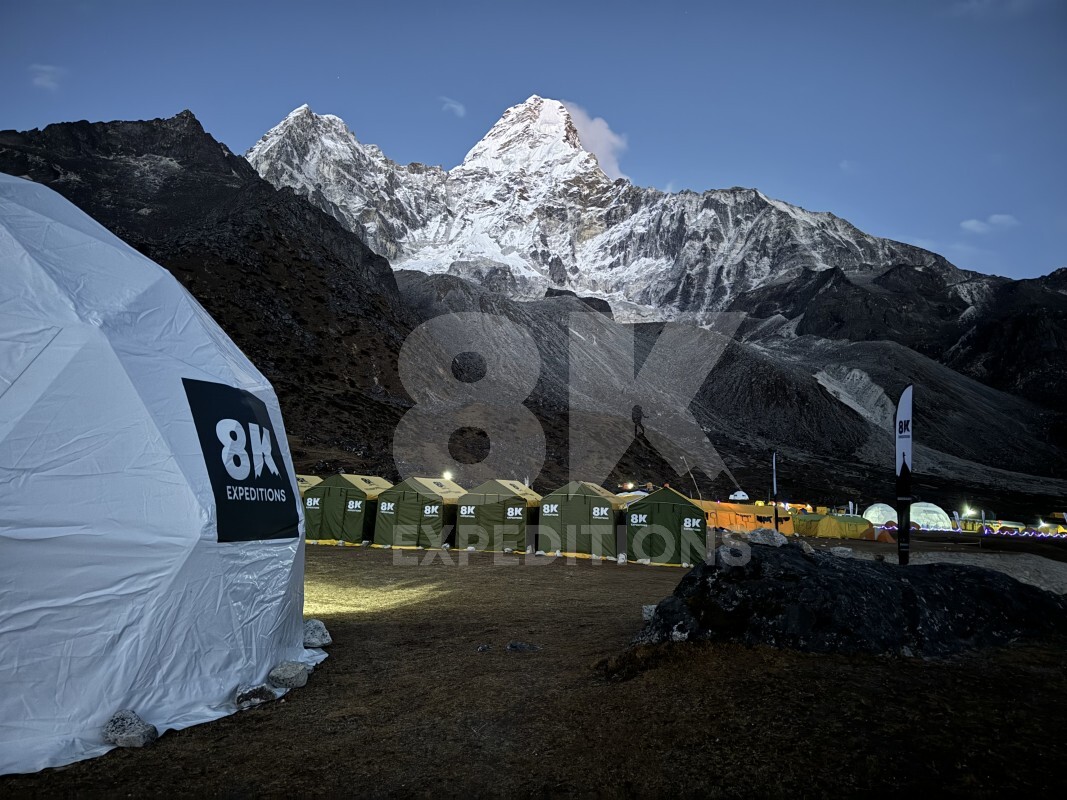
After spending our night in Tengboche, we start our trek towards Dingboche where we will stay for the next day to acclimate ourselves. Following the path down from Tengboche towards Deboche through the forests of Rhododendrons, we cross a bridge over the raging Imja river. Then we gradually climb uphill to reach the village of Lower Pangboche where we can witness the spectacular views of Ama Dablam. We then move across the valley to reach our destination Dingboche at the start of the Imja Tse valley after an approximate walk of 5-6 hours. We spend our next day here to acclimate ourselves. We go on short hikes around the area to get some striking views of the mountain grandeur.
After acclimatizing in Dingboche, we head towards another beautiful stop, Lobuche. The journey starts with a climb to the ridge behind Periche until the tea houses at Dughla followed by a steep ascent to the terminal moraine of Khumbu Glacier. You will encounter a series of stone monuments made in the memories of climbers who couldn’t make it back home. After walking for almost 6-7 hours on rugged terrain we reach Lobuche, a small settlement of Sherpas. It is the final village with lodges on this trail to Everest.
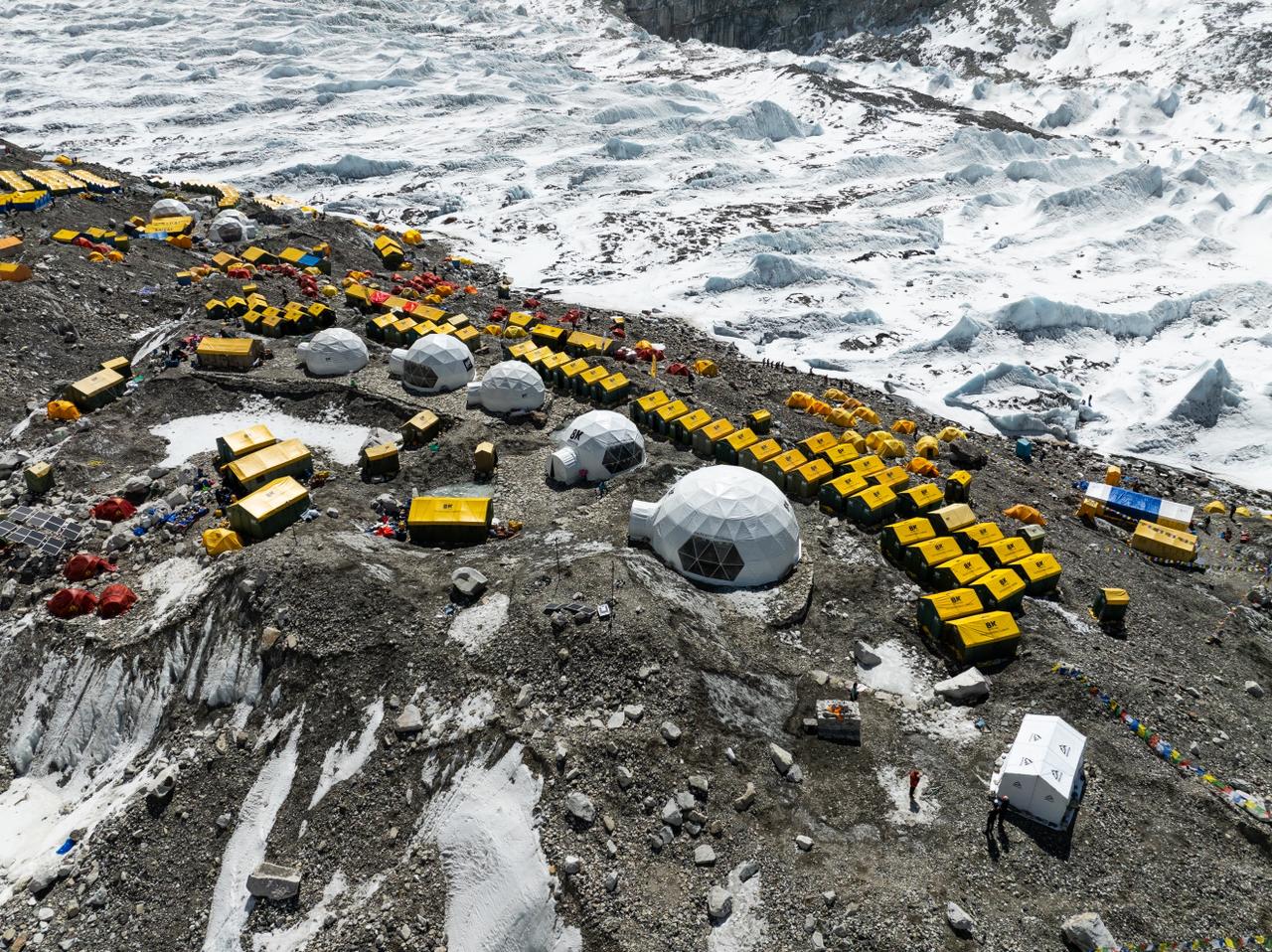
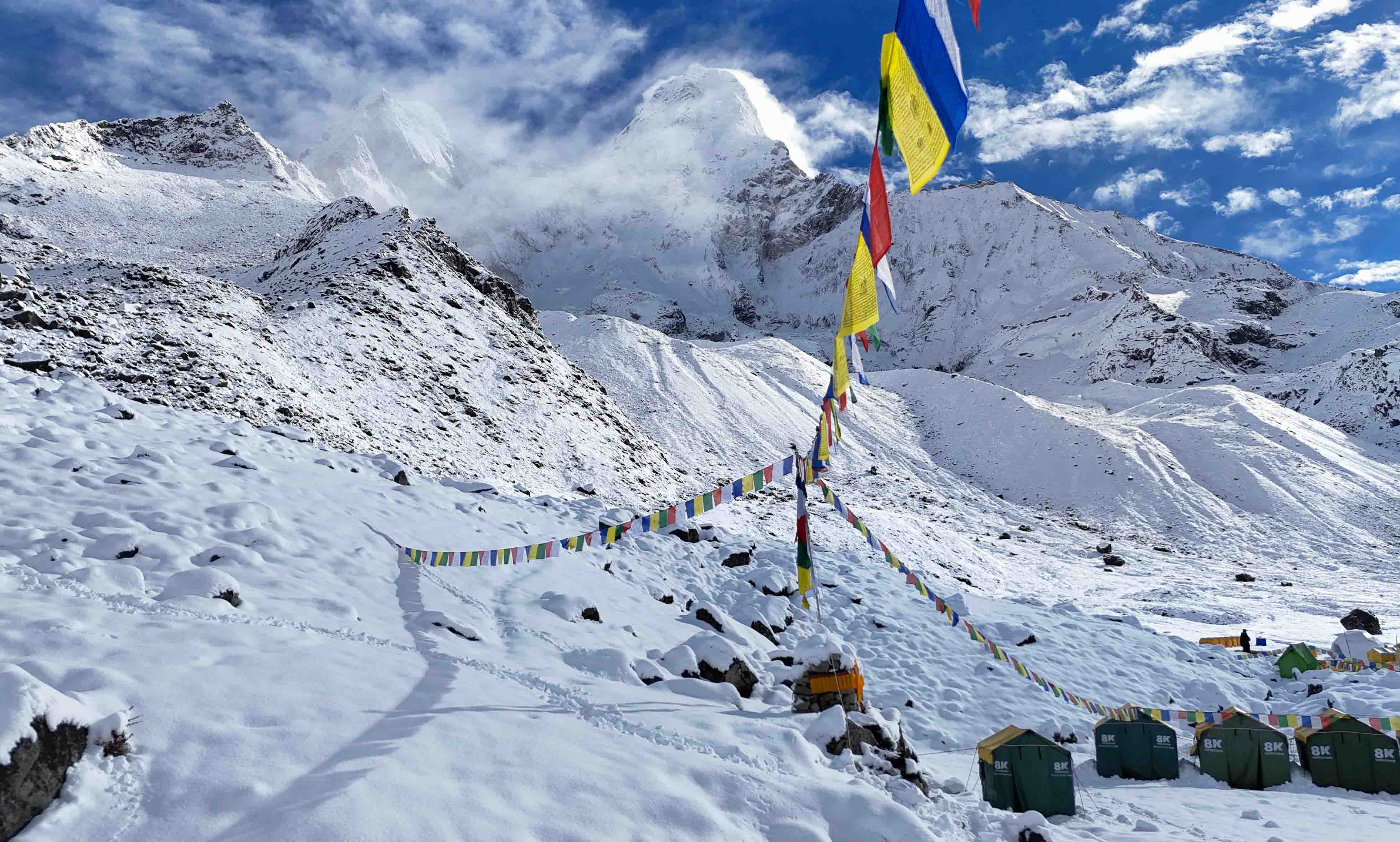
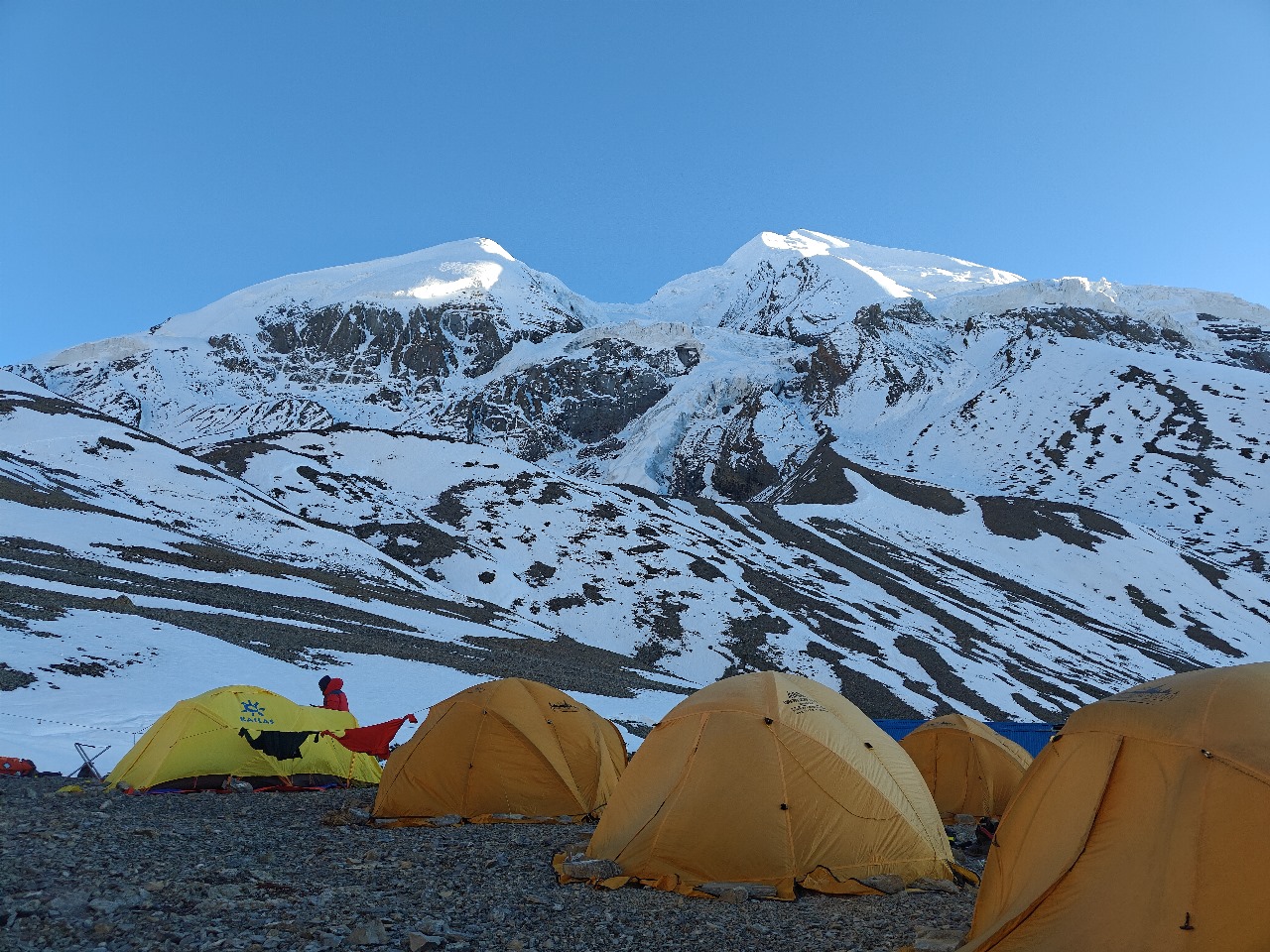
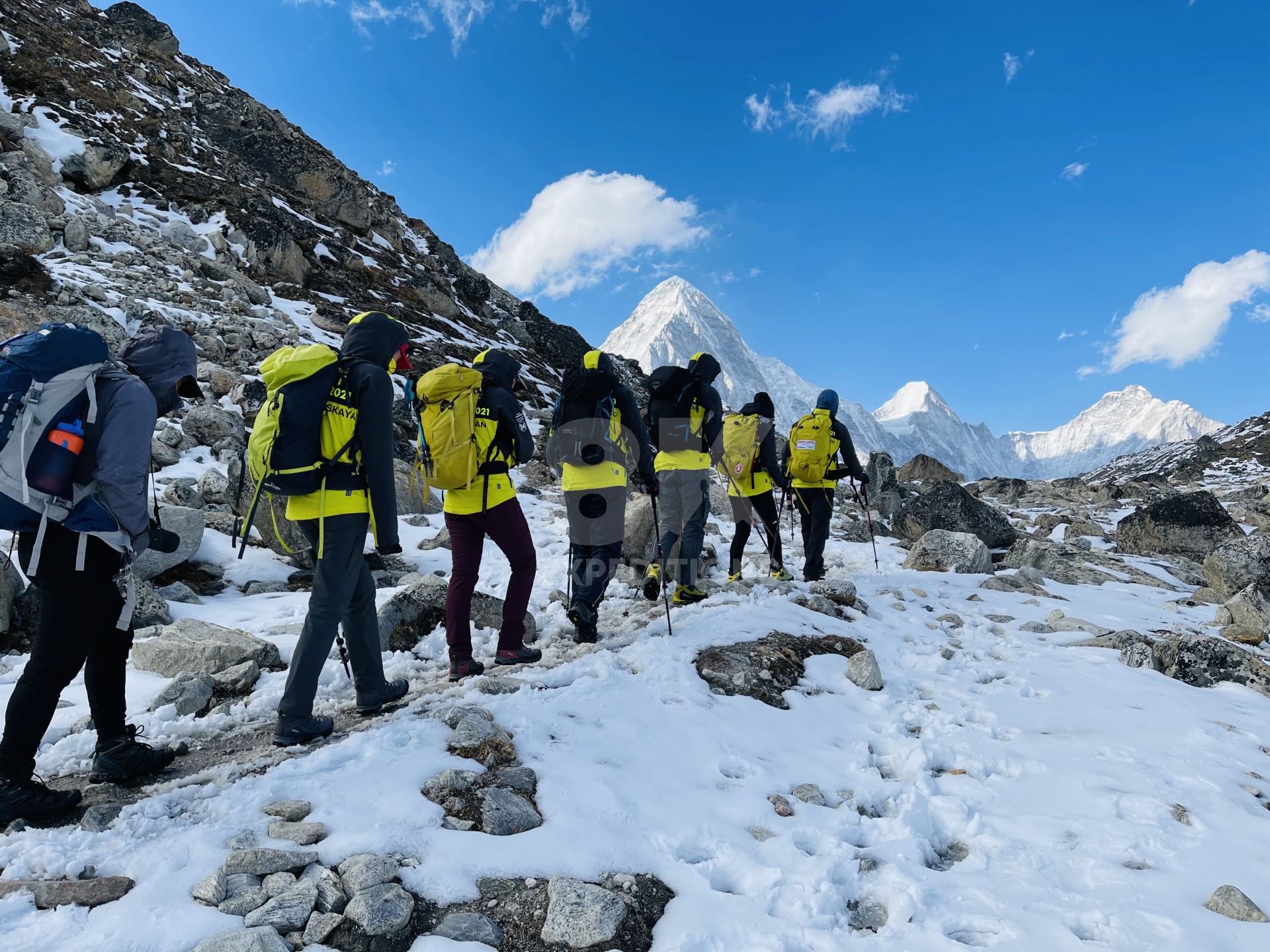
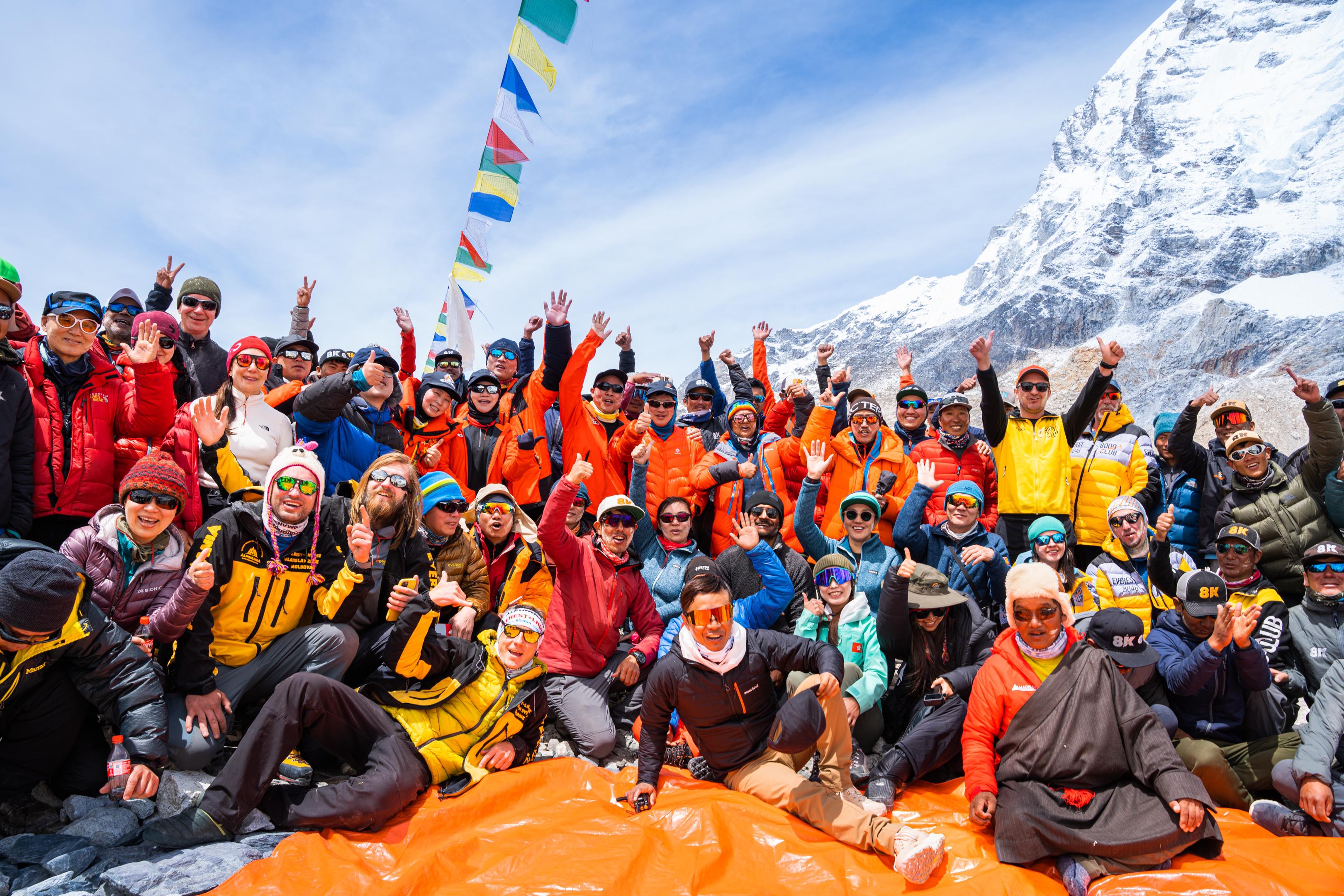
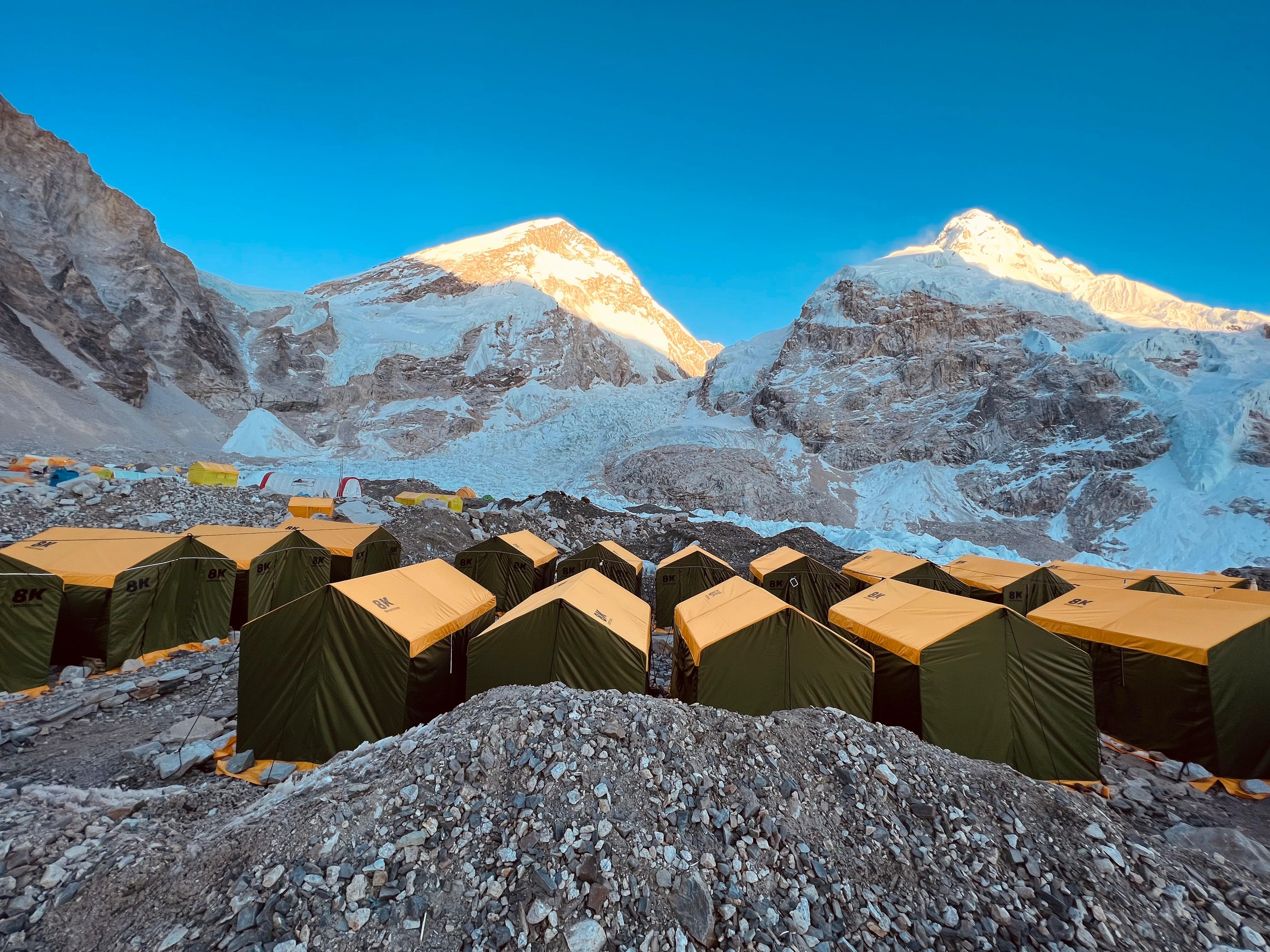
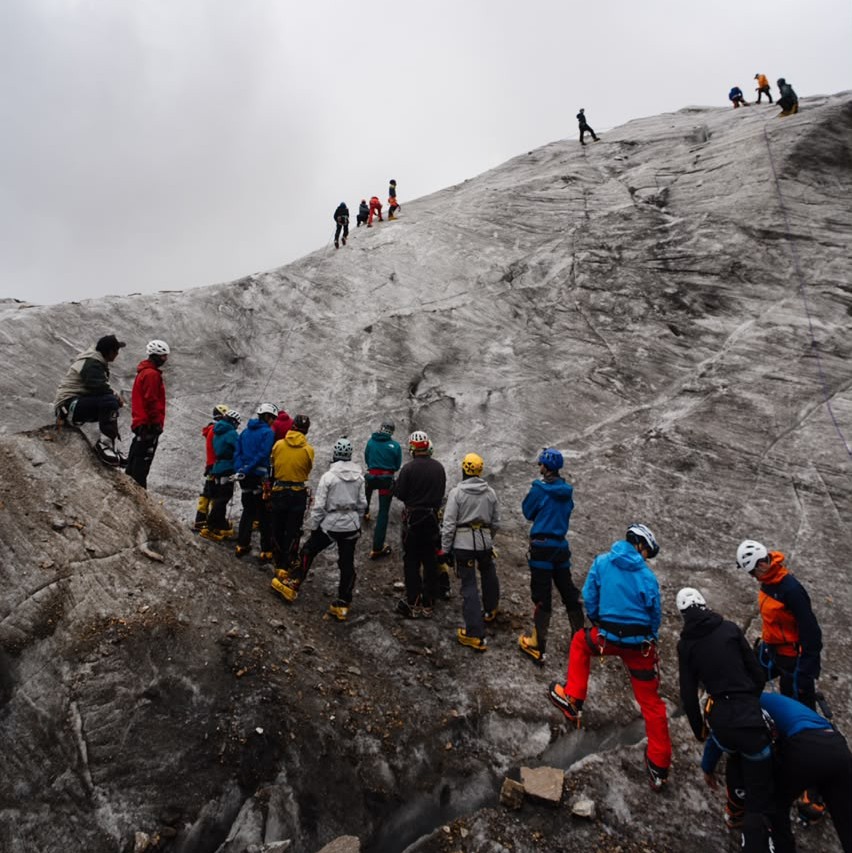
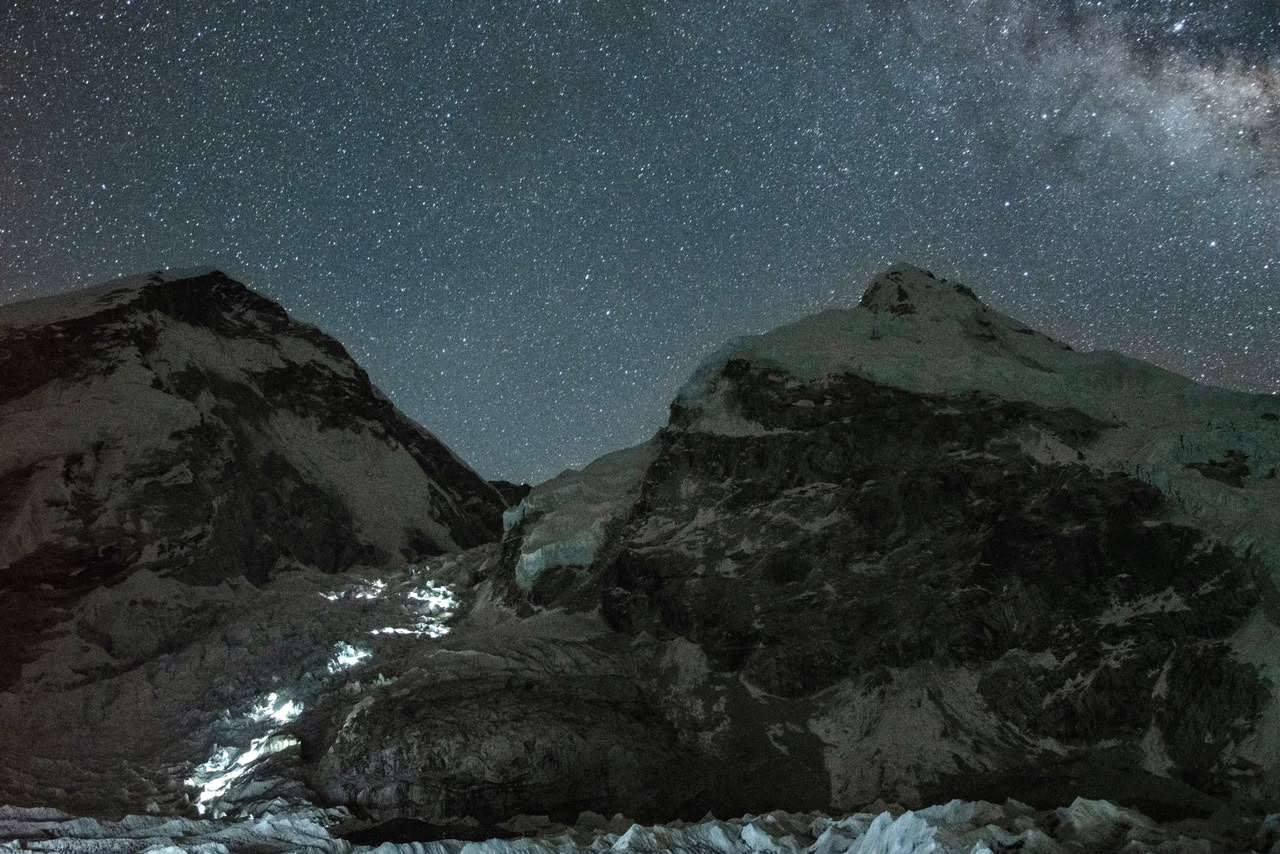
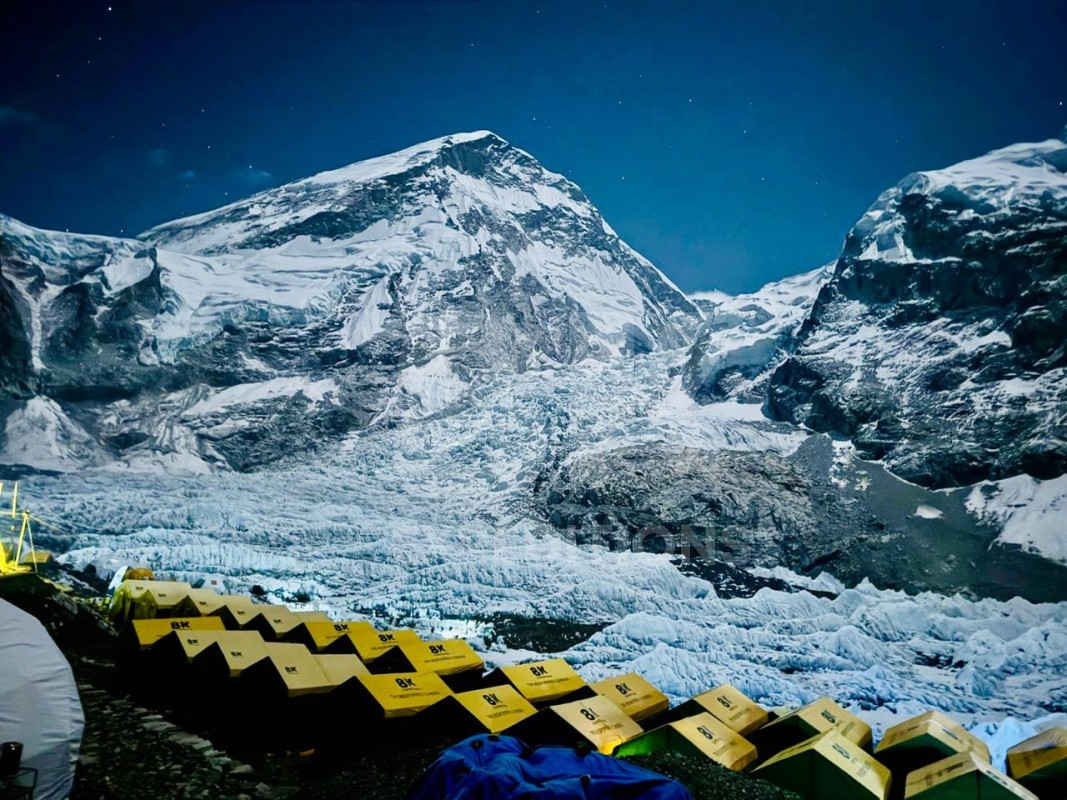
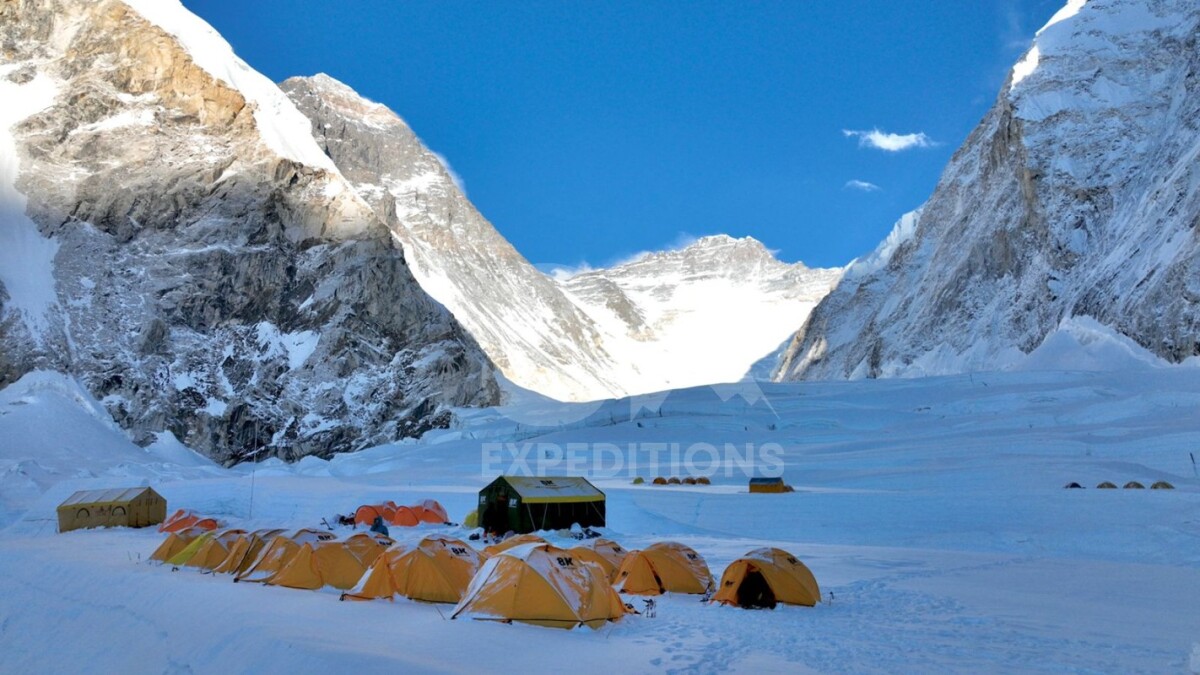
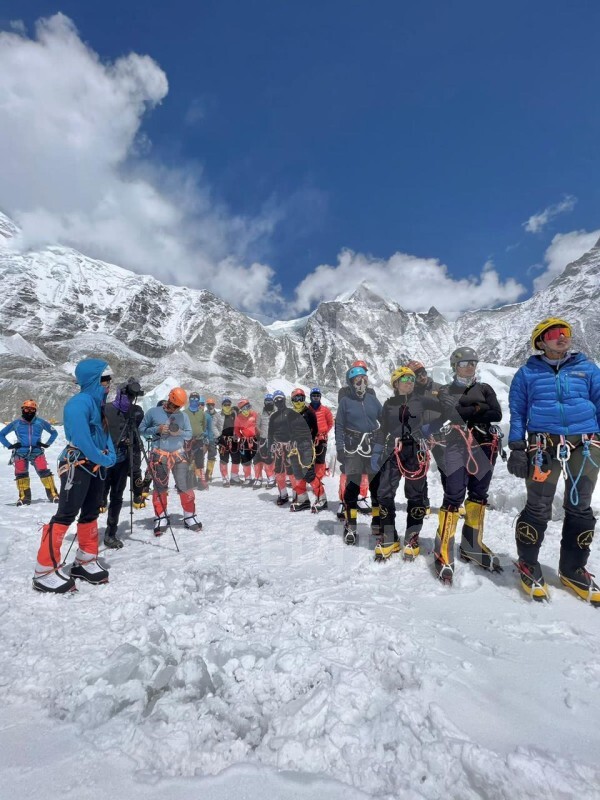
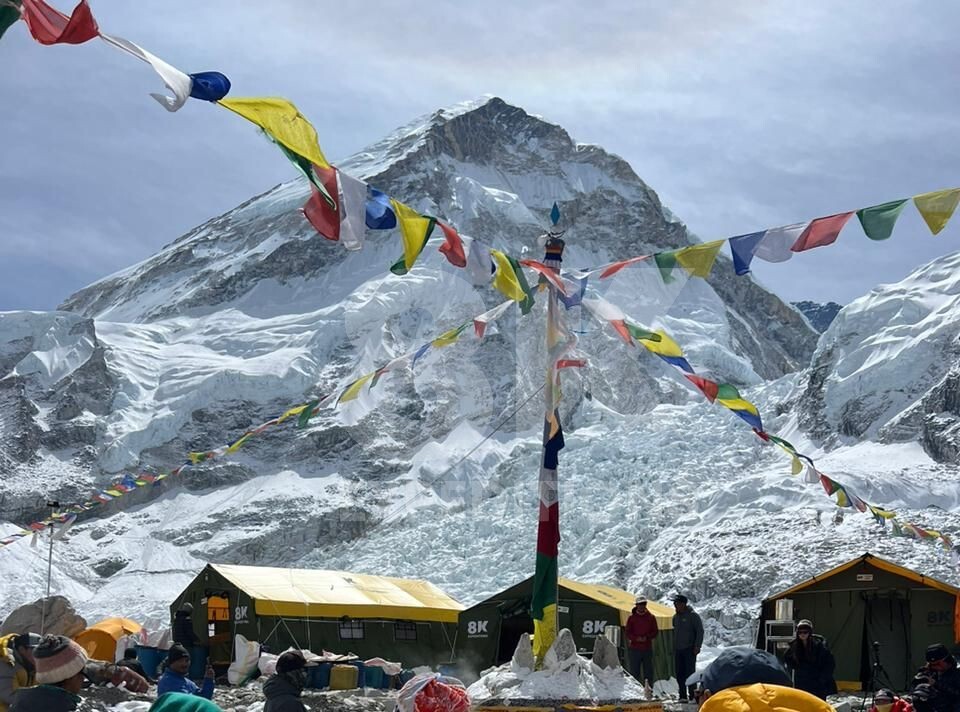
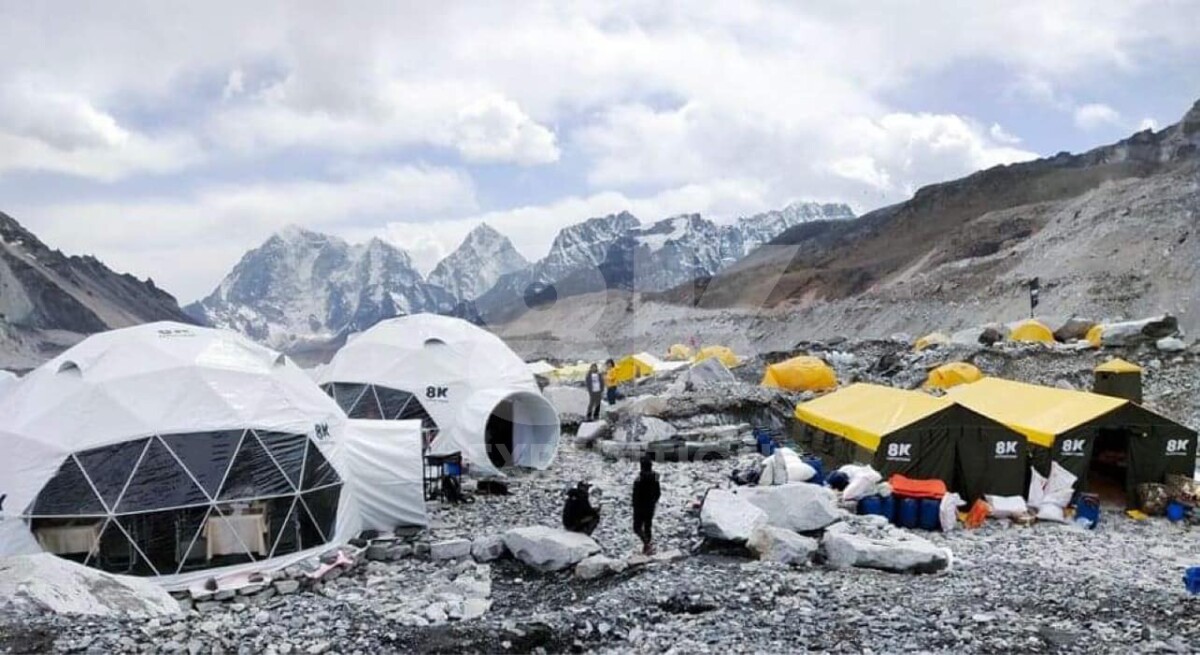
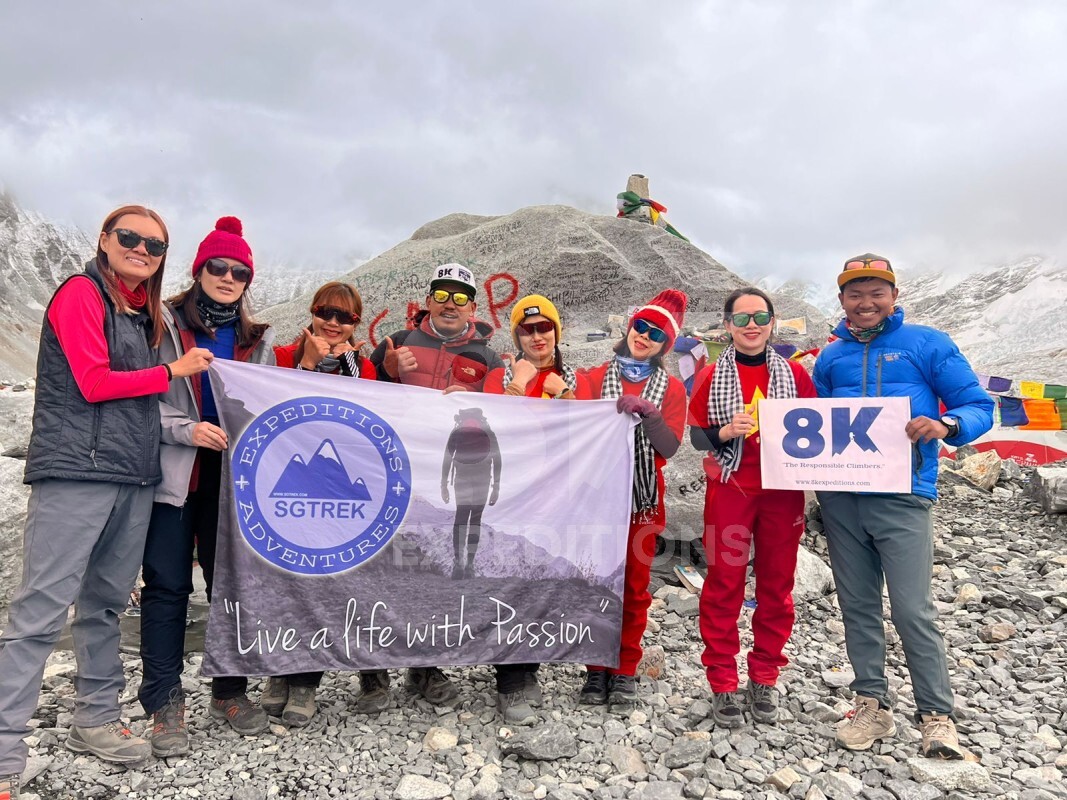
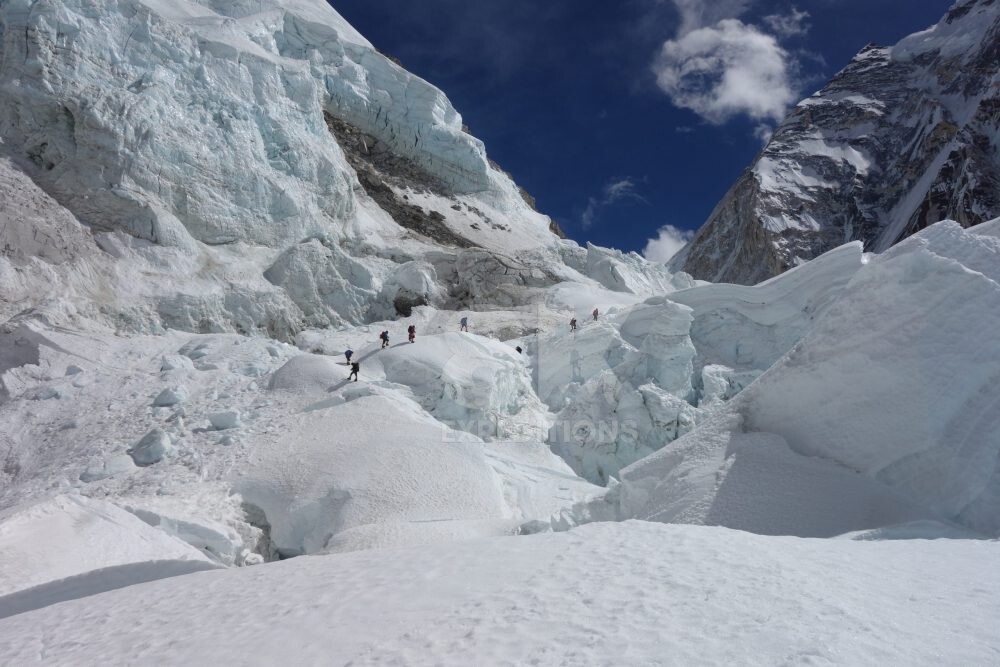
After Lobuche, we follow the Khumbu Glacier to reach Everest Base Camp. Enjoying the grand views of Mt. Everest, Lhotse, Nuptse, Ama Dablam, and many others in the background we finally reach the base of the world’s highest mountain. We will spend quite a few days in the base camp, training, acclimatizing, and preparing for the summit. We go on short excursions, practice through the Khumbu Icefall climb, and get acquainted with crampons, ice axes, and other climbing gears. We go on rotations to prepare to climb to Camp 1
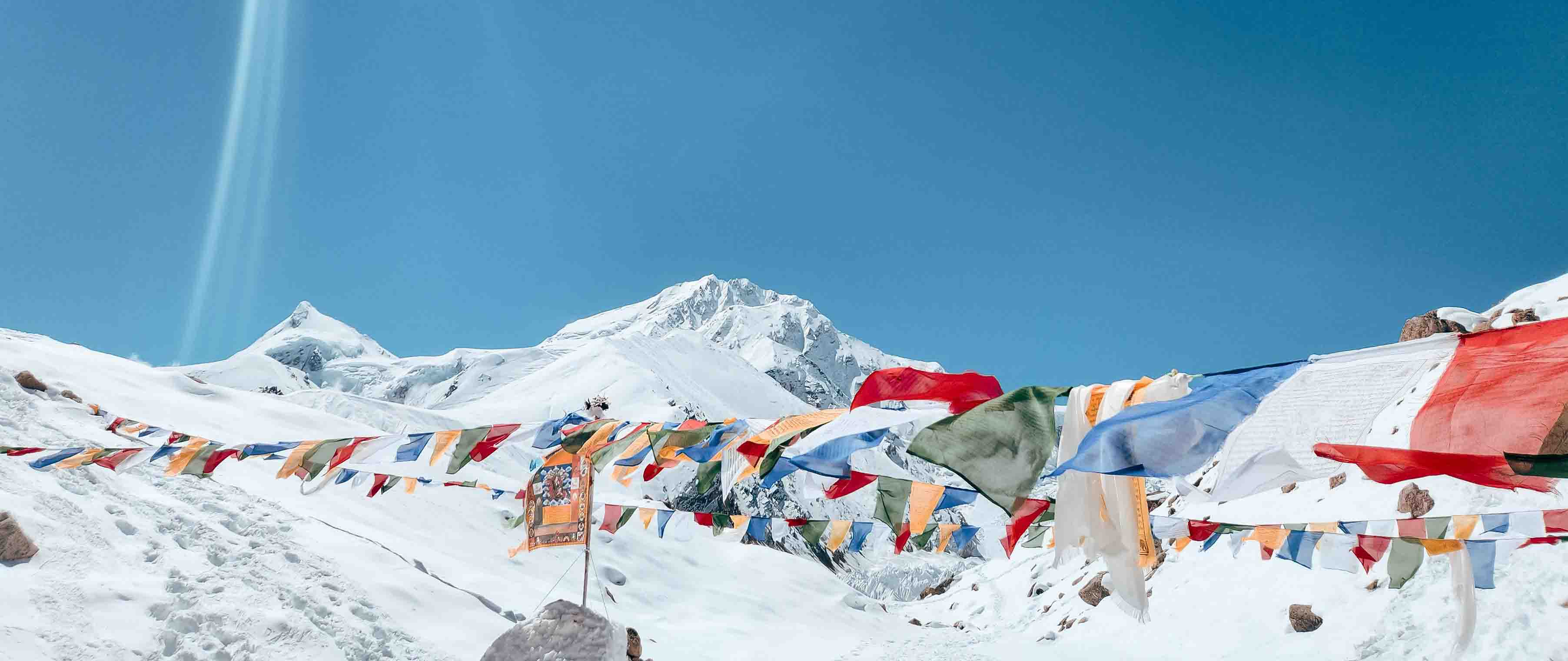
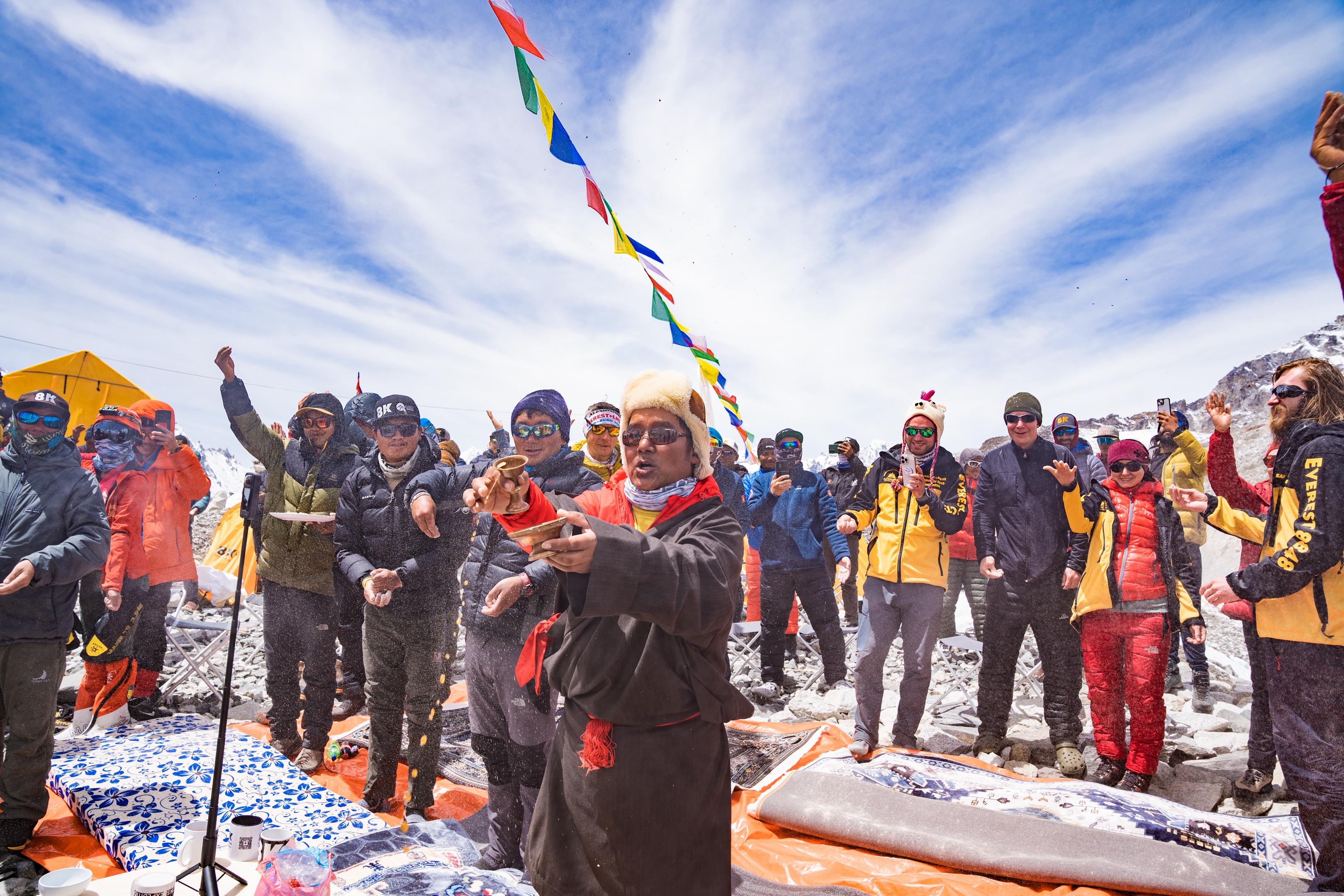
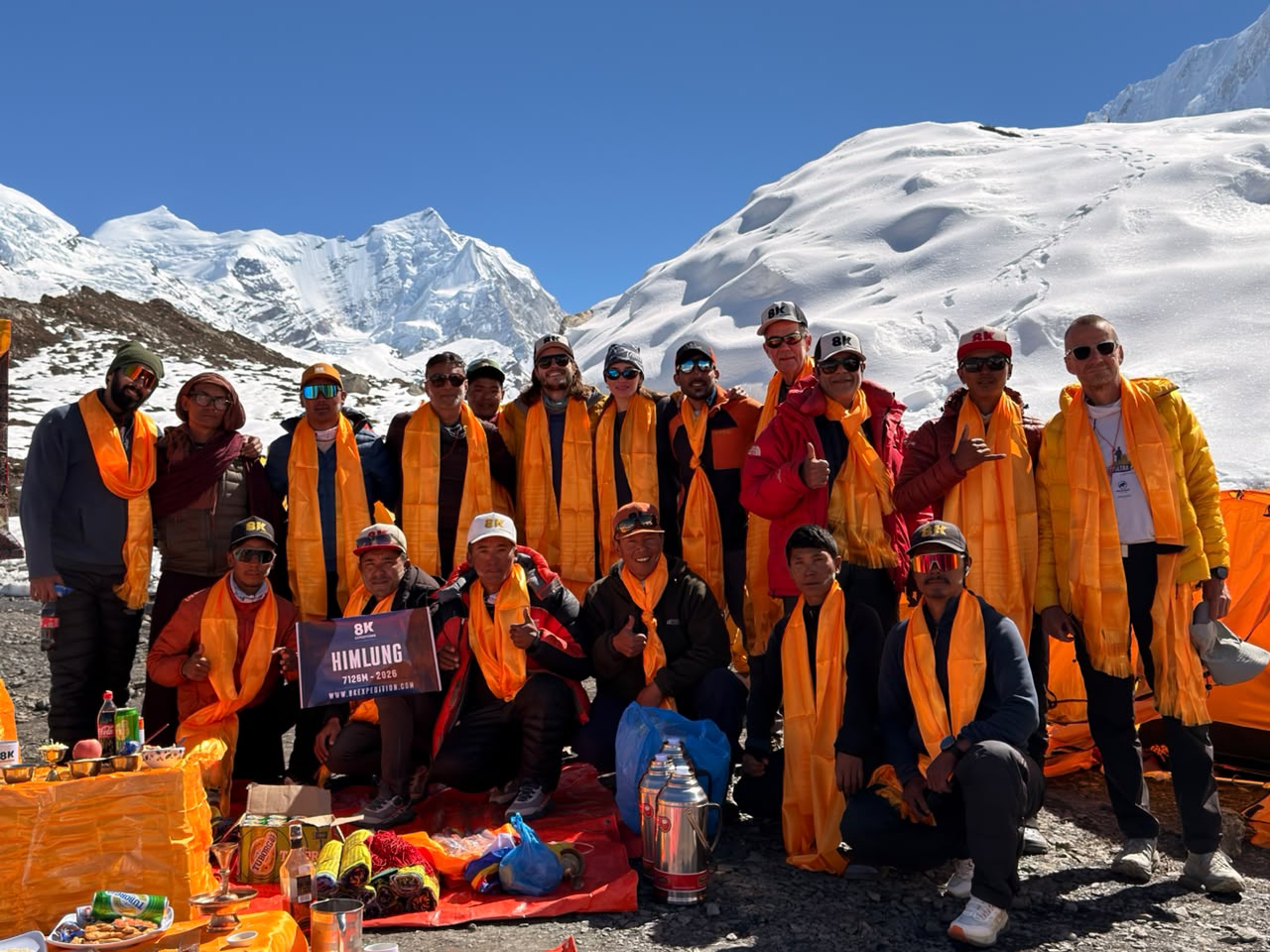
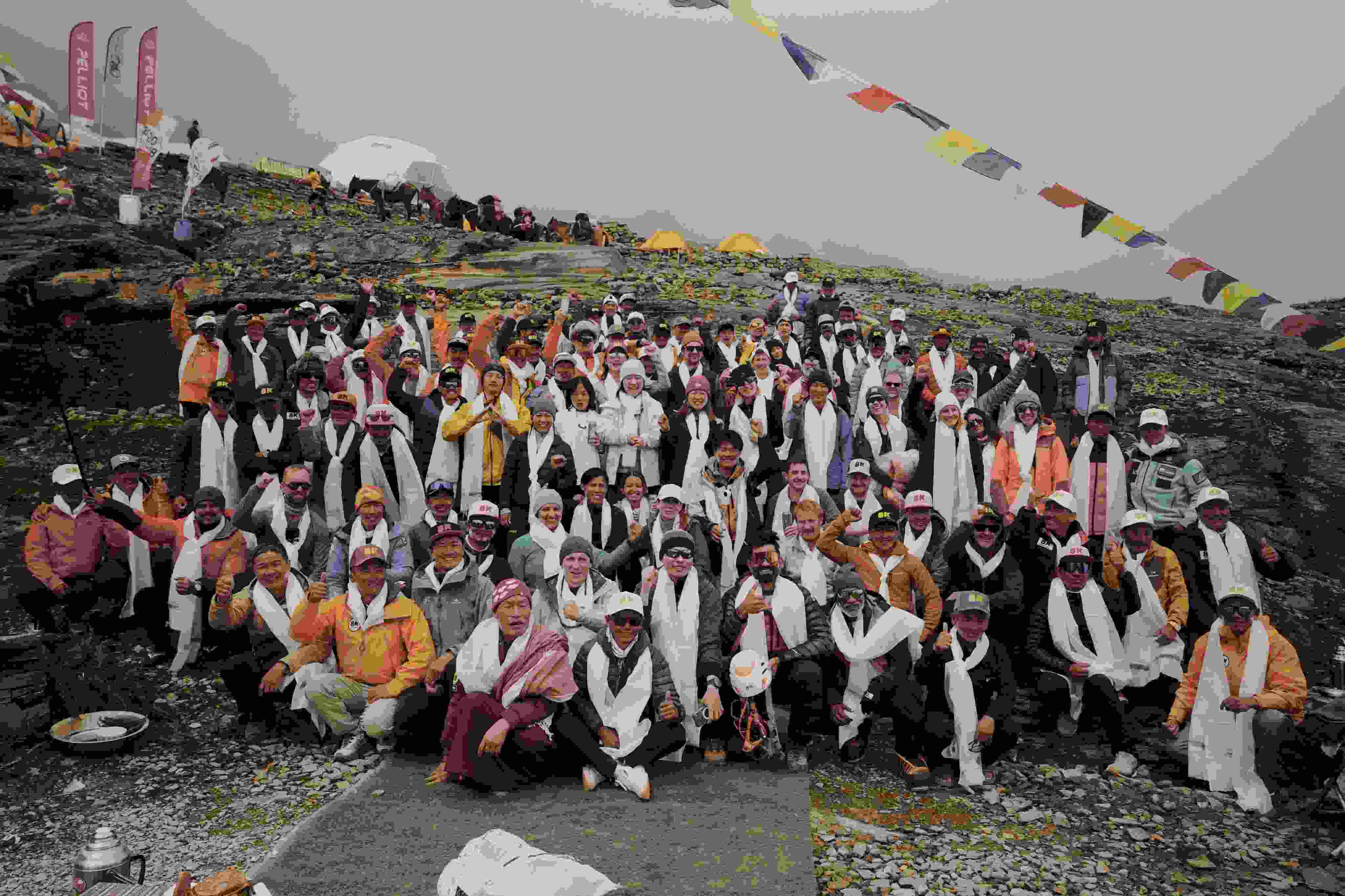
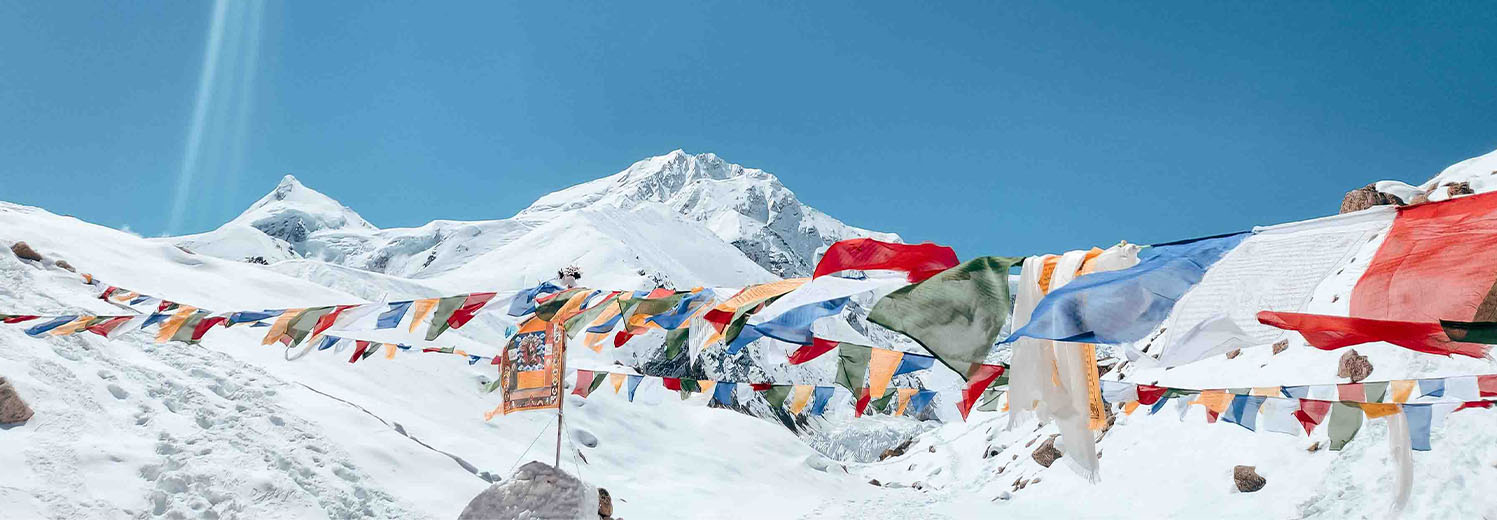
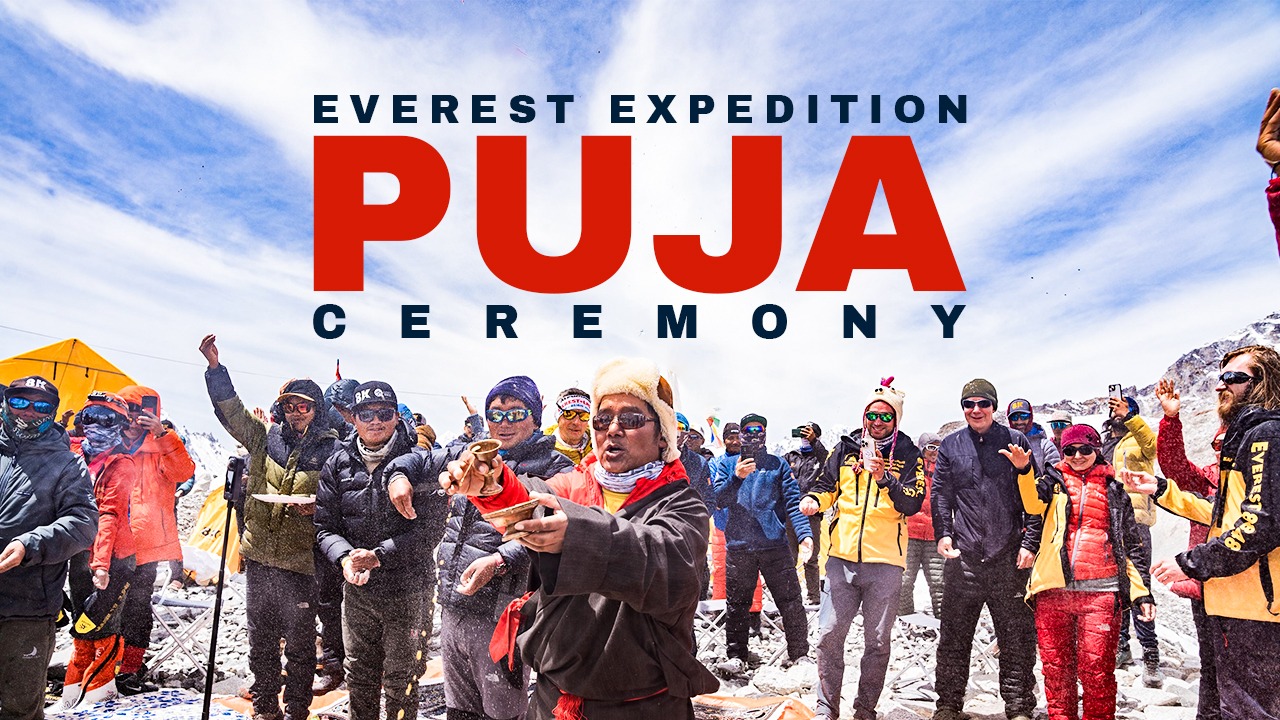
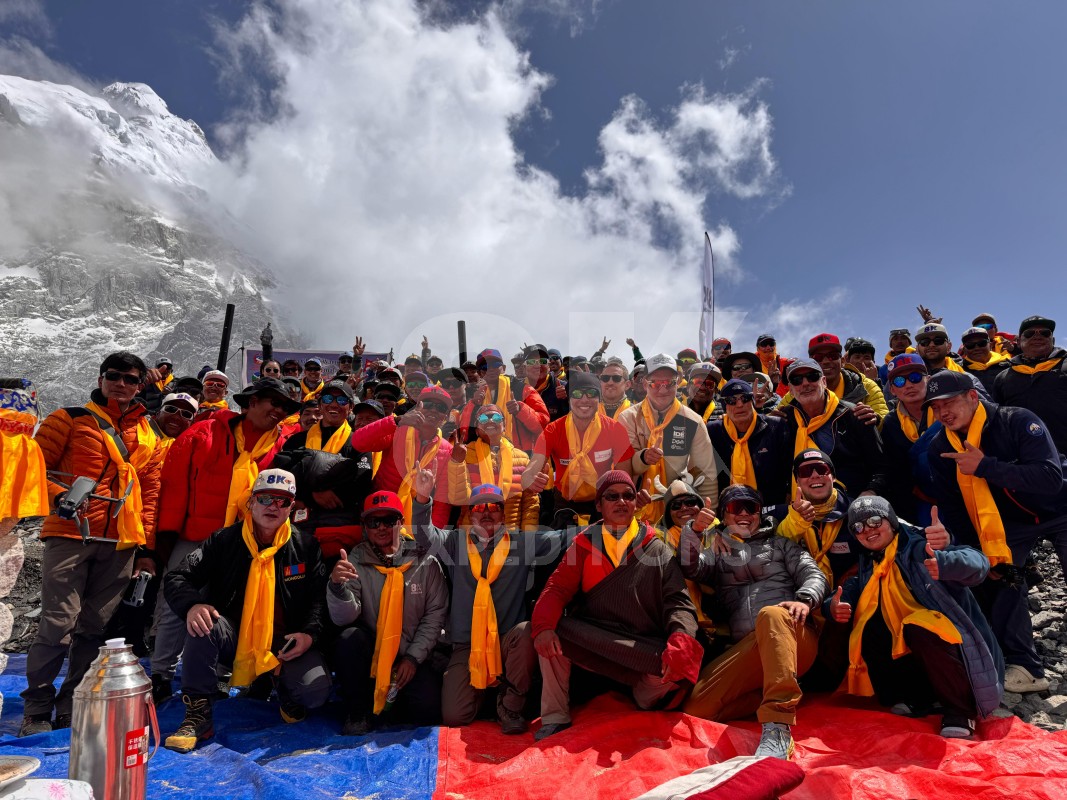
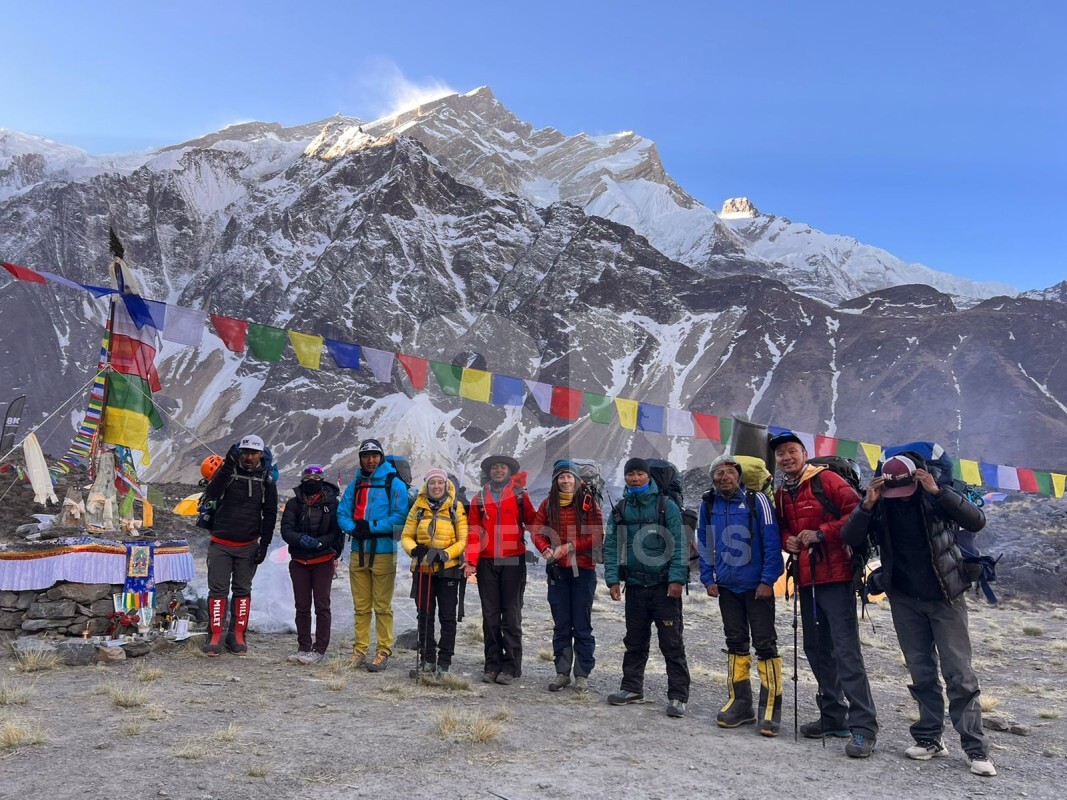
During our stay at the base camp, we get acclimatized to the high altitude so that we can adapt to even higher camps. We also organize and participate in the prayer ceremony before the summit as we consider Mt. Everest or Mt. Chomolungma as the “Mother Goddess of the World” as per the local Tibetan Language. The prayer is done to remain safe and as permission to climb on the holy mountain.
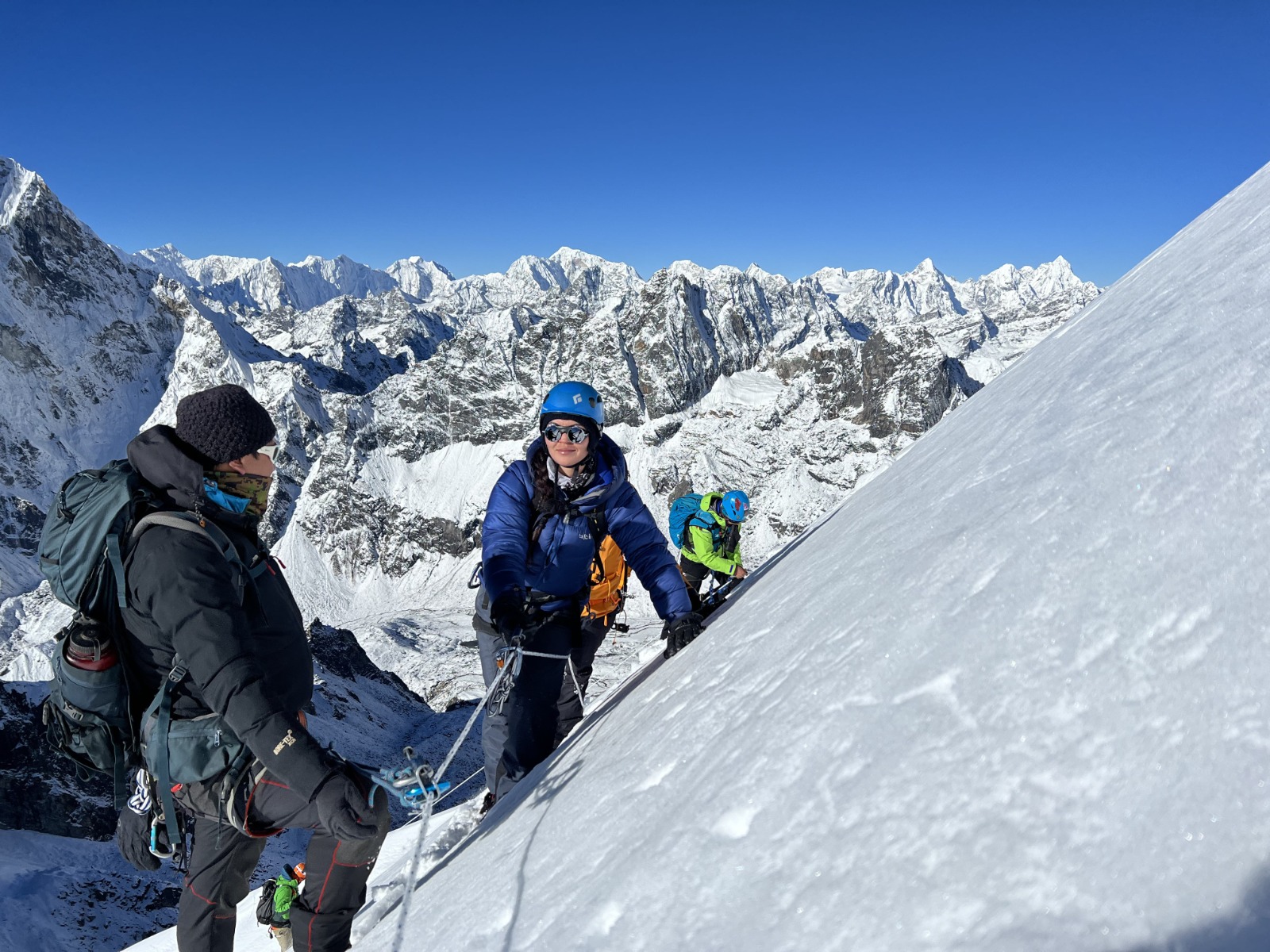
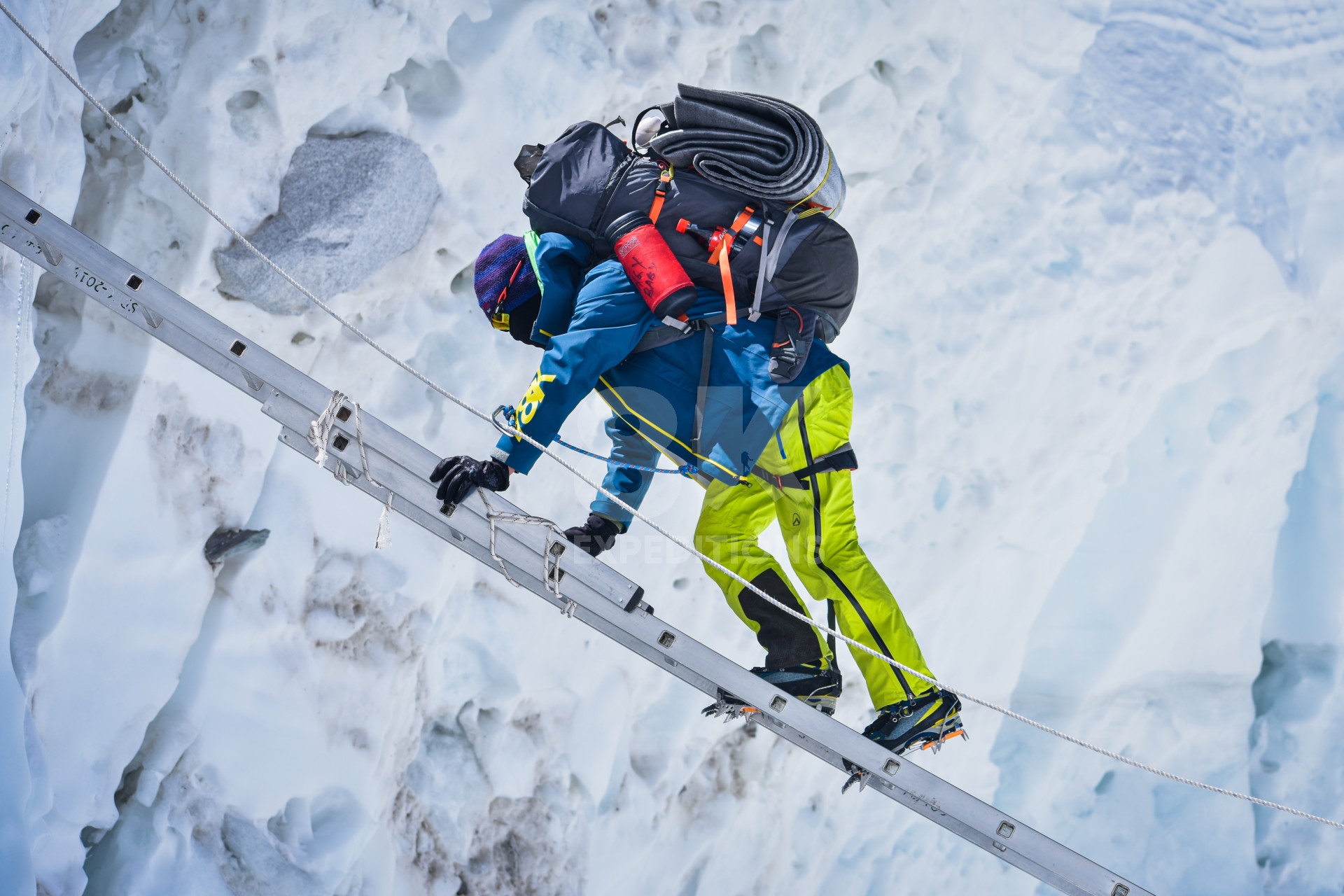
Besides, we also conduct some training that includes: ladder practice, walking on fixed lines, diagonal ascent and descent, traversing, duck walk, classical or flat-footing, handling Oxygen cylinders, using an Ice axe, and Crampons, using walkie-talkie and following instructions while climbing and many more.
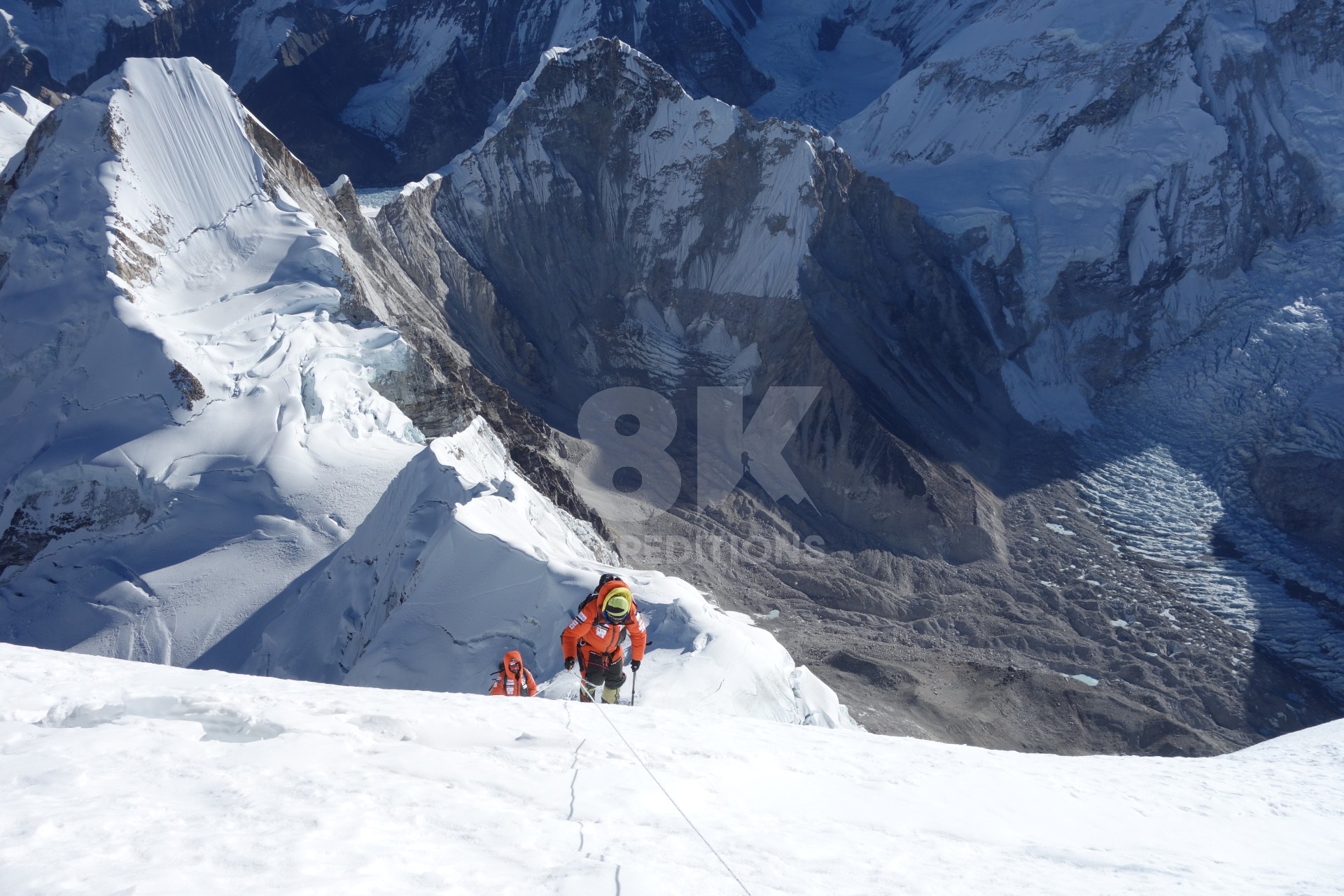
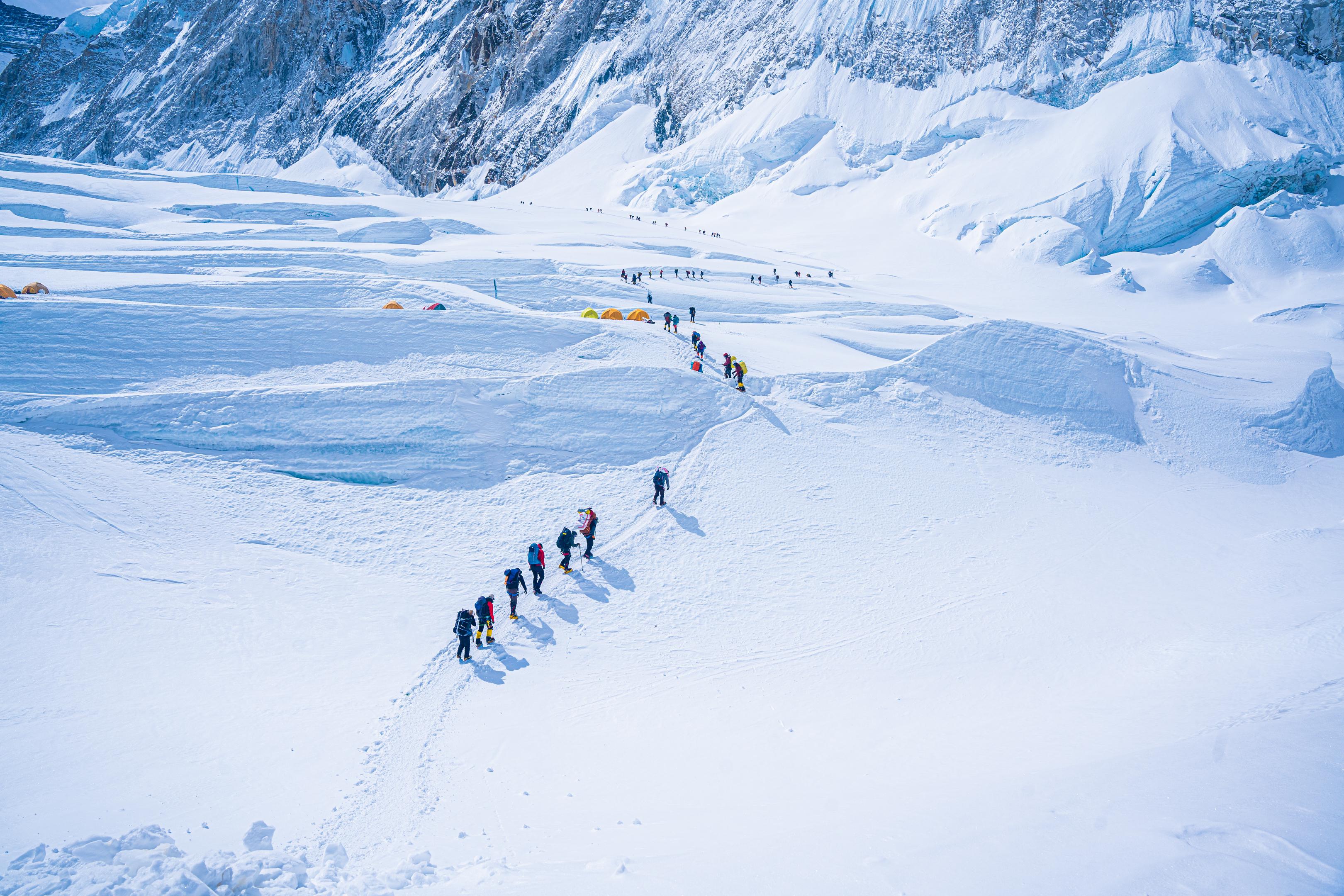
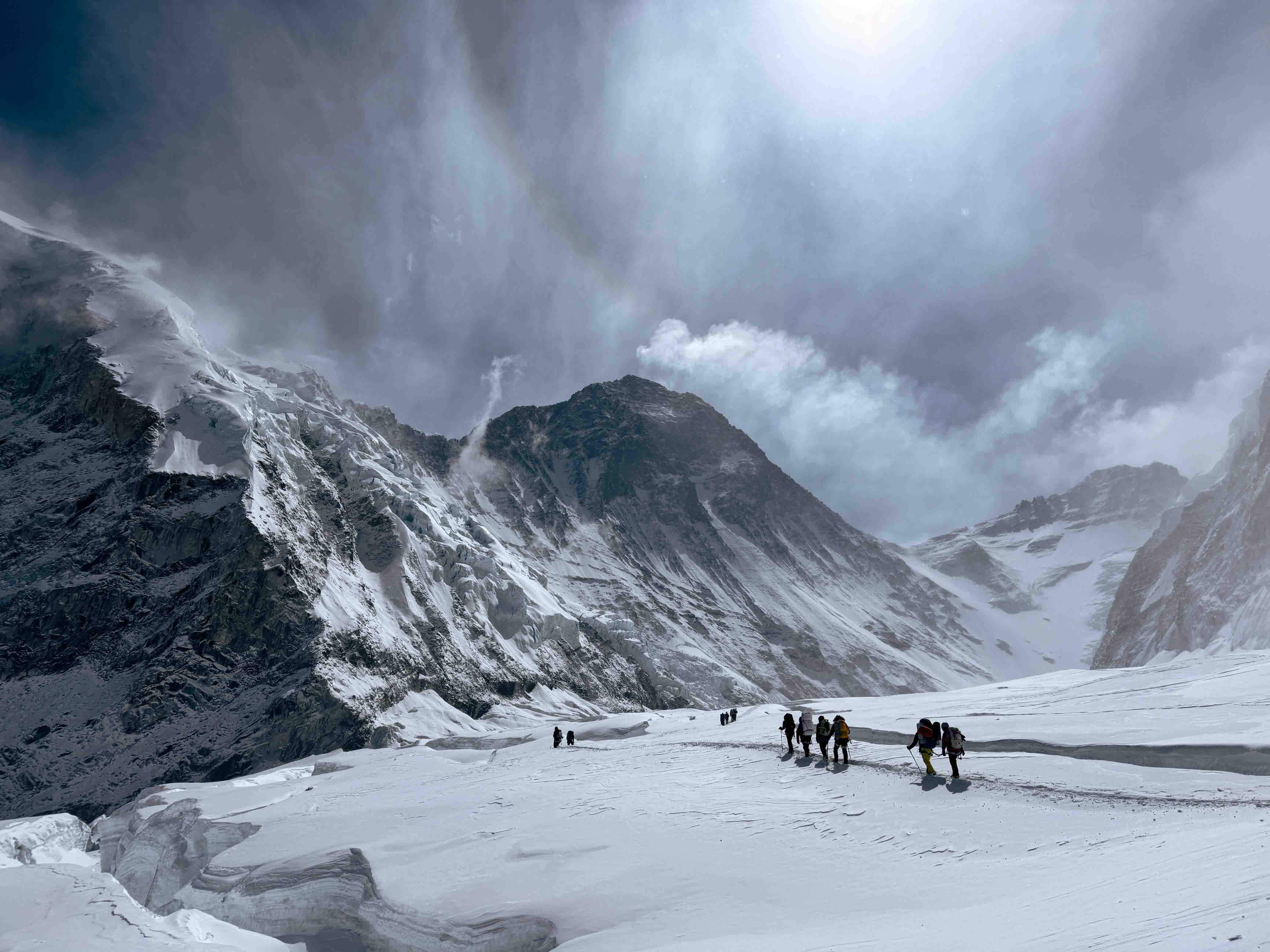
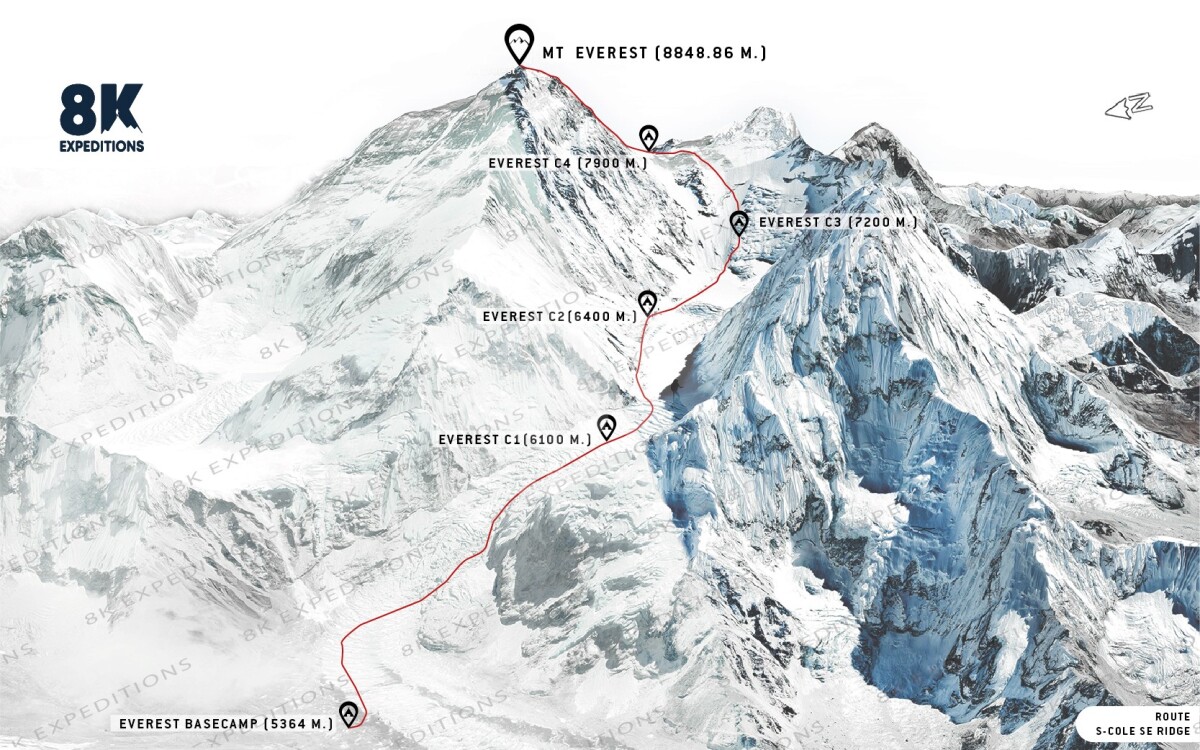
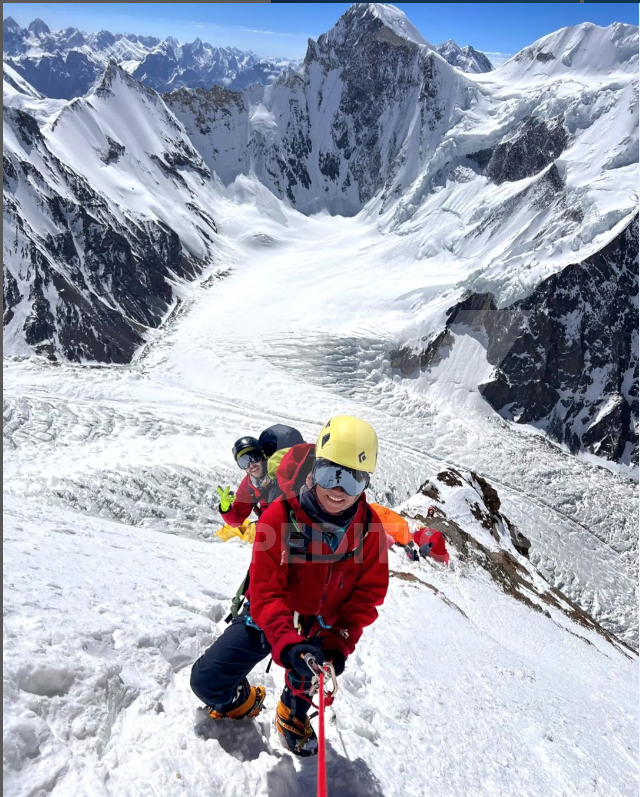
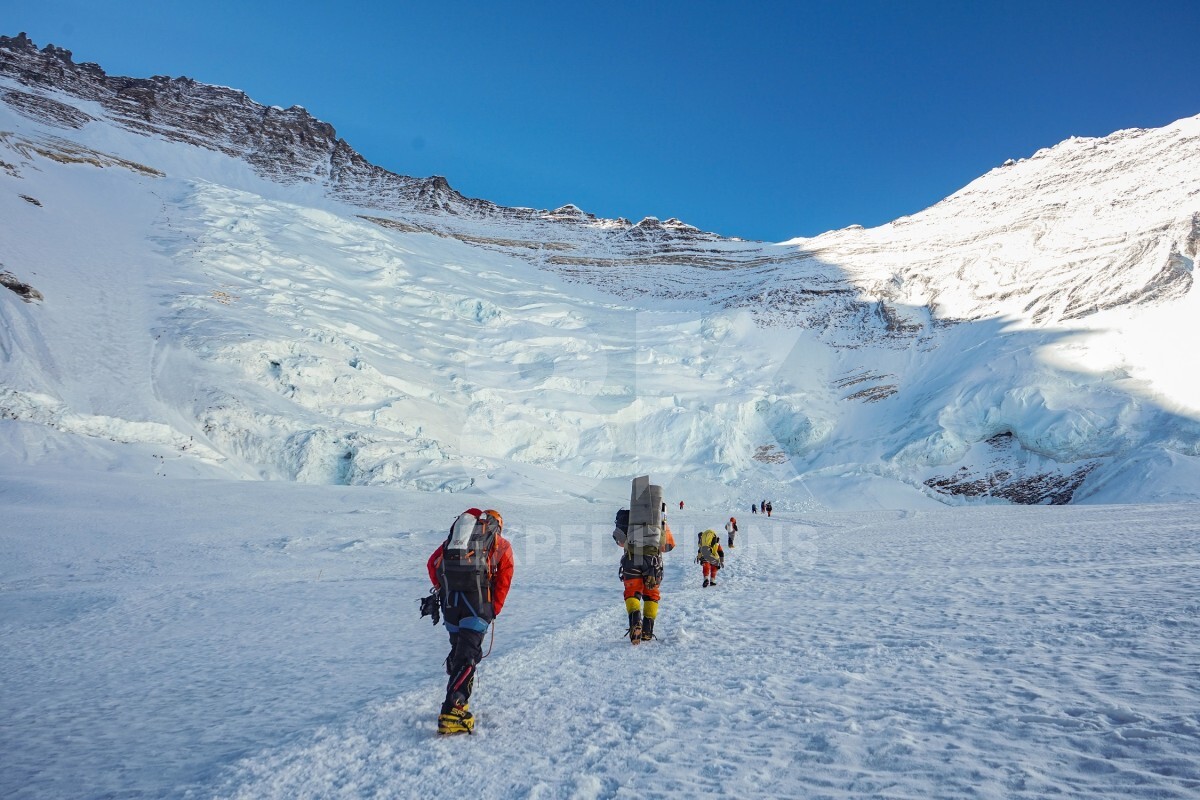
After 4-5 days of training, practicing and rotation, we will finally climb to Camp 1 to experience the true essence of the expedition. It requires crossing the Khumbu Icefall and tough crevasses. At Camp 1 at 6000 meters, we stay overnight in full-proof tents enjoying the meals cooked by our chefs.
After staying overnight at Camp 1, we gradually ascend towards Camp 2 that is set up at 6400metres. The climb includes crossing the Western CWM, a gently rising valley that is marked by huge crevasses in the center preventing direct access to the upper part of the CWM. After reaching Camp 2 we move back to Camp I to rest overnight.
After climbing up to Camp 2 experiencing the technicalities of the expedition through the crevasses, ladders, and fixed ropes, we return to the base camp and rest there for a few days. Our team will conduct rotations and short hikes to the surrounding areas to keep your enthusiasm boosted.
After resting at the base camp for a few days, we will then climb up to Camp II using the climbing techniques and rest overnight. During our stay at Camp II, we will hike up to the West Shoulder as well. Staying at a higher altitude for a few days will help us acclimatize, hence keeping altitude sickness at the side.
After several days’ preparation, we will then approach Camp III at 7200metres and rest for 1 hour. As we reach Camp III, we will slowly descend to Camp II to rest overnight but for those climbers climbing withut O2 will be staying in Camp III & will move to Camp IV the next day. These continuous rotations are held to make your ascent to the Summit easier. These also help to refine your skills with mountaineering gears and equipment.
It is necessary to provide our body with some rest after continuous climbing and mountaineering. So, after an overnight’s rest at Camp II, we will descend to the Base Camp, at a much lower altitude. These ascents and descents are a way of acclimatizing ourselves in the Himalayas and training to climb up to Camp IV and above the Death Zone. We will rest overnight at the Base Camp.
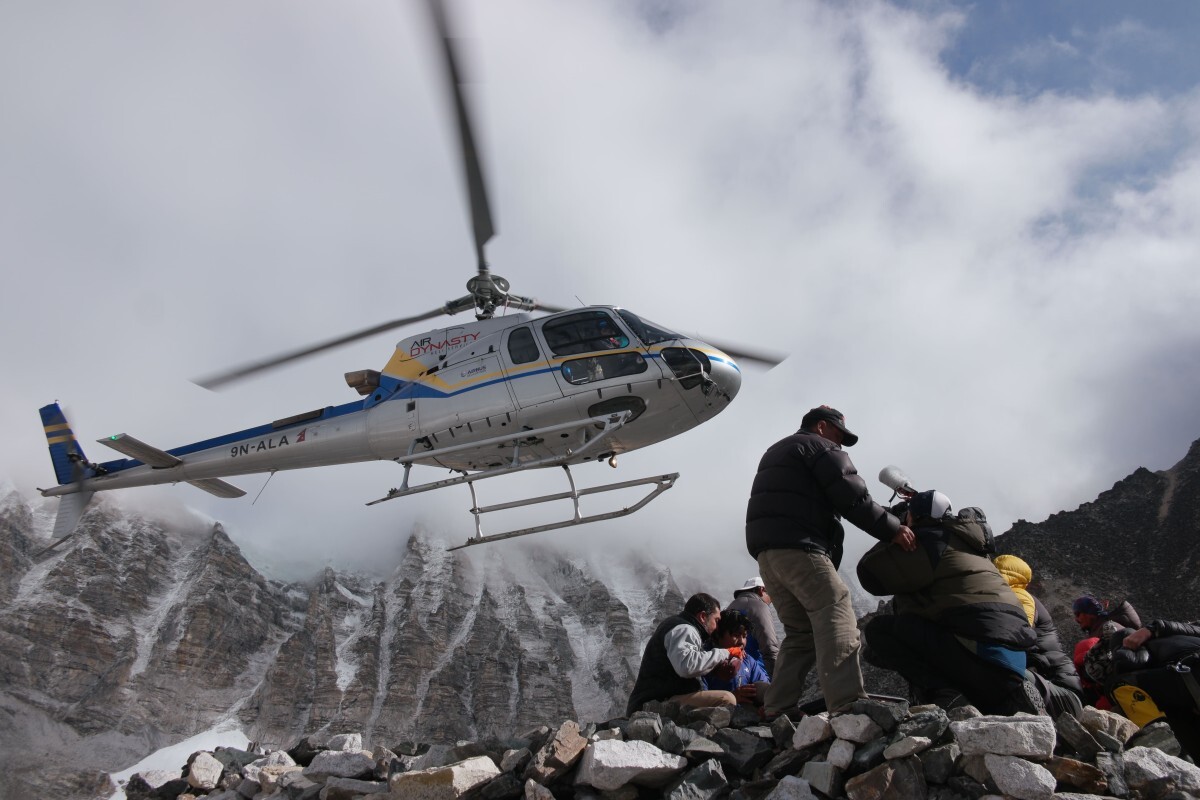
Descends to Namche Bazaar or optional Helicopter fly to Kathmandu for good rest. Analyze weather conditions and prepare for the final summit push. (All the expenses like hotel stay, meals, helicopter etc. are not included).
We allocate few days of complete rest before actually heading to the summit. For this, we may either descend back to Namche to rest at a cozy lodge or fly back to Kathmandu (For those who can afford it). While at rest, our expedition leaders and the team will evaluate the weather conditions and decide when to go for a final summit push. When everything looks favorable, we will prepare to trek back to the Base Camp. Those who choose to rest in Kathmandu can take Heli or can stay in Base Camp. During these resting period, our teams and climbing sherpas will be setting up higher camps at Camp IV for the summit push.
As we will have already been to Camp II earlier, it will be easier for us to reach there this time. Crossing the Khumbu Glacier and tough crevasses, passing Camp I at 5943 meters, we will finally reach Camp II. The climb includes crossing the Western CWM, a gently rising valley that is marked by huge crevasses in the center preventing direct access to the upper part of the CWM. We will rest overnight and enjoy the delicious hot meal prepared by our experienced cooks. Make sure to stay warm and stick with the team.
After resting overnight at Camp II, we will then ascend towards Camp III at 7162metres. Walking on the trail of ice, snow, and rocks, following the fixed ropes set up by our fellow Sherpa Climbers, we reach Camp III. We will use Oxygen Cylinders from here on. We request everyone to remain careful and stick with the team as well as communicate often. We will spend our night in Camp III in a warm tented Camp. High Food will be provided for meals.
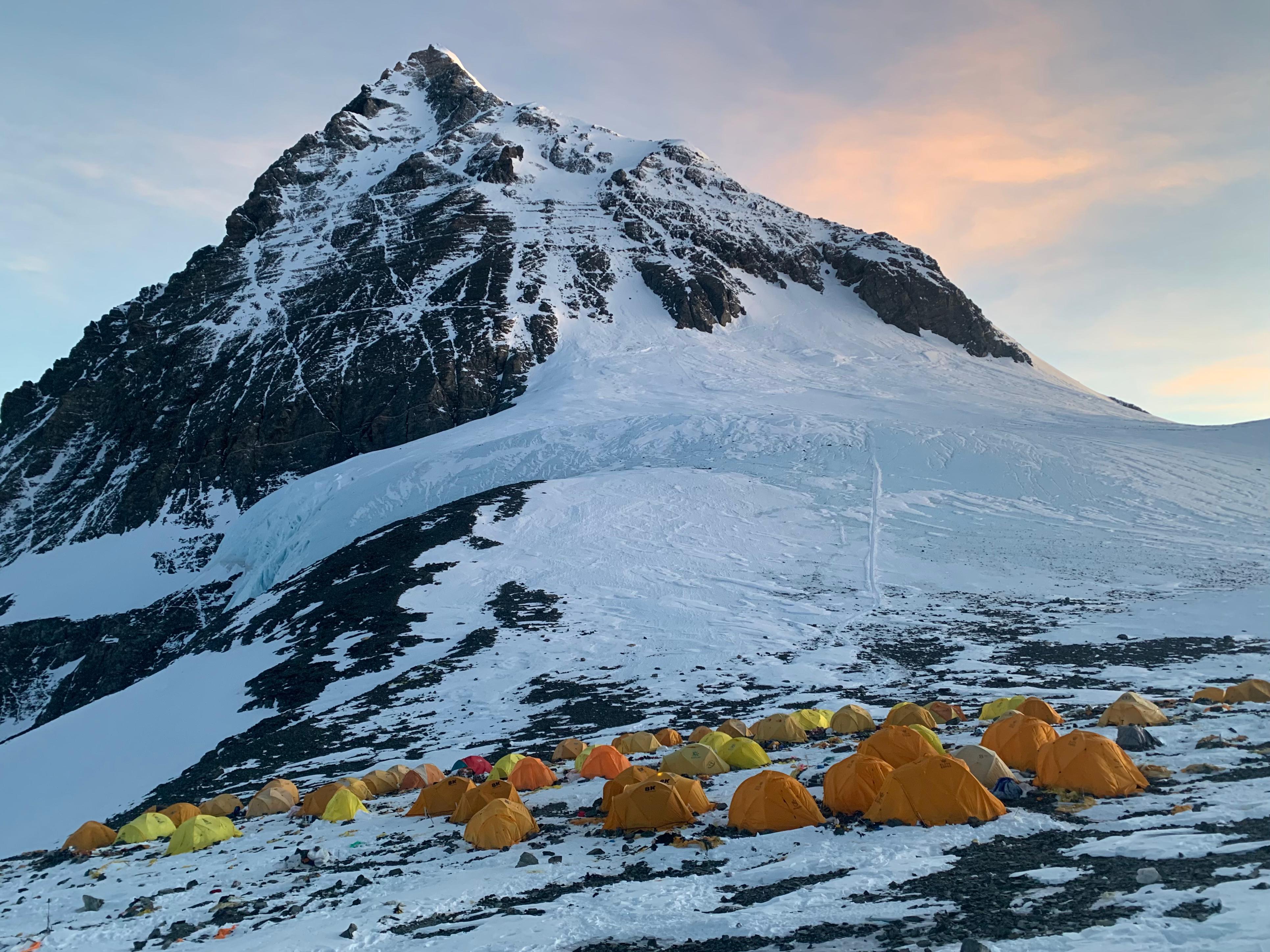
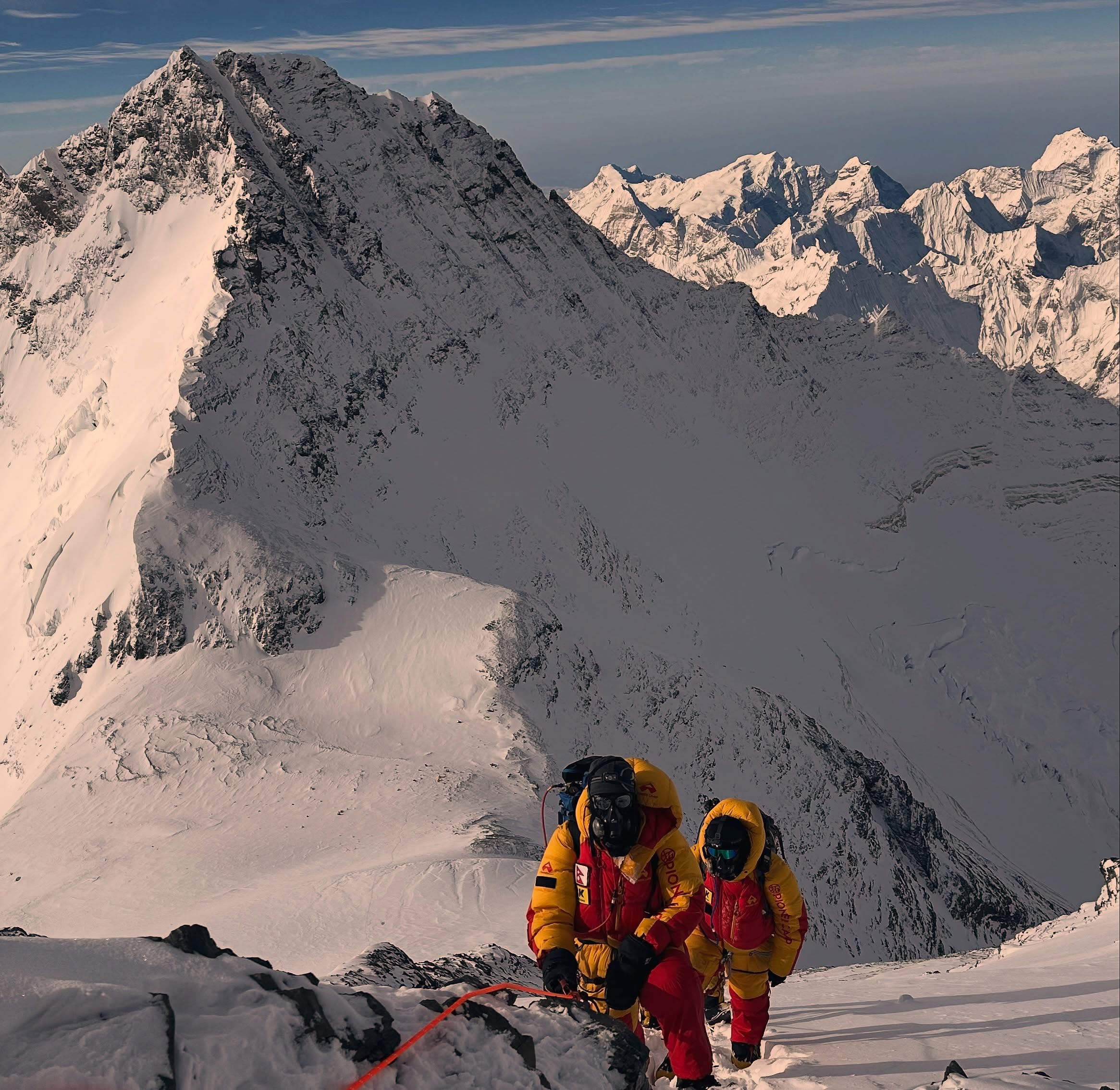
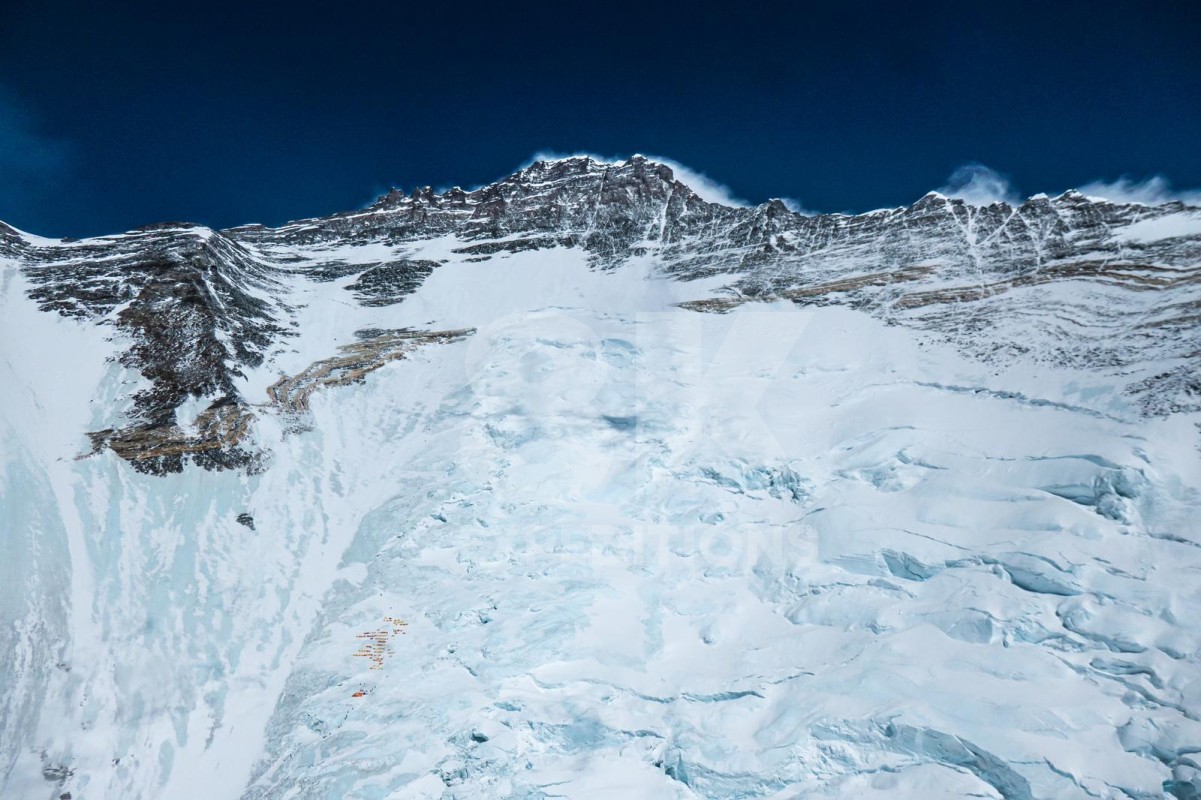
After Camp III, we ascend to Camp IV at 7900m. This is also the divergent point for climbers of Lhotse and Everest. The area above this is called the Death Zone and requires extreme caution and carefulness. We will keep ourselves warm and safe. We will rest for 5- 7 hrs in Camp IV & head for the summit push if everything goes as planned. A day’s rest at Camp IV is only applicable if there is bad weather before the summit Day.
We will monitor the weather conditions before summiting Everest. If the weather conditions is worse and the members need more Oxygen bottles then the company will manage the emergency oxygen bottles for use subject to a charge ($800 per bottle)
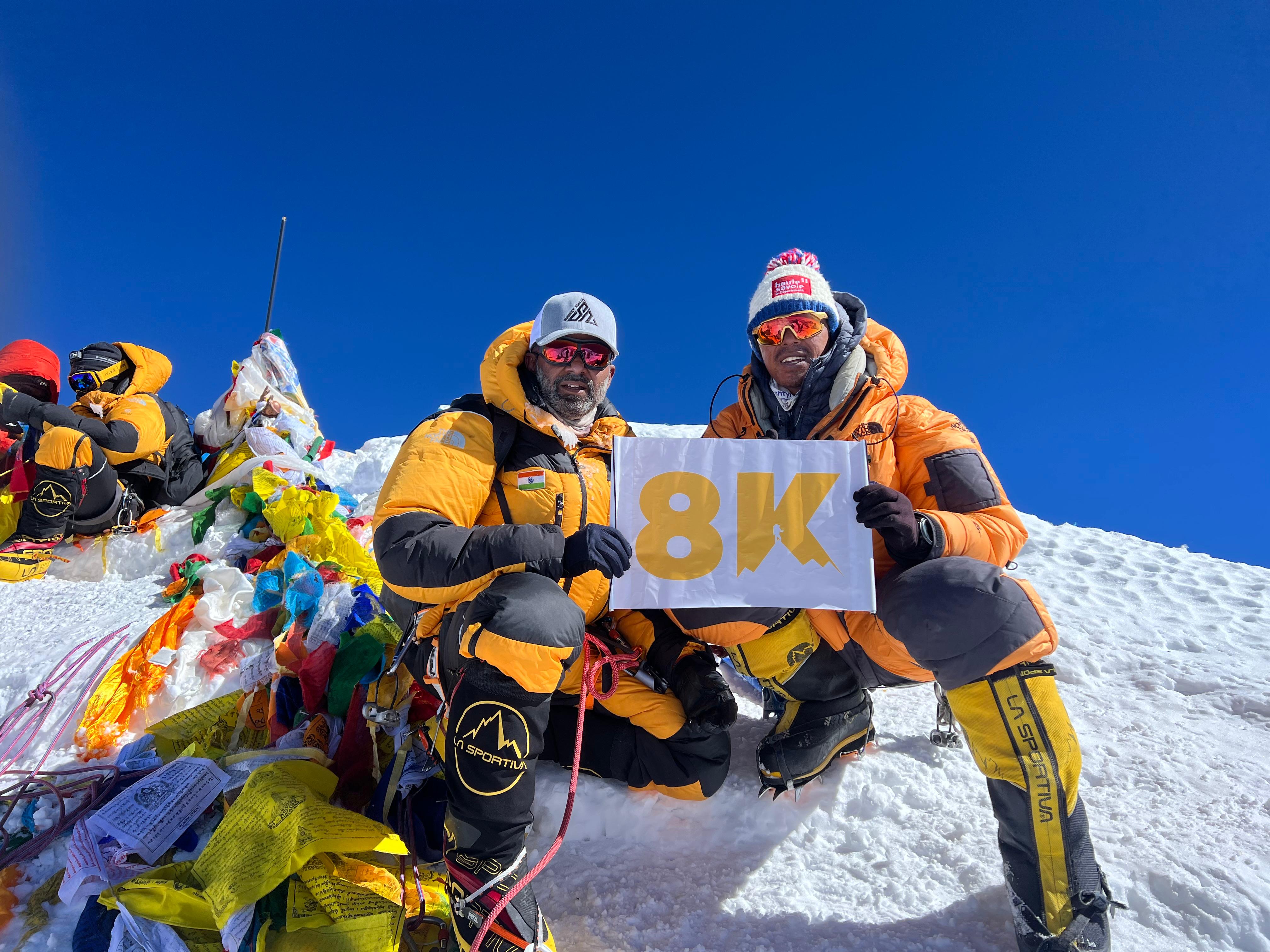
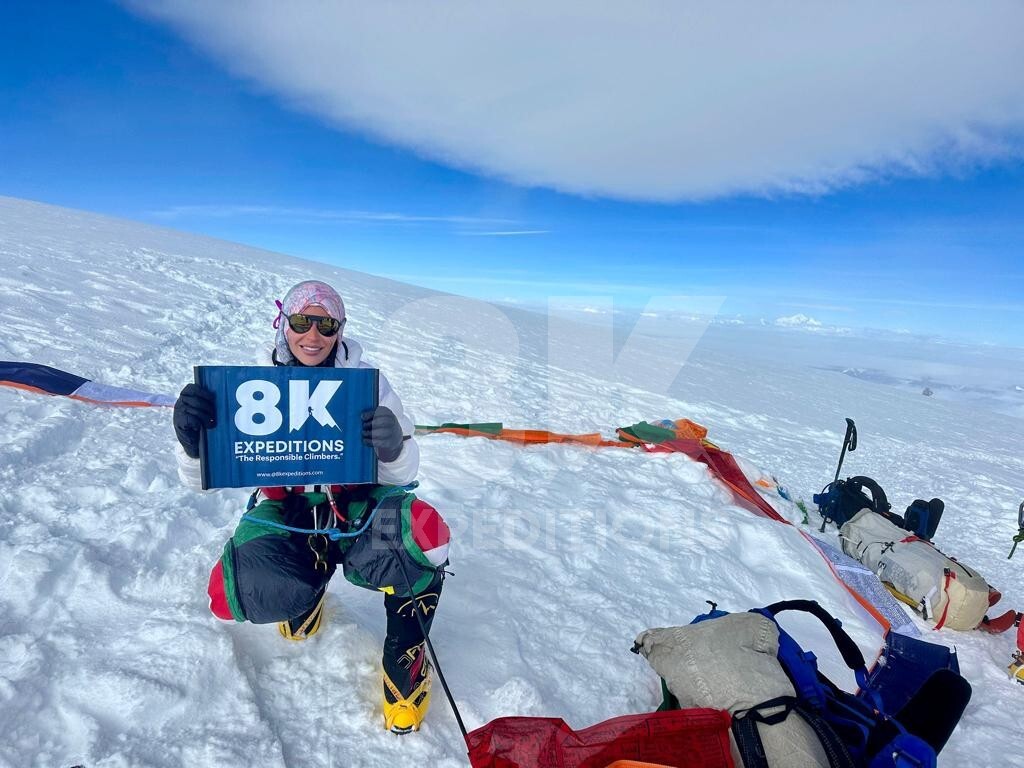
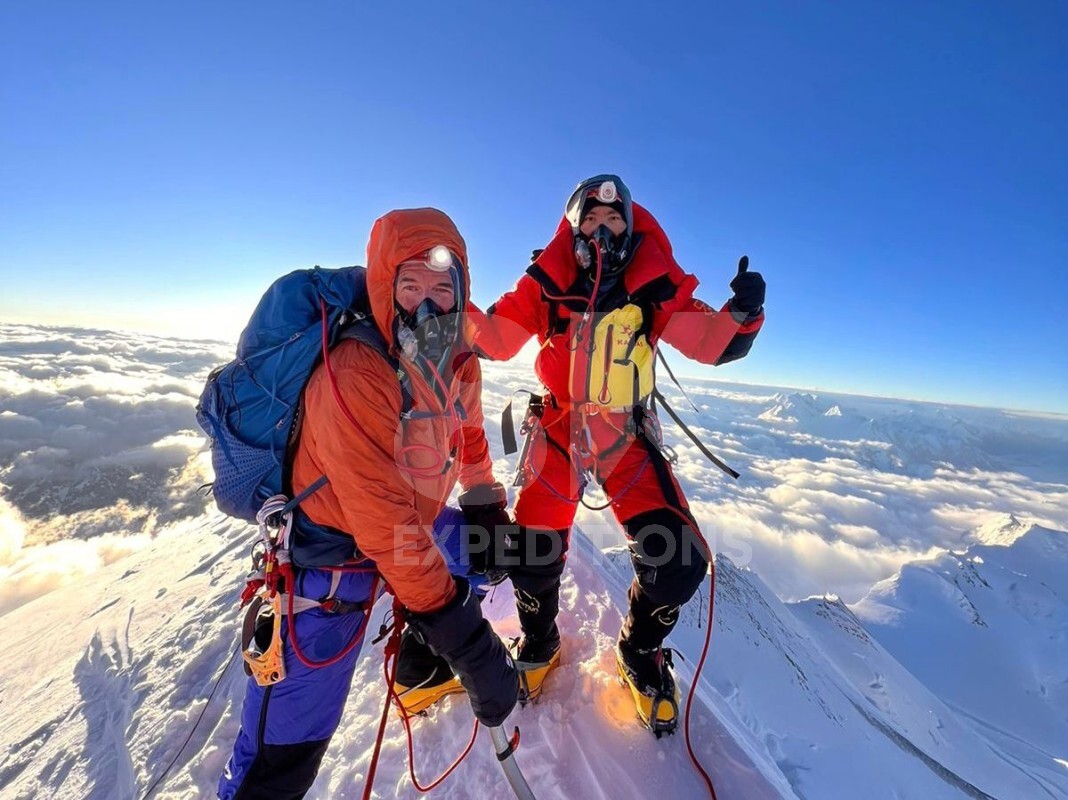
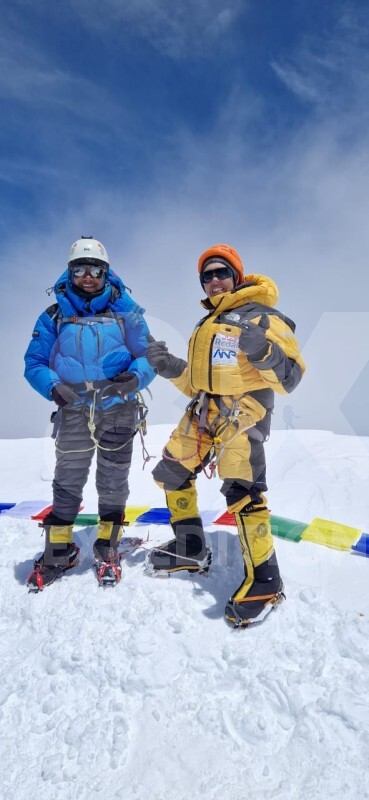
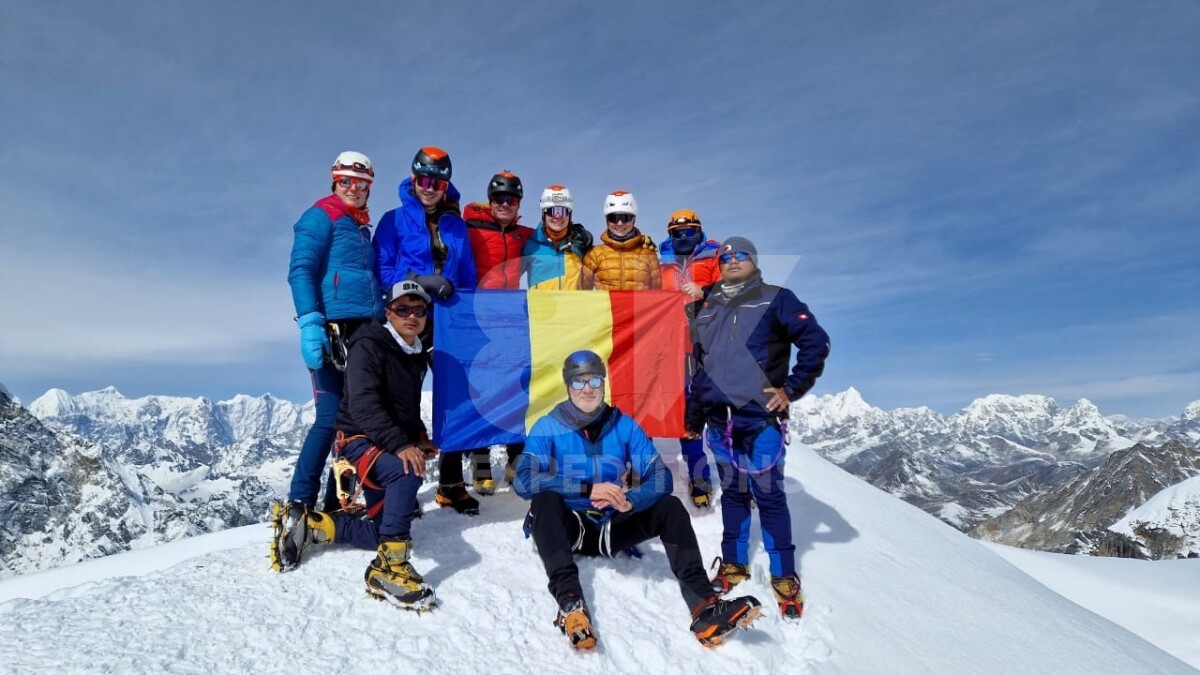
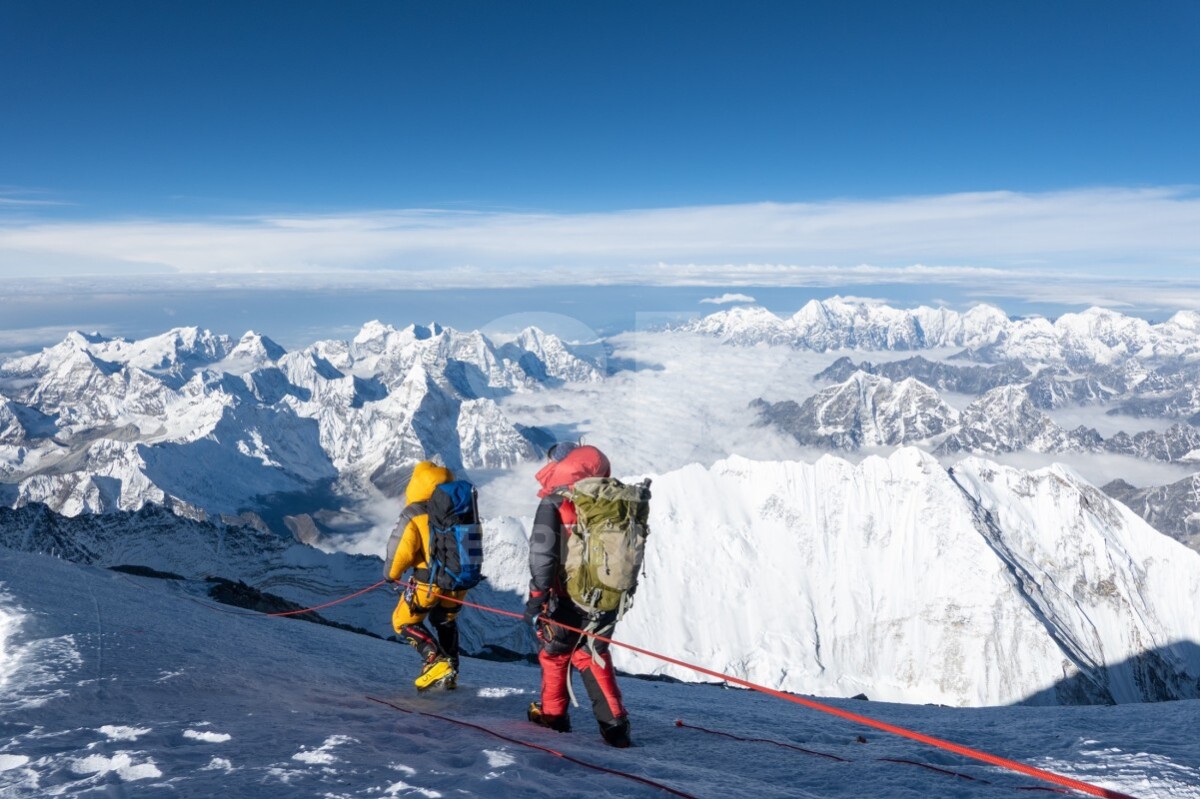
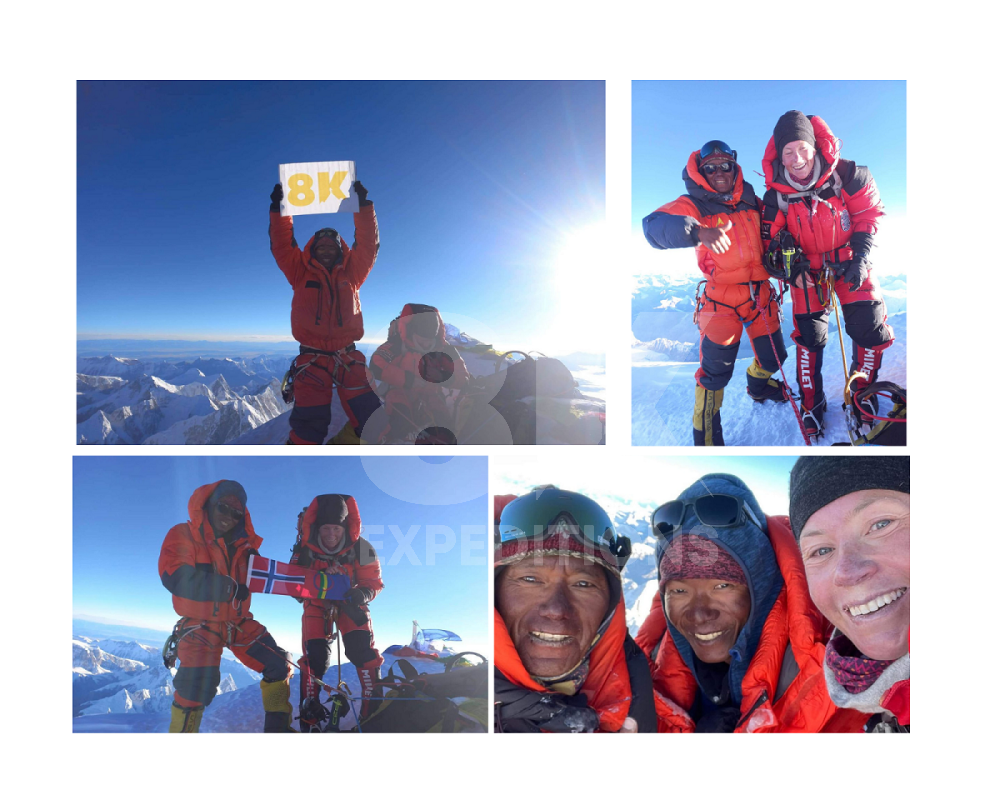
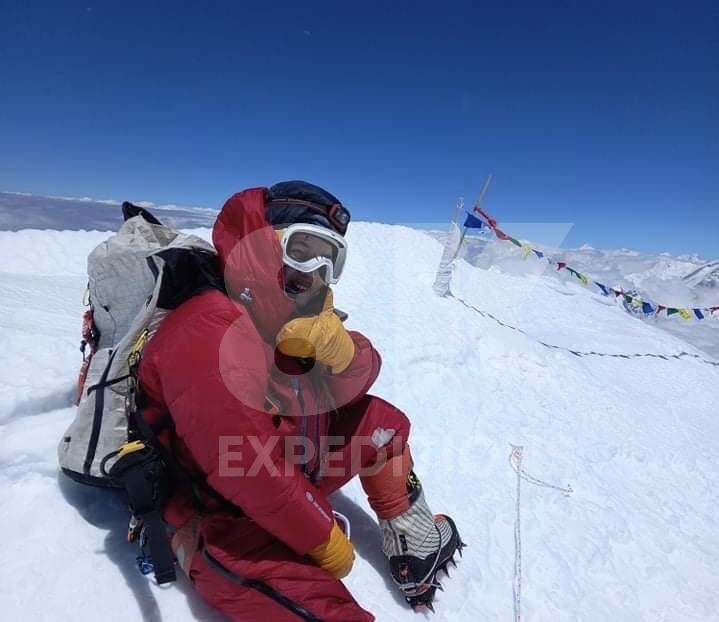
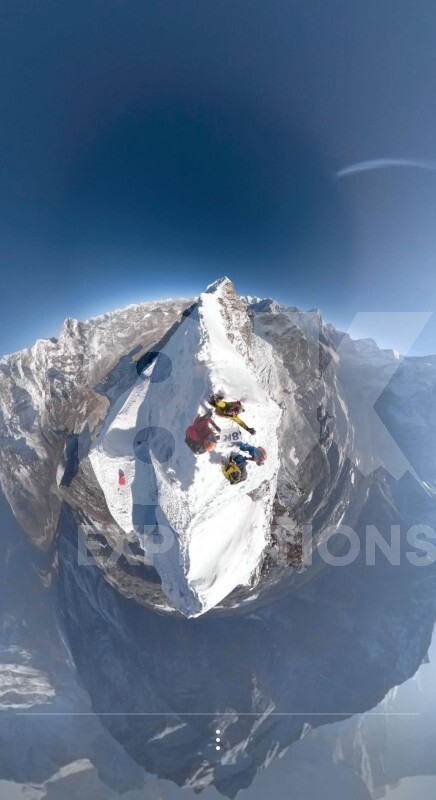
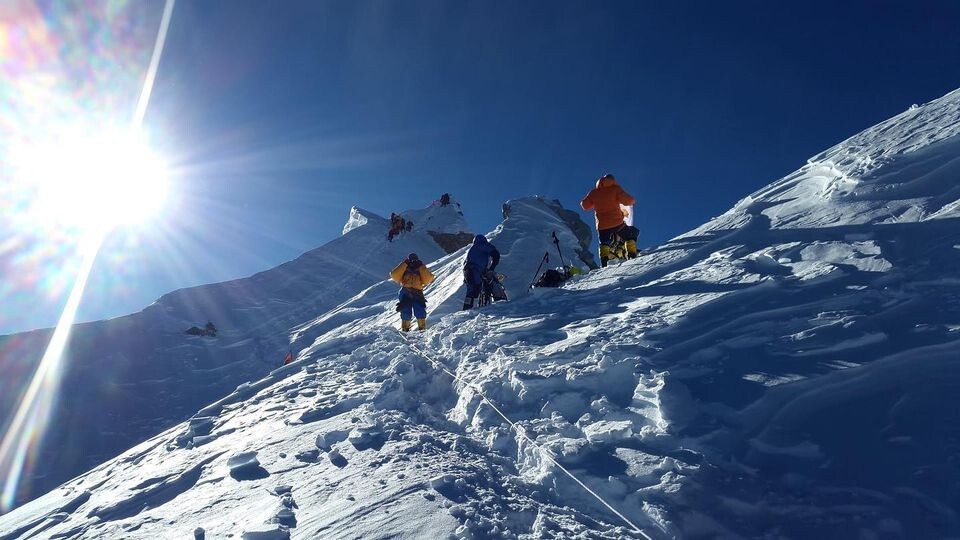
This day is the day when our hard work, patience, and endurance comes into reality. We will finally reach the top of the World. We start as early as midnight so that we reach the top at dawn to witness the glorious sunrise from behind the great mountain ranges. We spend some unforgettable moments on the highest point on Earth, take some photographs, and gradually descend to Camp III or possibly to Camp II to rest overnight. The member is only allowed to stay for a maximum of 15 - 20 minutes at the summit of Everest for safety concerns & following the climbing guidelines.
From Camp II, we will descend back to the Base Camp and as responsible travelers, we will clean up all the trash around the camp. We will then prepare to trek back to Pheriche.
We retrace the same trail back to Lukla from Namche. Going down through the dense forests, crossing several suspension bridges, and traversing through beautiful settlements will lead us to Lukla.
From Lukla, we will take a flight back to Kathmandu viewing all those mountain vistas, packed villages, green forests from a bird’s eye perspective. We will then transfer you to the hotel for you to rest and relax. We will see you in the evening for a farewell dinner at a typical Nepali Restaurant with cultural shows.
With gratitude and best wishes, we will have to bid you farewell for your flight back home. We hope to see you soon in the next season for a brand new adventure.
Traveling in the Himalayas may not be certain and as perfect as planned. This is why we must allocate some buffer days to cope up with consequences due to bad weather or any other unforeseeable circumstances. This is also to help you schedule your return flight in a flexible manner to avoid the risk of missing a flight.
Airport pick-up and drop-off for both (International & Domestic).
04 nights hotel 4-star category in Kathmandu on BB Plan with single occupancy.
One welcome and farewell dinner in a typical Nepali restaurant in Kathmandu.
Both ways domestic flight from Kathmandu to Lukla to Kathmandu with airport tax.
Land and Air domestic transportation and cargo for our overall expedition crew.
Permit for Everest expedition 2027.
Khumbu Ice-fall Fee and Summit Route Fixing Charge.
Garbage Management and Disposal Fees.
One official Nepal Government Mountaineering Liaison Officer.
High Altitude, Medical and Helicopter Rescue insurance for field staff.
Each member is allowed a personal baggage limit of 60 kg.
Necessary porters up to the Base Camp and return from the Base Camp.
Experienced Base Camp Manager, Cook and Kitchen Helpers.
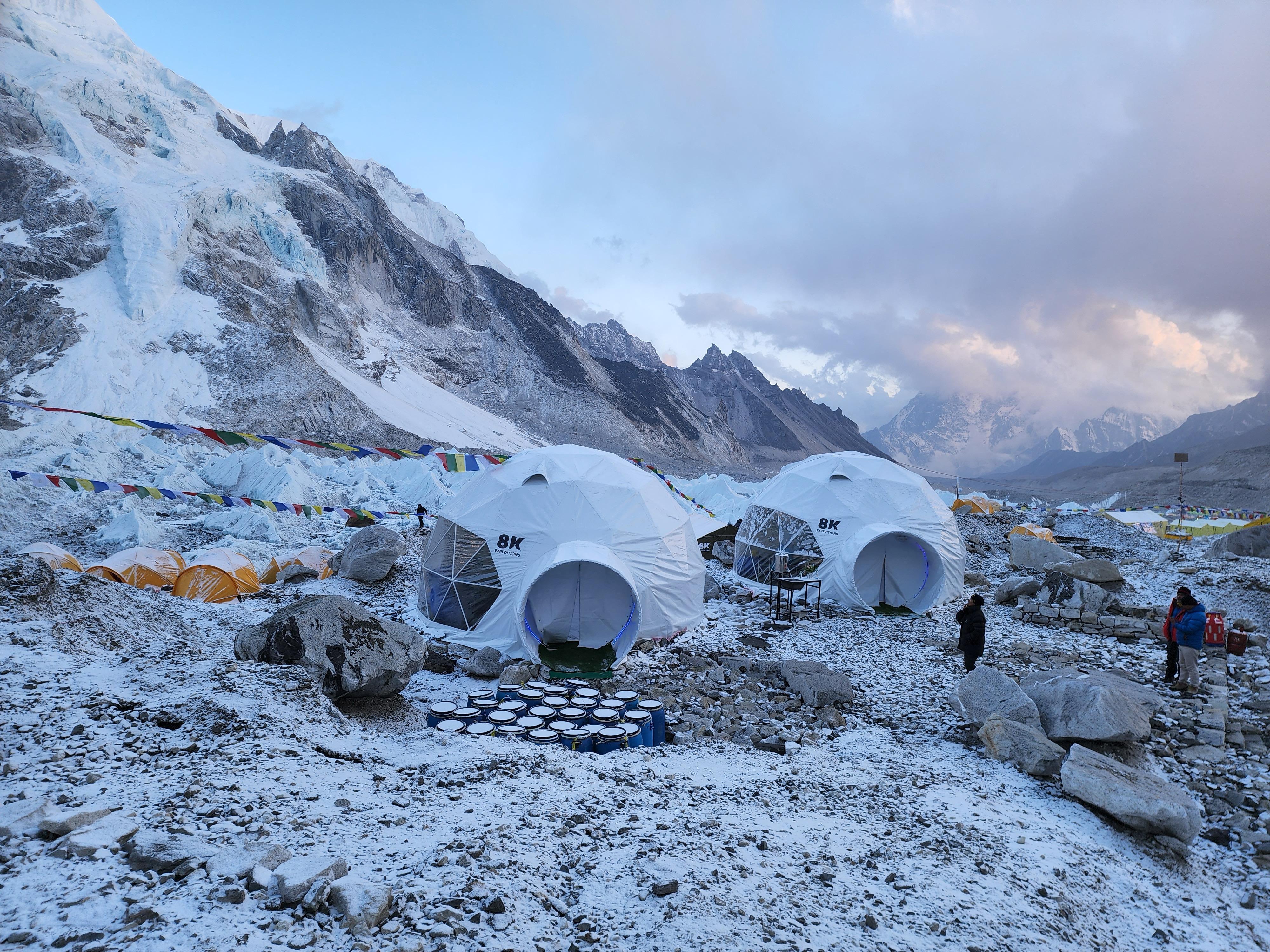
Freshly Cooked Meals (Breakfast, Lunch and Dinner) at Base Camp: Continental, Nepali, Chinese and Indian food with Hot Drinks, Tea and Coffee will be served.
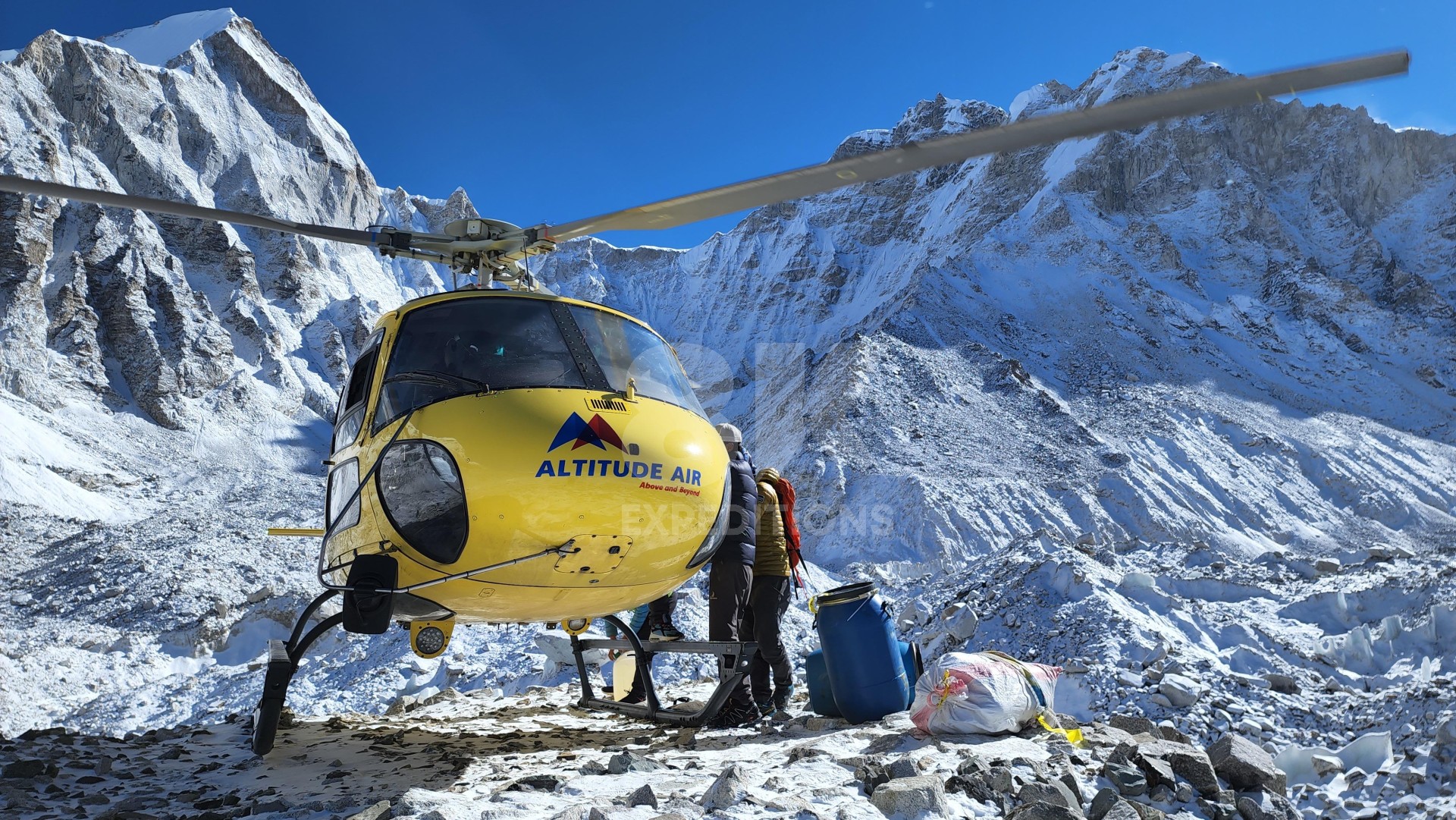
Fresh Green Vegetables, Fresh Meat, Fresh Fruits, Juice and Drinks will be regularly served at Base Camp. We use helicopter in order to bring them up to Base Camp on regular basis.
Machine and Espresso Coffee will be provided at Base Camp.
Individual Tent (Box tent), Thick Mattress and Pillow at Base Camp.
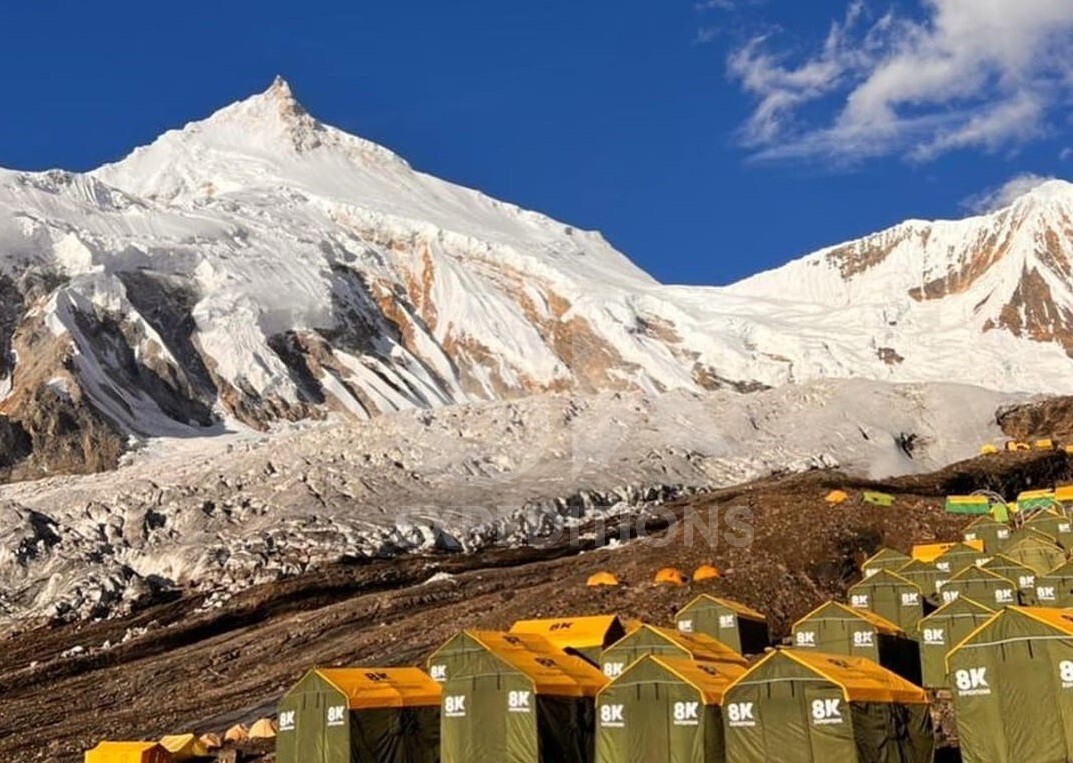
Common Equipment at Base Camp: Dinning Tent, Kitchen Tent, Communication Tent, Toilet Tent, Shower Tent, Tables and Chairs, Heater etc.
HRA medical camp provides emergency medical service at a certain charge.
Generator and Solar System for charging electronic devices at Base Camp.
Camp II Service: Member Dinning Tent, Tables, Chairs, Sleeping Tent (02 Members: 01 Tent), Kitchen Tent, Toilet Tent, Cook and Kitchen helpers.
High Camp Services: Member Sleeping Tent (02 Members: 01 Tent), Shovel, Extra Ropes, EPI Gas, Gas Burner (MSR Rector) and Coffle Set.
High food like Muesli, Porridge, Oats, Noodles, Plane Rice, Soup Items, Green Tea, Milk, Coffee, Dry Fruits, Chocolate Bar etc.
Internet service available at Base Camp (with a nominal charge).
Satellite phone is available for emergency use.
Walkie-Talkie set for communication during the entire expedition.
Weather forecast during the entire expedition.
01 highly experienced veteran Climbing Guide per member.
Oxygen: 06 bottles of per member and 03 bottles per Climbing Guide.
Summit Mask & Regulator Set for each member and Climbing Guide.
Helicopter rescue and a dedicated rescue team on standby in case of emergencies.
Backup Oxygen Bottles and Mask Regulator Set (Chargeable as per use).
First aid medical kit.
8K Duffle Bag and 8K Outdoor Cap.
Applicable Nepal Government Taxes and Company Service Charges.
Mount Everest summit certificate is issued upon successful climb, with photos and videos required for verification.
Personal Expenses: Phone calls, internet, battery recharge, laundry, alcoholic beverages, bottles and canned beverages, specialty coffee or espresso drinks etc during in lodges on the way to Base camp and Return.
Drone & Special filming permit.
Insurance with minimum US$1,00,000/- coverage for medical and helicopter rescue.
Summit Bonus: US$1,800/- per Climbing Guide and US$350/- for the Cook & Kitchen helpers, to be paid in cash. The Sherpa summit bonus is mandatory once the summit push begins, even if the climb is discontinued due to the client’s condition or any other reason.
Any additional services not listed under the “Services Includes”.
Trekking and mountain climbing in the Everest Region are highly dependent on weather conditions. We try to schedule our trips at the most favorable time but in case of extreme scenarios, domestic flights to Lukla may be delayed or canceled. In cases as such this, we would like to notify you that except for the total number of days in the itinerary section, expenses of other extra days shall be borne by the client himself/herself. However, 8K Expeditions will make necessary arrangements for the accommodation of porters and guides. If you wish to make alternative arrangements such as a helicopter flight to avoid flight delays, we can arrange it at a nominal extra charge.
Also, 8K Expeditions shall not be liable for any compensation for losses due to missed International Flights but we will surely help to make necessary arrangements to minimize your loss. To avoid missing flights, we suggest keeping some flexible time frames before trip departure and after trip departure.
Also be notified that as we will be traveling in remote areas with extreme climatic conditions and geography where trails can be distorted at times, we might need to adjust our itineraries as required. But we assure you that the quality of service shall not be compromised at any cost.
How much does it cost to climb Mount Everest in 2027?
The Costs of Climbing Mount Everest Expedition in 2027 vary depending on factors including group size, royalty and permit costs in different seasons, category of hotel accommodation, numbers of Sherpa’s allocated and equipment, type of arrangement, and package customization. So, we would like to discuss this with our client before offering the cost. Please feel free to contact 8K Expedition for any information about your selected package.
Is Mount Everest Expedition is worth to climb?
Absolutely.But that is exactly what makes it worth climbing. With proper acclimatization, experienced mountain guides, strong logistics, reliable equipment and professional high-altitude support, a well-prepared climber can approach Everest with confidence.
What is an Everest Expedition via south col in Nepal?
The Everest Expedition via South Col is the classic Nepal-side climbing route to the summit of Mount Everest (8,848.86 m). 8K Expeditions operates Everest Expedition from Nepal with expedition logistics, climbing support, Base Camp services, Sherpa support, oxygen arrangements, permits and high-altitude expedition infrastructure.
How Much Does an Everest Expedition Cost in 2027?
The Everest Expedition 2027 cost depends on the level of support, expedition operator, guide-to-client ratio, oxygen provision, logistics, accommodation, transportation and additional services. Commercial Everest expeditions from Nepal generally cost tens of thousands of US dollars, while premium and luxury expeditions can cost substantially more.
What should you check before choosing an Everest Expedition package?
How many Sherpa guides are included? How much oxygen is provided? What camps and logistics are included? Is helicopter transportation included? What happens during weather delays? What insurance is required? What are the exclusions and cancellation terms? A transparent inclusion and exclusion list makes it easier to compare expedition packages accurately.
How Long is the Everest Expedition from Nepal?
A typical Everest Expedition from Nepal takes approximately 45–60 days. The exact duration depends on the expedition itinerary, acclimatization strategy, weather, route conditions, transportation and contingency days.
What is the altitude or elevation of Mount Everest?
Mount Everest stands at 8848.86 meter/29,031.7 feet meter above the sea level. Why Start an Everest Expedition in Nepal? Nepal provides access to the classic southern route of Mount Everest and the famous Khumbu Valley.
Do You Need Previous Experience to Climb Everest?
Previous high-altitude mountaineering experience is strongly recommended for anyone planning an Everest Expedition. Everest should not normally be treated as a first major climbing objective. Experience on 6,000-meter and 7,000-meter peaks can help climbers develop the technical and physical skills required for an Everest attempt.
Training for Everest should begin months before the expedition. A comprehensive training program should develop endurance, strength, uphill capacity, load-carrying ability, technical climbing skills and expedition resilience.
What Equipment Do You Need for Everest?
An Everest Expedition requires specialized high-altitude mountaineering equipment.
Is Oxygen provided during the 8K Everest Expedition?
Yes, supplementary oxygen bottles is part of the Everest climbing strategy offered by 8K Expeditions.
How many oxygen bottles are included and whether additional oxygen is available if required?
Yes, minimum 06 bottles of oxygen are included in the standard packages and always available in the base camp to higher camps.
What Is the Role of Sherpa Guides on Everest Expedition?
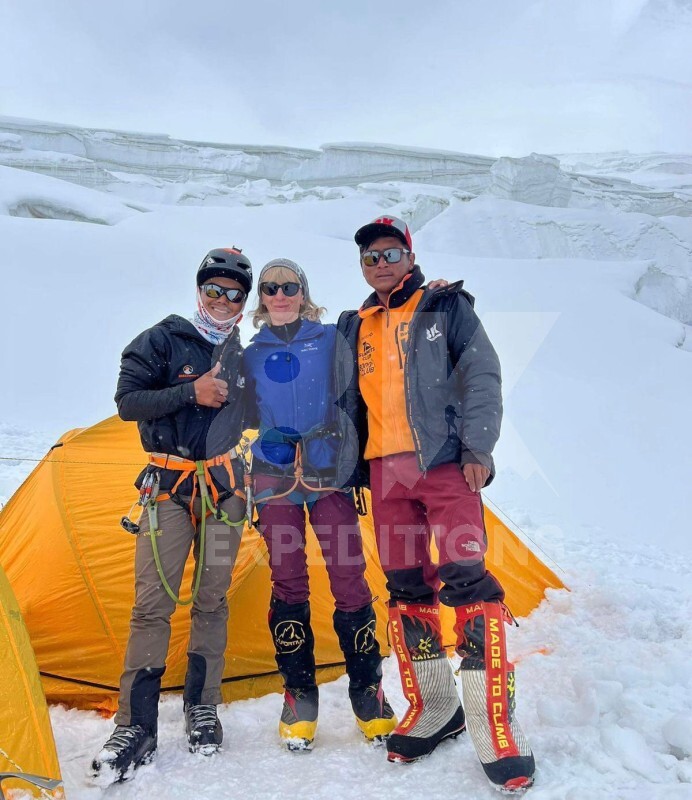
Sherpa climbing teams provide important high-altitude support during Everest expeditions. Their responsibilities can include route support, camp logistics, equipment movement, acclimatization rotations, fixed-rope support and summit assistance.
How Dangerous Is the Everest Expedition?
Climbing Everest involves serious and unavoidable risks. Major hazards include altitude sickness, hypoxia, extreme cold, frostbite, avalanches, icefall collapse, crevasses, exhaustion etc. No expedition can eliminate mountain risk completely but well preparation can minimize.
What Happens If the Weather Is Bad on Everest?
If weather conditions are unsafe, an expedition team may delay the summit attempt, remain at camp, descend to a lower camp or wait for another weather window. A fixed summit date cannot be guaranteed because weather and mountain conditions determine when the summit route can be safely attempted.
Can Beginners Climb Mount Everest Expedition ?
Everest Expedition is generally not considered a beginner-level mountain. Climbers should develop appropriate high-altitude and technical mountaineering experience before attempting the summit.
Is the Everest climbing permit included?
Yes, the Everest Expedition permit is included in the package. It also includes the Khumbu Icefall fee, national parks fees, Laison officer fees and summit route-fixing charge.
What is the Death Zone on Mount Everest?
The Death Zone refers generally to elevations above 8,000 meters, where the human body has extremely limited capacity to acclimatize and prolonged exposure becomes life-threatening. Everest climbers pass through this environment during the final stages of the expedition, particularly around Camp 4 and the summit route.
Can traffic jams occur on Mount Everest ?
Yes, congestion can occur on sections of the Everest Expedition climbing route, particularly during periods when many climbers attempt the summit within a limited weather window.
I have experience on peaks of 5600 meters
I have slept at that height for 3 days.
I do not speak a lot of english. Do you speak Spanish?
I want to climb everest in spring 2023, I am looking for costs to get enough sponsorships.
I look forward to your prompt and favorable response. Thanks